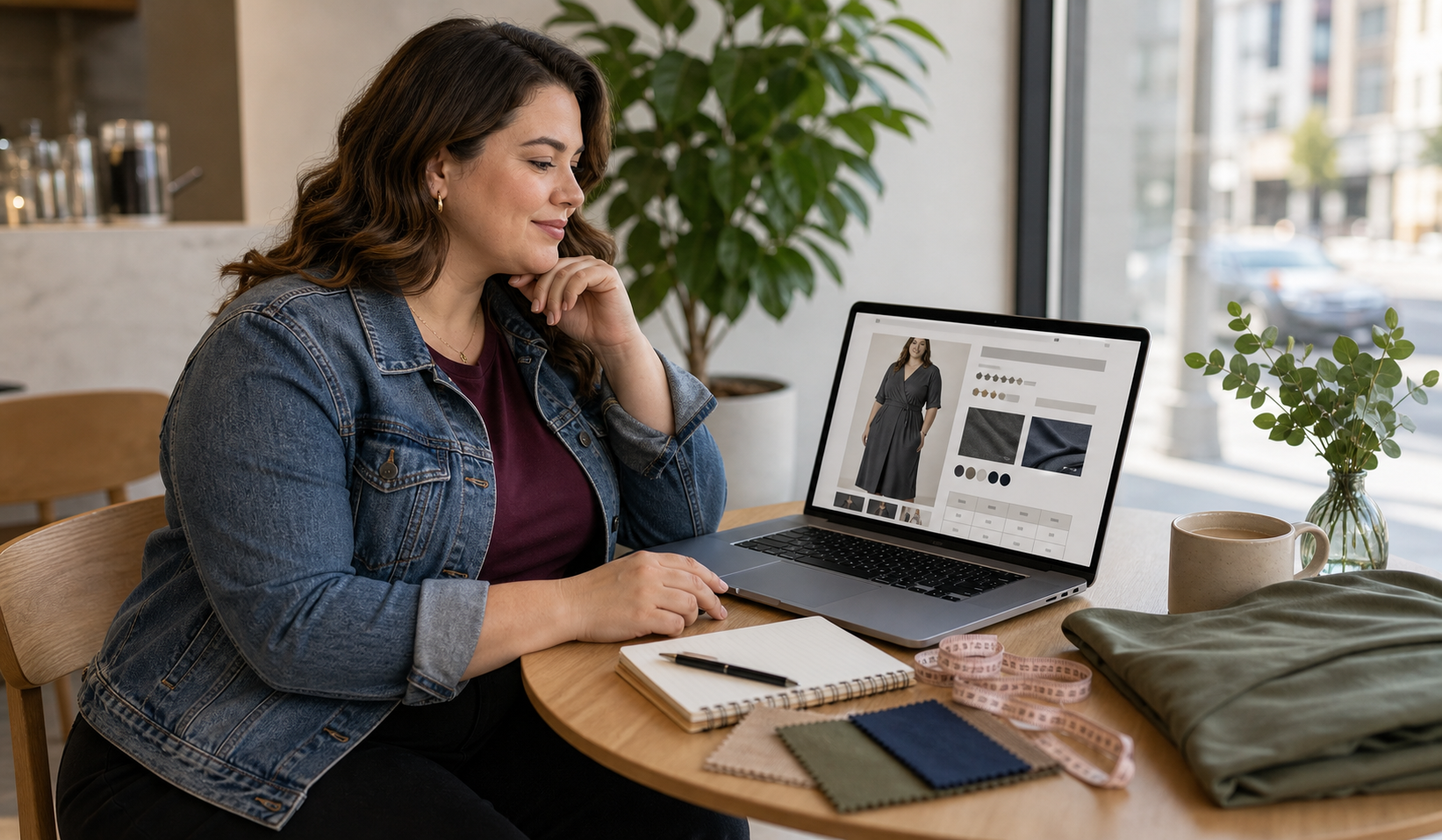
Як зрозуміти, що одяг якісно пошитий: гід для Plus Size
Як зрозуміти, що одяг якісно пошитий: гід для Plus Size
Якісний одяг Plus Size видно ще в примірочній: рівні шви, щільна тканина без просвітів, акуратна фурнітура й комфортна посадка на фігурі Plus Size. У цій статті розберемо, як самостійно прочитати річ зсередини й не переплатити за погану якість, особливо якщо ви носите розмір 48+.
Як оцінити якість пошиття: базові ознаки
Для жінок Plus Size якість пошиття - не дрібниця, а питання комфорту, самооцінки й довговічності гардероба. Неправильні шви можуть натирати, тонка тканина - просвічувати, а слабка фурнітура - ламатися у найнепотрібніший момент.
Якісне пошиття завжди видно в деталях: симетрії, рівності строчок, обробці зрізів і міцності швів. Перевіряйте річ не лише спереду, а й з боків, зі спини та з вивороту.
Симетрія виробу
Покладіть річ на рівну поверхню або уважно огляньте її на вішаку. Права й ліва сторони мають бути дзеркально симетричними. Перевірте довжину рукавів, рівень лінії талії, розташування кишень, манжет і коміра.
Рівні строчки
Строчка рівна по всій довжині.
Стібки мають однакову довжину.
Немає пропусків, вузлів, перетягувань нитки або хвилястої тканини біля шва.
Міцні шви
Обережно розтягніть тканину вздовж шва. Якщо шов не розходиться, між стібками не видно просвітів, а нитка не тріщить і не деформується, це добрий знак.
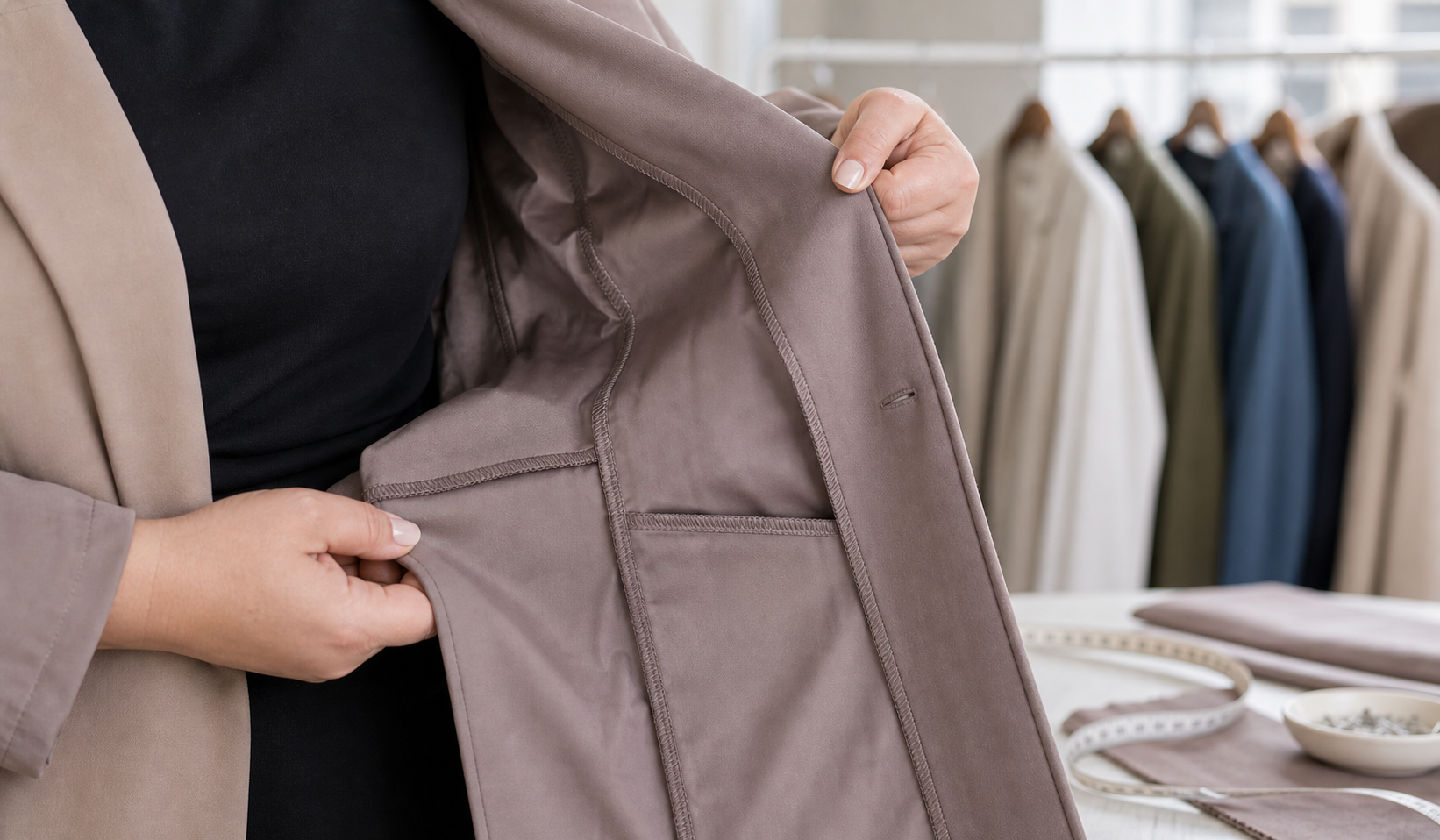
Охайність з вивороту
Виворіт одягу має виглядати акуратно. Зрізи повинні бути оброблені оверлоком або іншим способом, який не дає тканині обсипатися. Не має бути хмар з ниток, необроблених ділянок і стирчачих кінців.
Підкладка
Якщо у виробі є підкладка, вона має бути з гладкої, тонкої, але міцної тканини. Вона не повинна тягнути виріб, перекручуватися або збиратися складками. Шви на підкладці також мають бути охайними, особливо в жакетах Plus Size і верхньому одязі.
Тканина: що видає якість і що важливо для Plus Size
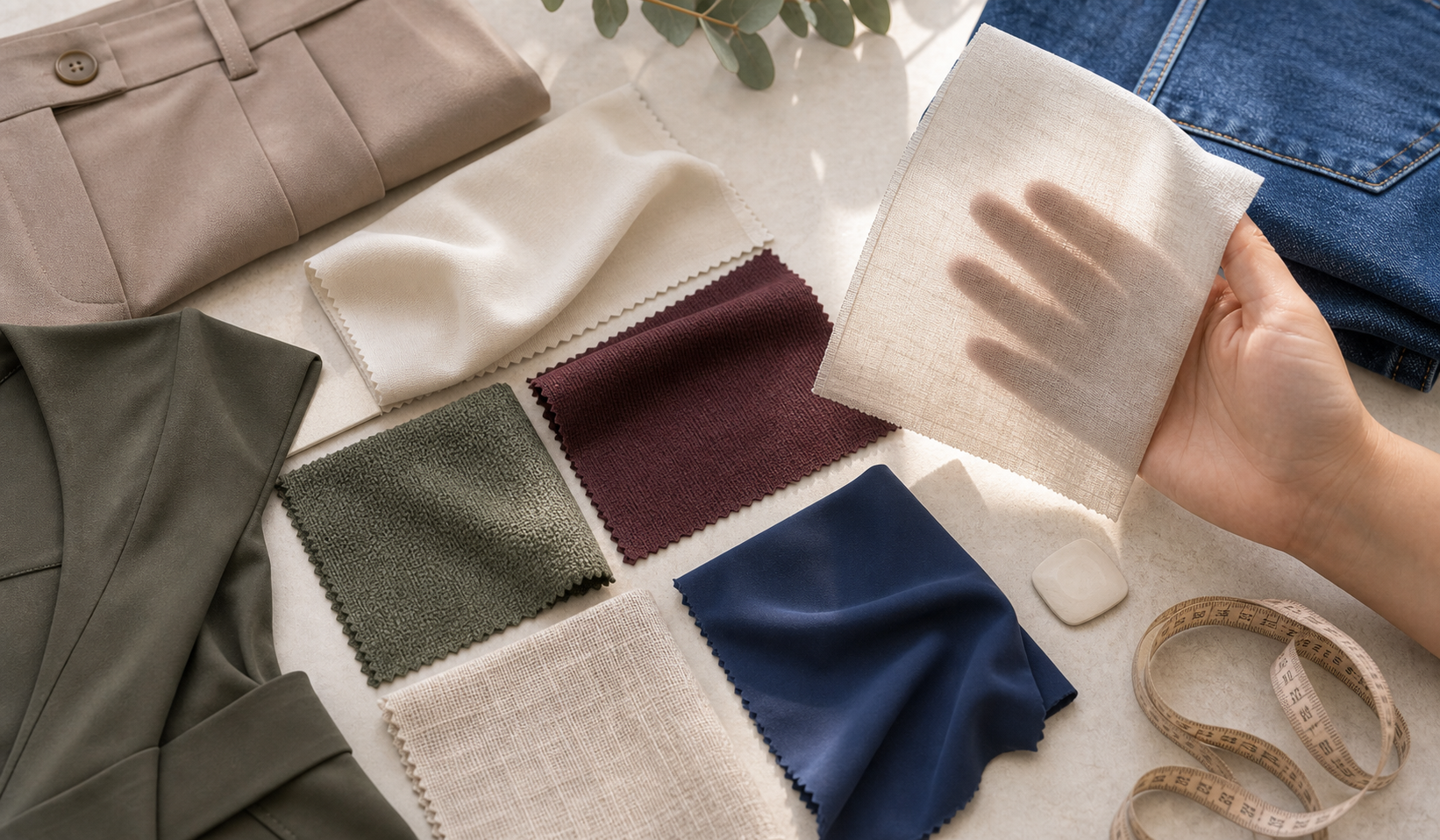
Саме тканина відповідає за те, як річ тримає форму, дихає й служить кілька сезонів. Для Plus Size це критично: матеріал має витримувати навантаження, не розтягуватися надто швидко й не просвічувати на стегнах, грудях або животі.
Як визначити якість тканини
Щільне плетіння. У хорошої тканини переплетення ниток рівномірне. Якщо при легкому розтягуванні нитки ходять між пальцями, плетіння слабке.
Приємний дотик. Тканина не дряпає, не скрипить, не має грубих вузликів і неприємної поверхні.
Вага матеріалу. Якісний матеріал має певну вагу: тонка тканина не повинна бути паперовою, а трикотаж має повертатися у форму.
Стабільний колір. Якщо тканина фарбує руки або має різкий запах, це може свідчити про нестійкий барвник.
Тканини, які особливо вдалі для Plus Size
Віскоза та її суміші. М'яка, дихаюча, приємна до тіла, добре драпірується й підходить для суконь, блуз і спідниць Plus Size.
Бавовна з еластаном. Зручна для футболок, сорочок і повсякденних суконь, якщо тканина достатньо щільна й не просвічує.
Щільний трикотаж. Підходить для легінсів, суконь-футлярів і лонгслівів, якщо не виділяє нерівності тіла.
Льон з віскозою. Менше мнеться, але зберігає дихаючі властивості льону, тому зручний для літніх комплектів.
Типові помилки - обирати надто тонкі липкі матеріали, купувати речі зі 100% жорсткого поліестеру для щоденного носіння або брати світлі штани Plus Size й сукні, які просвічують на стегнах і сідницях.
Шви, обробка та фурнітура: дрібниці, що вирішують усе
Саме шви та фурнітура часто показують, економив виробник чи ні. Для Plus Size ці деталі особливо важливі, бо в зонах навантаження тканина, нитки, ґудзики й блискавки працюють активніше, зокрема у блузах і сорочках.
Як перевірити шви
Внутрішні шви. Стібки мають бути частими, однаковими, без пропусків. Нитка не повинна провисати або перетягувати тканину.
Бокові шви та шов по спинці. Вони мають бути прямими, не завалюватися вперед або назад. Тканина біля шва не повинна хвилитися чи перекручуватися.
Обробка країв. Зрізи не мають сипатися. Підгинання низу має бути без потовщень, складок і гармошки.
Фурнітура: кнопки, блискавки, ґудзики
Блискавка. Легко застібається й розстібається, не заїдає, зубці рівні, верх і низ добре закріплені.
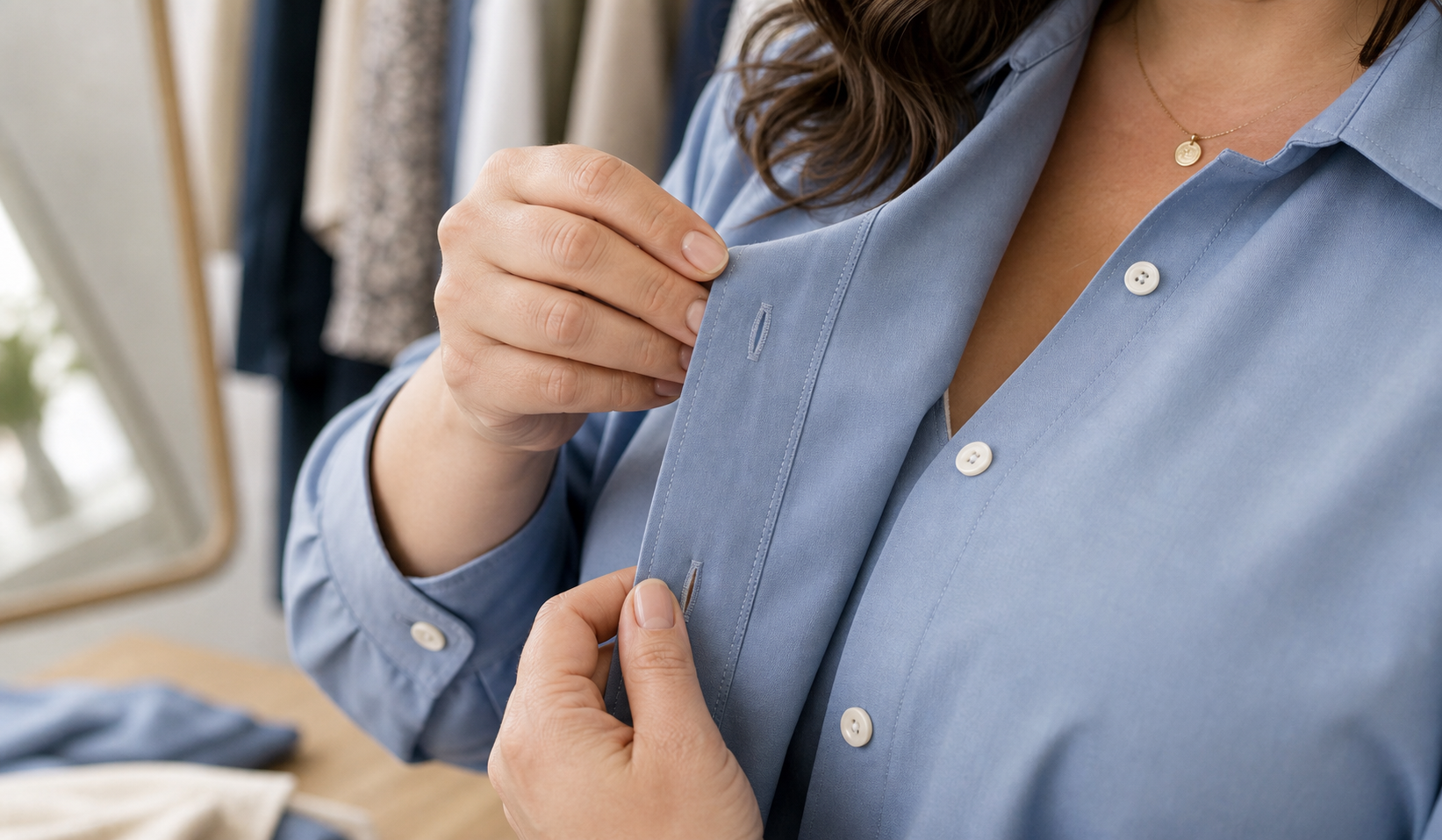
Ґудзики. Пришиті щільно, не хитаються, петлі рівні й без розтріпаних ниток. Запасний ґудзик - приємний знак уваги до якості.
Кнопки, гачки, декор. Не мають гострих країв, добре закріплені й розташовані симетрично.
Посадка на фігурі Plus Size: як зрозуміти, що річ сідає правильно
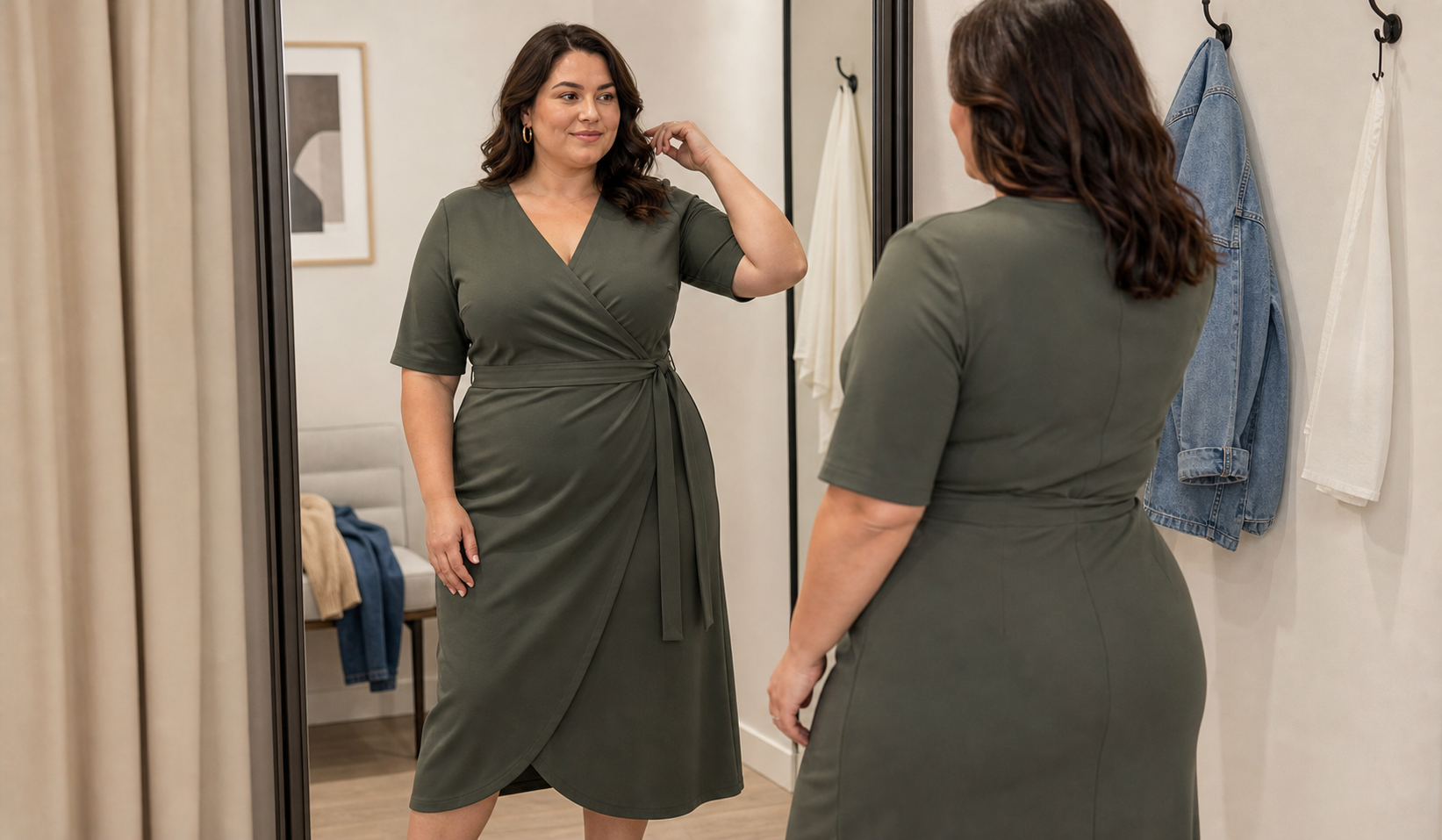
Навіть ідеальні шви не врятують, якщо лекала викроєні без урахування реальної Plus Size-фігури. Посадка визначає, як ви виглядаєте й відчуваєте себе протягом дня, особливо коли обираєте сукні Plus Size або штани.
На що дивитися в примірочній
Плечі. Плечовий шов має закінчуватися на природній крайній точці плеча, не сповзати на руку й не заходити на шию.
Зона грудей. Тканина не повинна натягуватися біля ґудзиків або утворювати складки хрестом.
Талія та живіт. Шви не врізаються в тіло, пояс не перетягує фігуру, а м'яко окреслює її.
Стегна й сідниці. Тканина не просвічує на натягнутих ділянках і не утворює горизонтальні складки під сідницями.
Рукави. Пройма не врізається в пахву, руки рухаються вільно, немає натягу в плечах і спині.
Порада стиліста: для Plus Size краще обирати моделі з невеликим запасом по об'єму, але з хорошим формоутриманням тканини, ніж щільно облягаючі тонкі речі. Це правило добре працює і для костюмів Plus Size.
Як перевіряти якість одягу онлайн: чекліст для покупок в інтернет-магазині
Коли ви купуєте одяг в інтернеті, немає можливості торкнутися тканини чи заглянути на виворіт. Але частину роботи можна зробити за описом, фото й відгуками.
Що дивитися в картці товару
Склад тканини. Обирайте моделі, де вказано точний склад, наприклад віскоза, поліестер і еластан у відсотках, а не просто «трикотаж».
Щільність і сезонність. Якщо є інформація про щільність або рекомендації за сезоном, це плюс до прозорості бренду.
Фото високої якості. Шукайте крупні плани тканини й швів, фото з різних ракурсів на моделі Plus Size і реальний колір без сильних фільтрів.
Відгуки покупців. Читайте, як річ поводиться після прання, чи не розтягується, чи не линяє й чи відповідає розмірній сітці.
Орієнтуватися тільки на бренд і ціну. Дорогий одяг теж може мати дефекти пошиття й дешеву тканину.
Ігнорувати виворіт. Багато дефектів видно лише зсередини: необроблені зрізи, вузли, криві шви.
Обирати ефектні, але непрактичні матеріали. Надто блискучі, жорсткі або дуже тонкі тканини підкреслюють нерівності фігури.
Брати неправильний розмір «щоб схуднути». Замалий одяг швидко розповзається по швах, деформується й виглядає неакуратно, особливо якщо це брюки великих розмірів або сукня по фігурі.
Не читати склад і рекомендації по догляду. Навіть якісна річ швидко втратить вигляд, якщо прати її неправильно.
Висновок
Якісно пошитий одяг - це симетрія, рівні й міцні шви, щільна приємна тканина, продумана фурнітура та посадка, яка не заважає рухатися. Для жінок Plus Size це особливо важливо: грамотно скроєна річ служить довше й працює на впевненість.
Перед покупкою дивіться на виворіт, тканину, шви, фурнітуру й посадку. Якщо купуєте онлайн, перевіряйте склад, фото деталей, розмірну сітку й відгуки. Такий підхід допомагає не переплачувати за слабку якість і збирати гардероб, який справді працює; для натхнення можна переглянути готові образи GARNE.
Поширені запитання
Як швидко в магазині зрозуміти, що річ пошита якісно?
Подивіться на симетрію, рівність швів і обробку зрізів з вивороту, легенько розтягніть тканину вздовж шва, перевірте ґудзики й блискавку. Якщо нічого не розходиться й не стирчать нитки, це добрий знак.
Яка тканина найкраща для суконь Plus Size на кожен день?
Практичний варіант - віскоза або бавовна з невеликим відсотком еластану. Такі тканини дихають, м'яко драпіруються, добре тримають форму й комфортні в носінні, особливо у сукнях Plus Size на кожен день.
Як перевірити якість одягу, якщо купую онлайн?
Звертайте увагу на склад тканини, опис щільності, якість фотографій, крупні плани швів, розмірну сітку та відгуки покупців. Якщо інформації мало, поставте запитання продавцю.
Чи завжди натуральні тканини кращі за синтетичні?
Натуральні матеріали комфортні для шкіри, але невелика кількість синтетики може підвищити міцність і зносостійкість. Важливий баланс: якісні сумішеві тканини часто служать краще, ніж дешевий 100% натуральний матеріал.
Чому одяг може виглядати дорогим, але швидко псуватися?
Причина може бути у слабких швах, дешевій фурнітурі, нестійкому барвнику або тонкій тканині зі слабким плетінням. Ціну формує не лише якість, а й бренд, маркетинг та трендовість.
На що особливо звернути увагу жінкам Plus Size?
На щільність тканини в зоні стегон і грудей, міцність швів у ділянках навантаження, висоту пройми, ширину рукавів і посадку по спинці. Одяг не має тягнутися, врізатися чи просвічувати.
Як часто варто оновлювати базовий гардероб, якщо обирати якісні речі?
Базові якісні речі можуть служити кілька сезонів. Оновлюйте їх, коли тканина помітно зношується, деформується або колір тьмяніє навіть після делікатного догляду.