A Basic Plus-Size Wardrobe: How to Build It Without Buying Extra
A Basic Plus-Size Wardrobe: How to Build It Without Buying Extra
A basic Plus Size wardrobe can be put together without dozens of new items if you first sort through your closet, understand your lifestyle, body type and colors, and only then selectively purchase 5-10 truly necessary items. This approach saves money and time, and the looks look thoughtful and modern.
Where to Start: Wardrobe Analysis, Not Shopping
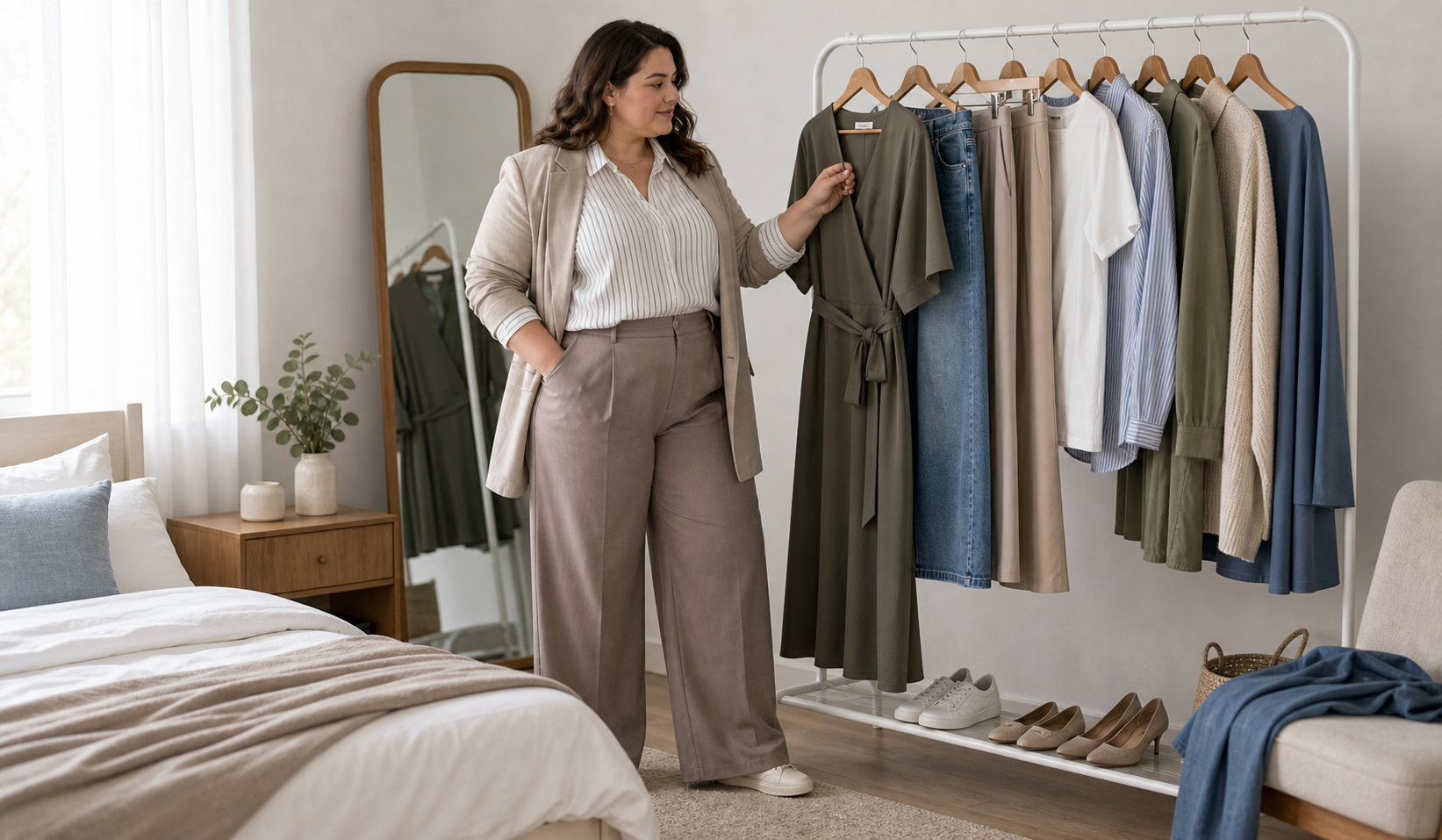
The goal of a basic plus-size wardrobe isn't to visually slim down, but to ensure that every item works for you: flatters your figure, is easy to combine, and doesn't look ragged on the hanger. So, the first step to a budget-friendly wardrobe is a closet audit.
How to Audit a Plus Size Wardrobe
Remove items from a season or two adjacent seasons.
Try on each item and honestly evaluate whether the style suits your figure, whether the cut is current, whether it's comfortable to move, and whether the item matches your current style.
Divide your clothes into categories: "I wear and love them," "I haven't worn them for over a year," and "needs repair or dry cleaning."
Make a list of what you already own: bottoms, basic tops, dresses, outerwear, shoes, and accessories.
The goal of an audit is to identify real gaps in your wardrobe and avoid buying duplicates. If you already have three black T-shirts but no comfortable pants, your shopping plan should start with pants.
Stylist tip: Take stock before each season. This will help you better understand what's worth keeping, what to donate or sell, and what you really need to buy more.
How to avoid unnecessary purchases: a clear plan and capsules
The capsule approach helps you buy less but wear more combinations. A capsule is a small collection of items that fit together perfectly and cover a specific part of your life: work, daily chores, walks, or outings.
Define your daily roles
Before shopping, write down where you spend most of your time:
Office or remote work;
Walks, errands around town, shopping;
Meetings, coffee shops, outings with friends;
Holidays, events, special occasions.
For each category, think about what you're realistically willing to wear. There's no need to buy an office jacket if you don't have an office, or an evening dress "just in case" if you rarely have one.
The No-Frills Capsule Formula
For a plus-size wardrobe, a simple formula works well: there should be at least twice as many tops as bottoms. Even a small number of things gives many looks.
You can create many different outfits from this set if the colors, cuts, and fabrics coordinate well.
Plus Size Figure: How to Choose Styles That Work
To avoid buying "pretty, but not flattering" items, it's important to understand your silhouette and the styles that support it. Basics shouldn't hide your body, but provide a comfortable fit and a neat line.
Basic Principles for Plus Size
Length. Dresses and skirts that are midi or just below the knee often look more versatile. It's best to choose a top that doesn't end at the widest point of the hips or stomach.
Bottoms. Jeans and mid- or high-waisted trousers work well for plus size women: they accentuate the waist and fit better across the stomach and hips.
Top. A V-neck or soft crew neckline visually elongates the neck. The cut should be loose but not baggy: straight, semi-fitted, or A-line.
Accents. Exposed wrists, ankles, and collarbones create a lighter silhouette. The waistband on a dress or coat can be raised slightly above the natural waist if this creates a more balanced appearance.
If the bulk of your waist is concentrated in the abdominal area, look for slightly flared dresses and tops that are not too tight in this area. If your hips are prominent, A-line skirts and soft fabrics that hug the hips and flare out below work well.
Plus Size Essentials That Are Truly Worth Having
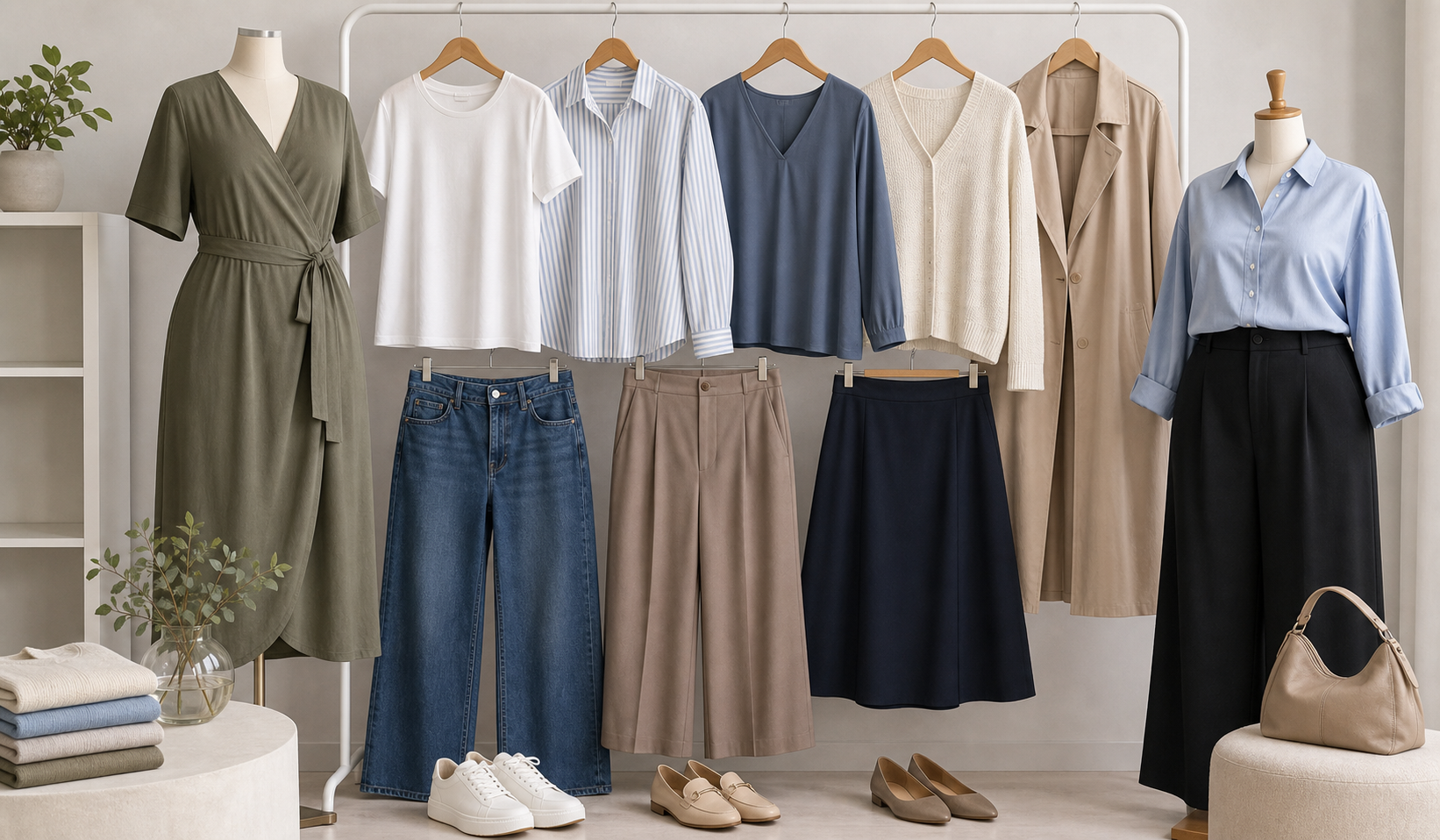
To avoid buying everything, focus on a short list of items that are easy to combine and suit your lifestyle.
Bottoms
Straight-leg or slightly tapered jeans. Choose a mid- or high-rise, thick but flexible denim with elastane.
Pants. A slight taper and a length that hits the ankle or just above work well. A partial elastic band at the back can provide a better fit.
Mid-A-Line Skirt. It gently hugs the hips and flares out below. The fabric shouldn't be too thin or too stiff.
Tops
A loose-fitting white or colored T-shirt. It doesn't cling to the stomach, and the sleeves end at about mid-shoulder or slightly lower.
A loose-fitting, long shirt. A straight or semi-fitted cut without sharp darts works well in everyday capsule outfits.
A V-neck blouse or top. This neckline visually elevates the silhouette and is especially comfortable for a larger bust.
A long sleeve or lightweight jumper. Choose a smooth, thick knit without active lint.
Dresses
One or two dresses are enough for a base: a shirt dress, an A-line dress, or a plaid dress. If the dress is a bit tight, it's best to choose a comfortable fit without the "sheath" effect.
A simple jacket or trench coat. A length that reaches mid-thigh or below the widest point often looks more harmonious.
Shoes and Accessories
To start, one comfortable pair of sneakers or loafers and one more elegant pair are enough. Accessories are best chosen in medium sizes: too small can get lost, while too large can distort the proportions.
Colors and Fabrics: How to Simplify Selection and Combinations
A well-chosen palette and materials help you get by with fewer items but still look varied. When most items coordinate in color and texture, each purchase is more effective.
Color Palette
Choose 2-3 basic neutral colors and 1-2 accent colors. Neutral base colors can be beige, navy blue, chocolate brown, gray, off-white, or black. Deep green, burgundy, blue, terracotta, or other shades that complement your complexion are great for accents.
Prints are best reserved for one or two accent pieces: shirts, dresses, scarves, or blouses. This will prevent the base from becoming chaotic, and the outfits from looking the same.
Fabrics that work for Plus Size
For summer: dense viscose, soft linen blended with viscose, matte or semi-matte silk, high-quality blended fabrics.
For fall and winter: soft wool, flannel, poplin, cupro, heavy knits.
Key rule: the fabric should be flexible and fairly dense, without excessive shine or a strong nap. This creates a neat silhouette and doesn't highlight uneven areas.
How to Buy Less, But Better
After your inventory and capsule plan, you can move on to targeted purchases, rather than shopping on an ad hoc basis.
Step 1. Shopping List
Based on your inventory, write down which bottoms are missing, how many basic tops you need, whether you need a versatile dress, and whether you have suitable outerwear. This will be your checklist for online or offline shopping.
Step 2. The Try-On Rule
Each new item should pair with at least three items you already own.
Try on your new item with actual jeans, trousers, shoes, or a jacket, not just "in theory."
Discard items that are too tight or require a "worn-on-after-weight" clause. A basic wardrobe should work for now.
Step 3. Focus on Quality
It's better to invest in well-fitting jeans and trousers, basic dresses, and coats that will last several seasons. Trendy accents—bright blouses, jewelry, and textured accessories—can be found on a budget.
How to combine plus-size basics to avoid boredom
When you already have the basics, variety comes not from new purchases, but from combinations. The same bottoms can look different with a T-shirt, shirt, blouse, jacket, or sweater.
Simple Mix-and-Mix Algorithm
Choose one bottom: jeans, trousers, or a skirt.
Pair it with three different tops to create three looks.
Change your shoes: sneakers, loafers, or a smart pair.
Add earrings, a scarf, a belt, or a bag to change the mood of the outfit.
Even with two bottoms, six tops, and two pairs of shoes, you can create over twenty outfits. Plus-size women especially benefit from accents on the wrists, neck, and ankles: bracelets, earrings, scarves, and open-toe shoes.
Conclusion
To build a basic plus-size wardrobe without unnecessary purchases, start by reviewing your closet, not the store. Then, plan small capsules to suit your lifestyle, choose silhouette-supporting styles, and identify colors and fabrics that are easy to combine.
The key is to buy precisely, not more. High-quality basic jeans, trousers, dresses, shirts, T-shirts, and outerwear can create dozens of looks if each item truly suits you and pairs well with what you already own.
Frequently Asked Questions
How many items should a basic plus-size wardrobe have?
For a capsule wardrobe, 20-40 items per season are often enough. This isn't a hard and fast rule: the main thing is that the pieces fit together and cover your everyday needs.
What jeans are best for a plus-size wardrobe?
The most versatile jeans are mid- or high-rise, straight or slightly tapered, made of denim with a little elastane. They fit well at the waist and hips.
Is a dress essential in a basic wardrobe?
It's advisable to have at least one or two dresses in a flexible fabric with a comfortable fit. They easily transition from casual to more formal looks with the addition of different shoes and accessories.
What colors are best for a plus-size base?
Form a base of two or three neutral colors and add one or two accent shades. This makes it easier to combine items without feeling monotonous.
What fabrics are best for a plus-size figure?
Look for dense yet soft and flexible fabrics: viscose, linen blends, soft wool, cupro, and high-quality knits. Materials that are too thin or shiny can highlight uneven areas.
How do you know if an item is truly essential and not an impulse buy?
Ask yourself if it matches at least three other items in your closet, if it's comfortable to move in, and if you'll wear it next season. If the answer is "no," it's not essential.
How often should you review your essential wardrobe?
Optimally, before each season. This way, you'll see in advance what needs updating, what items are no longer in keeping with your style, and avoid impulse purchases.