Как подобрать Plus Size садящуюся по фигуре одежду
Как подобрать Plus Size садящуюся по фигуре одежду
Правильно подобранная Plus Size одежда не должна жать, тянуться в плечах или стоять коробкой. Если хотите быстро сориентироваться в базе, начните с каталога Plus Size и посмотрите, как разные крои работают в лукбуке.
Чтобы вещь действительно села, смотрите не только на размер на бирке, а на силуэт, посадку, ткань, длину и пропорции. Именно это дает эффект, когда одежда подчеркивает фигуру, а не спорит с ней.
1. Как понять, что вещь сидит правильно
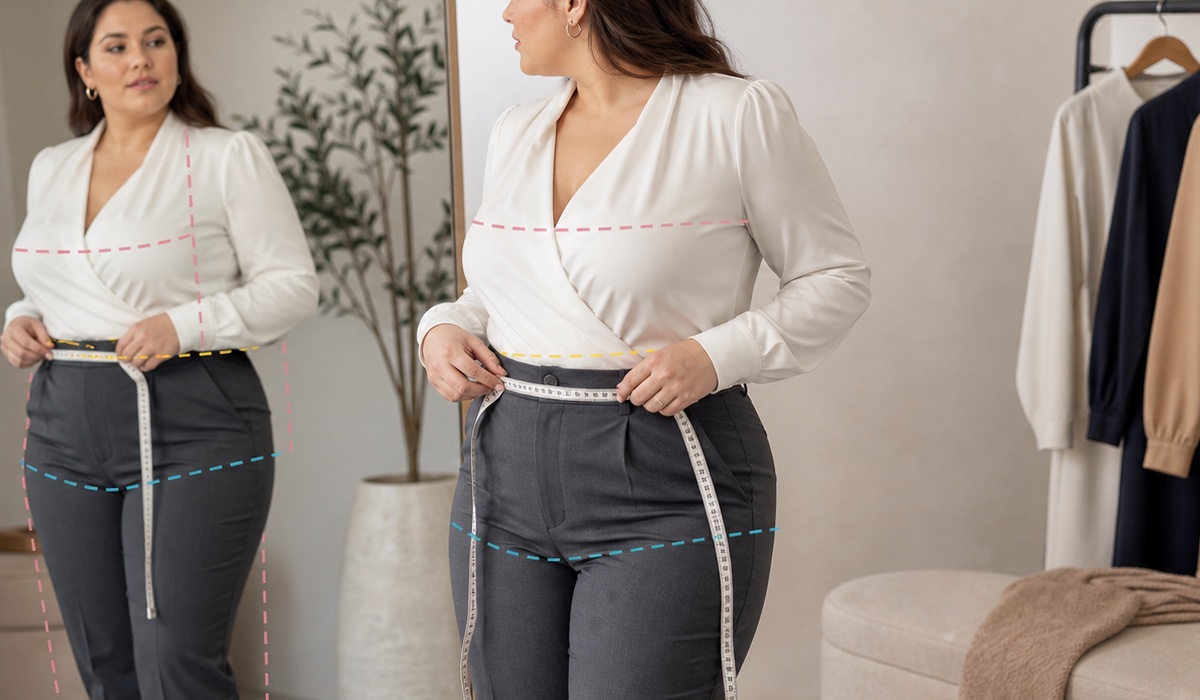
Ориентироваться стоит не на цифру, а на посадку в движении. Одежда сидит хорошо, если:
в плечах ничего не тянет и не съезжает назад;
нет поперечных складок в зоне груди или бедер;
низ изделия не задирается во время ходьбы;
вещь не пережимает талию, живот или верх рук;
силуэт выглядит собранным, а не натянутым.
Совет стилиста. Если модель красиво выглядит стоя, но садится плохо в приседании, наклоне или при ходьбе, это не ваша посадка. В качественной Plus Size одежде комфорт и линия силуэта должны совпадать.
Блок для изображения: чек-лист правильной посадки Plus Size, который показывает плечи, грудь, талию, бедра и низ изделия.
2. На что смотреть в первую очередь: крой и силуэт
Лучше всего садятся модели, которые повторяют линии тела без чрезмерного облегания. Для Plus Size часто работают платья Plus Size с запахом, А-силуэт, прямые брюки и жакеты с продуманной линией плеча. Для структурированного верха также полезны вещи, которые сочетаются с брюками больших размеров и не сбивают пропорции.
Приталенный силуэт работает, когда есть свобода в правильных зонах, а не жесткое перетягивание.
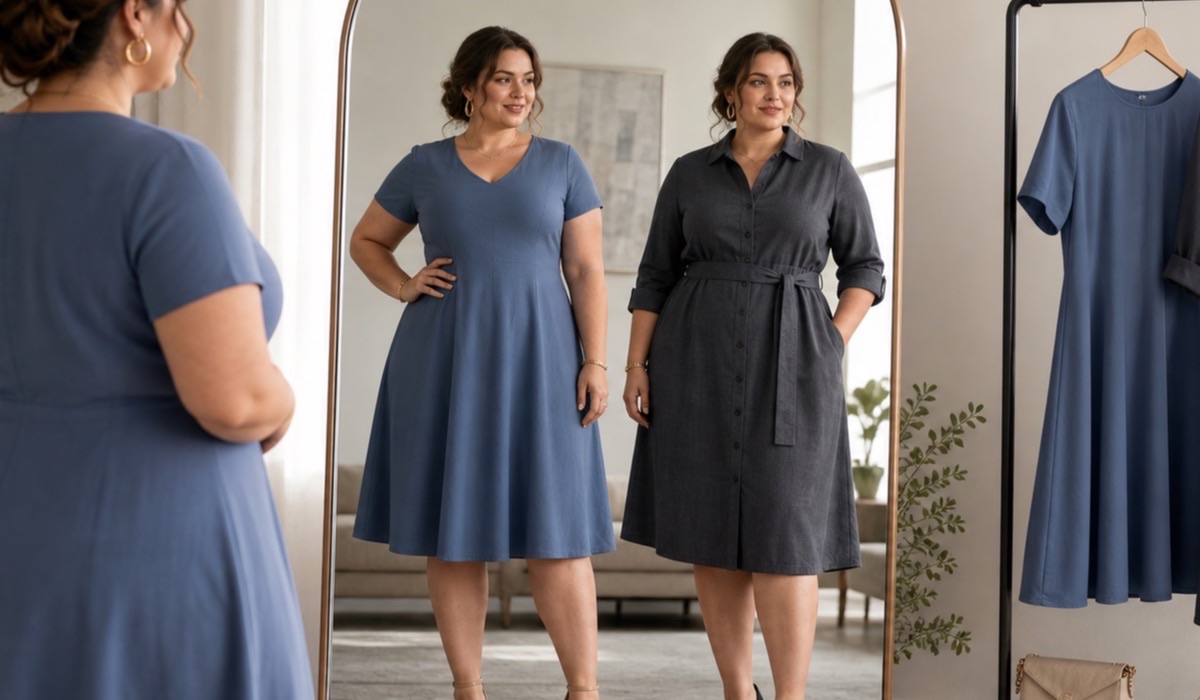
Платье с запахом мягко формирует талию и хорошо читается в движении.
А-силуэт выравнивает пропорции и не акцентирует лишний объем.
Прямой крой дает спокойный, собранный образ.
Жакет или кардиган с четкой линией плеча добавляют структуры.
Важно не прятать фигуру под бесформенностью. Слишком свободная одежда часто добавляет объема и делает образ тяжелее, особенно если в ней нет конструкции в плечах или талии.
Блок для изображения: сравнение силуэтов Plus Size: А-силуэт и платье-рубашка с поясом.
3. Какая ткань помогает посадке
Ткань сильно влияет на то, выглядит ли вещь аккуратно. Для Plus Size лучше работают материалы, которые держат форму, не просвечивают, не слишком тонкие и не слишком жесткие, но при этом остаются комфортными к телу. Если ищете базу для повседневного гардероба, обращайте внимание на вещи из раздела футболок и топов Plus Size или на легкие верхи с мягкой посадкой.
Хлопок хорошо дышит и подходит на каждый день.
Лен дает естественную легкость и спокойный силуэт.
Шелк или мягкие аналоги работают, когда нужна пластика без лишнего блеска.
Плотный трикотаж средней толщины лучше держит линию.
Лучше осторожнее относиться к слишком тонким тканям, грубой вязке, блестящим фактурам и материалам, которые подчеркивают каждую складку. Матовая поверхность и средняя плотность почти всегда выглядят спокойнее и чище.
4. Какие цвета и детали работают на фигуру
Цвет не решает все, но помогает собрать образ визуально. В Plus Size часто хорошо работают темные и насыщенные оттенки, а также вертикальные линии, которые вытягивают силуэт.
V-образный вырез визуально облегчает верх.
Вертикальные швы, рельефы и полосы добавляют сдержанной высоты.
Однотонные модели или спокойный принт не дробят фигуру.
Матовая фактура без блеска работает мягче.
Менее удачными часто бывают горизонтальные полосы, слишком контрастные принты и блестящие ткани в зонах, которые хочется сделать спокойнее. Если хочется цвета, лучше добавить его в аксессуар или в верхнюю часть образа.
5. Как подобрать размер без ошибки
Самая частая ошибка — покупать на глаз или ориентироваться только на привычный размер. У разных брендов сетка отличается, поэтому важны именно замеры тела и таблица конкретного магазина.
обхват груди;
обхват талии;
обхват бедер;
длина плеча;
желаемая длина изделия.
Если вещь обтягивает там, где не должна, берите больший размер только тогда, когда это не ломает крой. Если модель и так имеет правильную свободу, но жмет в груди или спине, это знак, что фасон вам не подходит. В таком случае лучше проверить условия доставки и обмена и возврата, чем мириться с неудачной посадкой.
6. Какие модели чаще всего садятся лучше
Если нужны вещи, которые легко встроить в гардероб, обращайте внимание на базовые модели с хорошей конструкцией. Для собранного повседневного образа полезно смотреть не только на костюмы Plus Size, но и на юбки Plus Size, блузы и верхнюю одежду, если нужна дополнительная структура.
Чаще всего хорошо садятся:
платья с запахом;
платья-футляры без чрезмерного облегания;
прямые или слегка зауженные брюки с правильной посадкой;
жакеты мягкого кроя;
блузы с V-вырезом и продуманной линией плеча.
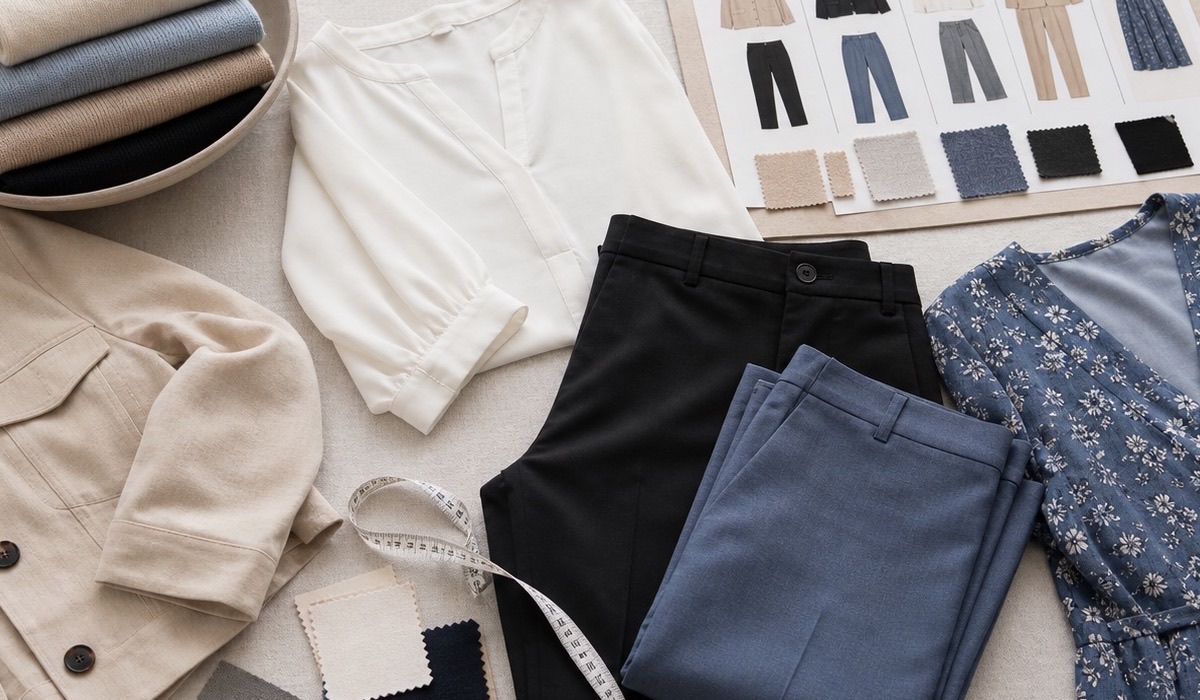
Для повседневного гардероба хорошо подойдут вещи, которые можно комбинировать между собой: комплект верх+низ, базовое платье, универсальные брюки, жакет или кардиган. Если хотите быстрее увидеть удачную формулу в готовом виде, снова вернитесь в лукбук и сравните длину верха, линию талии и пропорции низа.
Блок для изображения: подборка базовых вещей для Plus Size гардероба: верх, низ, жакет и ткани в одном кадре.
Если вы просматриваете онлайн-каталог, удобно начинать с категорий, где уже есть проверенная посадка: платья Plus Size, верхняя одежда, другие базовые вещи для ежедневных комплектов и готовые образы в каталоге. Так легче найти конструктивные модели, которые действительно садятся по фигуре.
Plus Size одежда действительно садится по фигуре тогда, когда вы оцениваете не только размер, но и силуэт, ткань, длину и посадку в движении. Лучшие модели не прячут тело, а гармонично его оформляют — без давления, перекосов и лишнего объема.
FAQ
Часто задаваемые вопросы
Какой фасон Plus Size самый универсальный?
Платье с запахом и прямые брюки с хорошей посадкой. Они легко комбинируются и обычно хорошо работают на разных типах фигуры.
Обязательно ли выбирать только темные цвета?
Нет. Темные оттенки действительно визуально собраннее, но яркие цвета тоже можно носить, если правильно расставить акценты.
Какая ткань лучше всего для Plus Size?
Чаще всего советуют хлопок, лен, шелк и плотный трикотаж средней толщины. Они лучше держат форму и комфортнее в носке.
Как понять, что размер не мой?
Если тянет в плечах, груди или бедрах, низ задирается или появляются поперечные складки, посадка неправильная.
Подходит ли oversize для Plus Size?
Да, но только структурированный. Бесформенный oversize часто добавляет объема и делает силуэт тяжелее.
Можно ли носить принты?
Да, лучше выбирать сдержанные или неконтрастные. Горизонтальные полосы и слишком активные принты лучше использовать осторожно.
Что делать, если онлайн-модель сидит неидеально?
Сравнить замеры, проверить посадку в движении и при необходимости воспользоваться условиями доставки, обмена или возврата, чтобы не оставлять неудачную вещь в гардеробе.