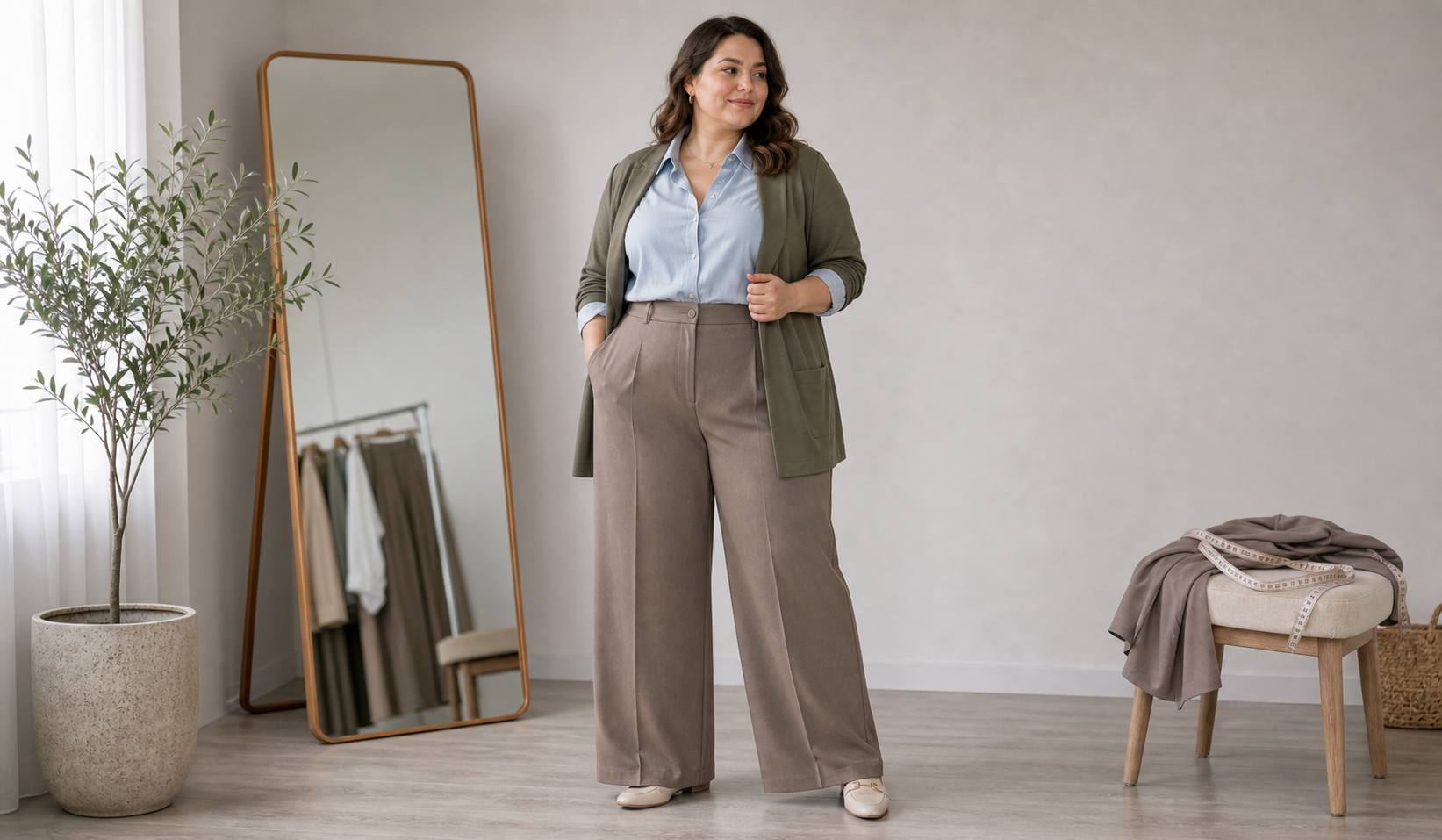
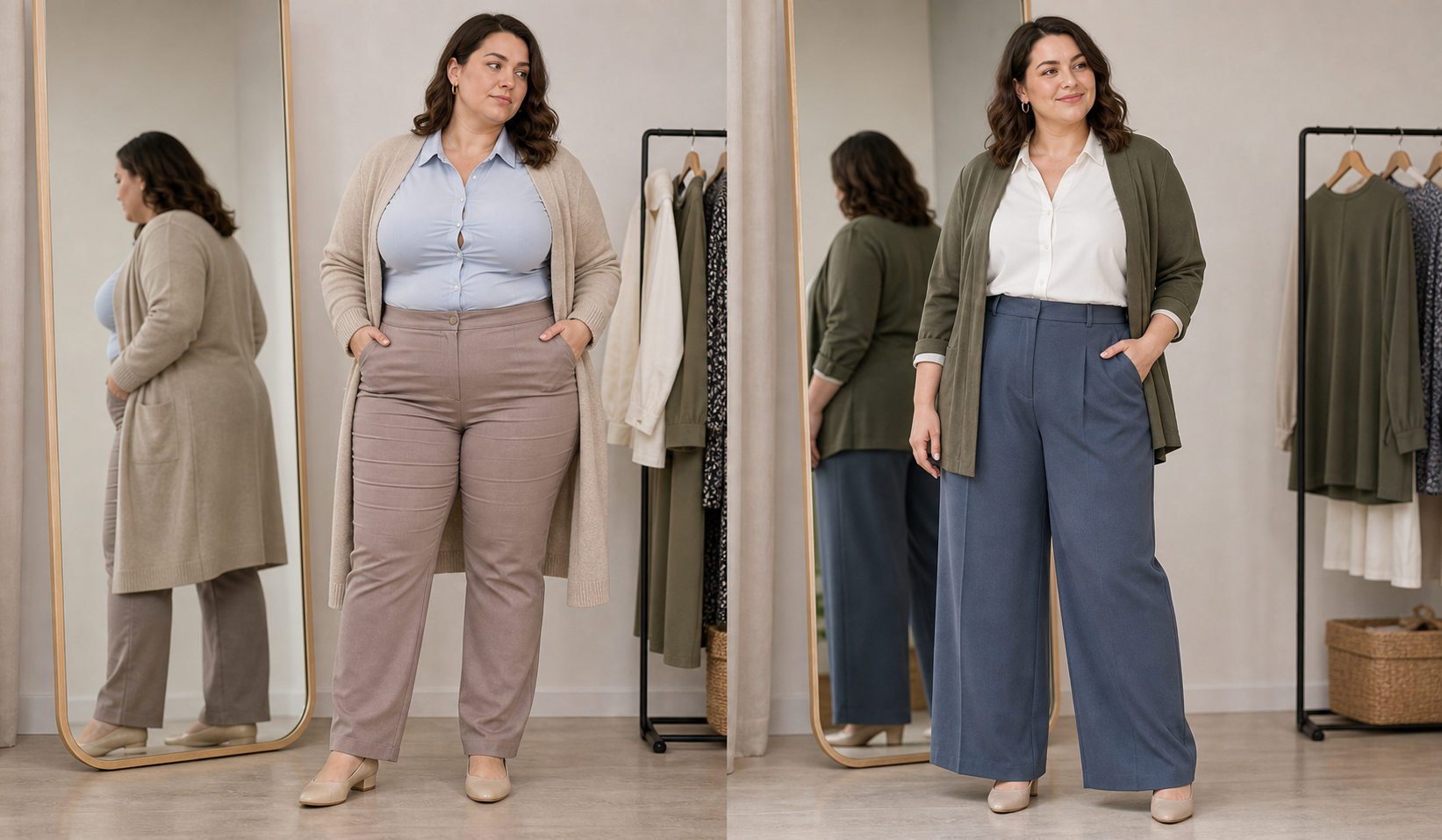
For Plus Size, it's not just the size that's important, but the fit: it's the fit that determines how a garment looks on your figure, whether it accentuates your proportions, and whether it's comfortable. However, a good fit is impossible without choosing the right size, so these two parameters work together.
What about Plus Size really makes a difference in the overall look
Fit is how a garment sits on the body: where the shoulders are, how the waist is, whether the fabric pulls at the chest or hips, and whether there are any creases. It's the fit that determines whether a garment flatters or detracts from the figure.
Size is important as a baseline. If you go too small, the garment will become deformed and emphasize tight areas. If you go too big, it can blur the silhouette and add unnecessary bulk. Therefore, in Plus Size, it's better to think not in terms of "larger or smaller," but rather in terms of whether the item fits my measurements and proportions.
Stylist's tip: If an item fits well in the shoulders, chest, and hips, but you tend to go up a size "to be safe," it's better to stick to your actual size. Overly loose clothing often doesn't conceal the figure, but rather exaggerates the silhouette.
Why you shouldn't choose Plus Size based solely on the number on the tag
Size charts vary among brands, and this is especially noticeable in Plus Size. The same size can fit differently depending on the cut, fabric, and proportions of the item. Therefore, relying solely on the number is a mistake.
It's better to look at:
chest, waist, and hip measurements;
length of the garment and sleeves;
type of fabric: does it hold its shape and drape smoothly;
construction of the garment: darts, shoulder fit, waist height, armhole width.
Typical Mistakes
Buying a size smaller in the hopes of "fitting in" Into it.
Opt for clothes that are too loose, so that nothing is tight.
Ignore the length of the top, pants, or sleeves.
Ignore that fabric can behave differently in the same style.
How to know if the fit is right
A good fit in Plus Size doesn't mean the item has to be tight. It should hold the shoulder line, not pull in too tightly across the chest, not bunch up horizontally at the stomach or hips, not bounce when you move, and maintain a clean silhouette.
Simply put: a good item in the right size doesn't fight with the body. It softly and carefully follows its contours.
What to consider when choosing
For dresses and blouses, the bust and shoulders are important.
For trousers and skirts, the hips and waist.
For jackets and coats, the sleeve length, shoulder line, and balance of the top and bottom.
What fit works best in Plus Size?
In most cases, a clean, thoughtful fit without extremes looks best: not too tight and not too bulky. It helps maintain proportions and create a put-together look.
High or mid-rise trousers and jeans often provide better support.
A softly fitted cut works better than a tight fit.
An A-line silhouette for dresses and skirts helps balance proportions.
A length that hits the hipbone or just below works well for tops, shirts, and sweaters.
How to combine
If the bottom is fuller, it's better to choose a more structured top.
If the top is loose, the bottom should hold its shape.
If the fabric is soft, a crisp cut is desirable.
Which fabrics are best for a good fit?
Fabric greatly influences how clothes fit. Fabrics that are too thin can accentuate contours, while fabrics that are too stiff can add volume and create a standing effect instead of draping.
Work best with:
moderately dense fabrics;
fabrics that hold their shape but don't feel stiff;
medium-weight knits;
fabrics with a soft, controlled fall.
How to choose the right size online
Start with the measurements, not the size name. You need to compare your measurements with the brand's chart and consider the specific item in front of you.
Take your bust, waist, hip, and, if necessary, leg or sleeve length measurements.
Compare them with the specific store's size chart.
If your measurements fall into different sizes, use the largest critical measurement for that category of item as a guide.
Look at the fit description: loose, semi-fitted, or fitted.
Check the length of the item, especially for dresses, jackets, and trousers.
Stylist's tip: For plus size wearers, it's better to choose a garment that supports your figure than one that tries to hide it with excessive looseness.
Is it better to go up a size or look for a different one? Fit
If the choice is between a larger size and a better fit, it's usually worth looking for the better fit. A larger size may not fix the problem, but create a new one: a loose shoulder, extra volume in the back, a poorly defined waist, or a heavy hemline.
When a larger size makes sense
if you need freedom of movement in a dense fabric;
if the style is designed to be semi-loose;
if you consciously want a softer silhouette.
When a better fit is more important
in jackets and coats;
in sheath dresses;
in trousers with a defined waist;
in blouses and shirts where the shoulders and chest are critical.
Conclusion
In plus size, fit is more important than the size number, but without the correct size, it's ineffective. The best results come from a combination of accurate measurements, attention to cut, and fabric choices that support the figure without adding unnecessary bulk.
If you're looking for clothes that truly fit well, look for thoughtful construction, not just the label. This makes it easier to find not just your size, but your fit.
Frequently Asked Questions
Can I rely solely on the size on the tag?
No. Different brands have different sizing charts, so your measurements and the fit of a specific style are more important.
What should I do if my bust and hips are different sizes?
Choose an item based on the larger critical measurement and check if the style allows for adjustments in the other area.
Is it better to order a size larger for comfort?
Not always. Clothes that are too loose can add bulk and ruin your silhouette. It's best to look for a style that allows for freedom of movement without being too baggy.
What is the best fit for plus-size pants?
A high or mid-rise often works best if it holds the waist well and doesn't squeeze the hips.
What fabrics fit best on a plus-size figure?
Preferably moderately thick fabrics that hold their shape but aren't too stiff. Medium-weight knits also work well.
What's more important for a dress: size or fit?
Fit and fit determine how a dress will look on your body, but the size should match your measurements.
Where to look for the best fit?
Start with the Plus Size dress, plus size pants, blouses, and jacket categories. In the description, pay attention to the measurements, fabric, length, and fit type.