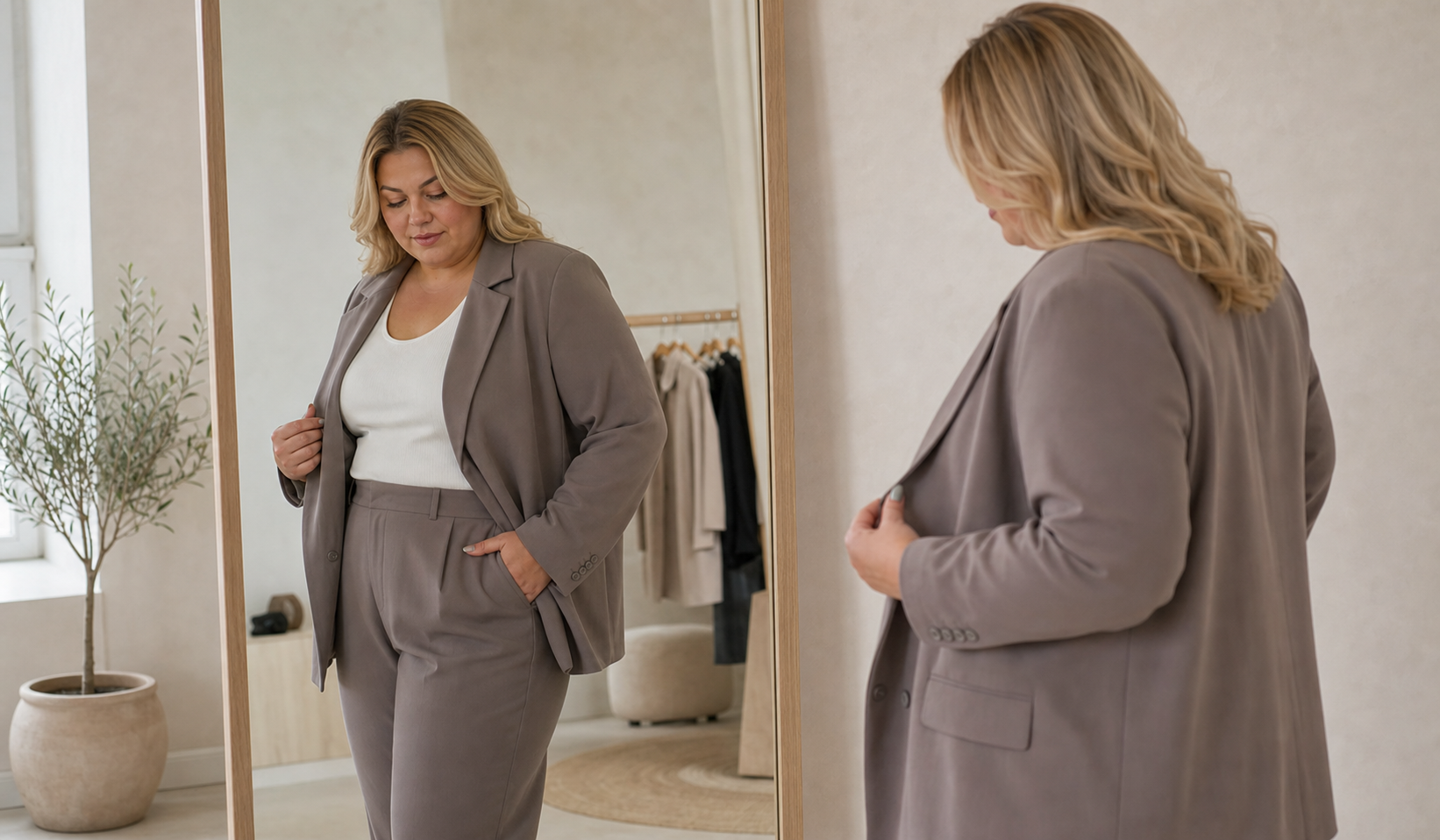
Почему одна и та же вещь по-разному сидит на разных фигурах
Почему одна и та же вещь по-разному сидит на разных фигурах
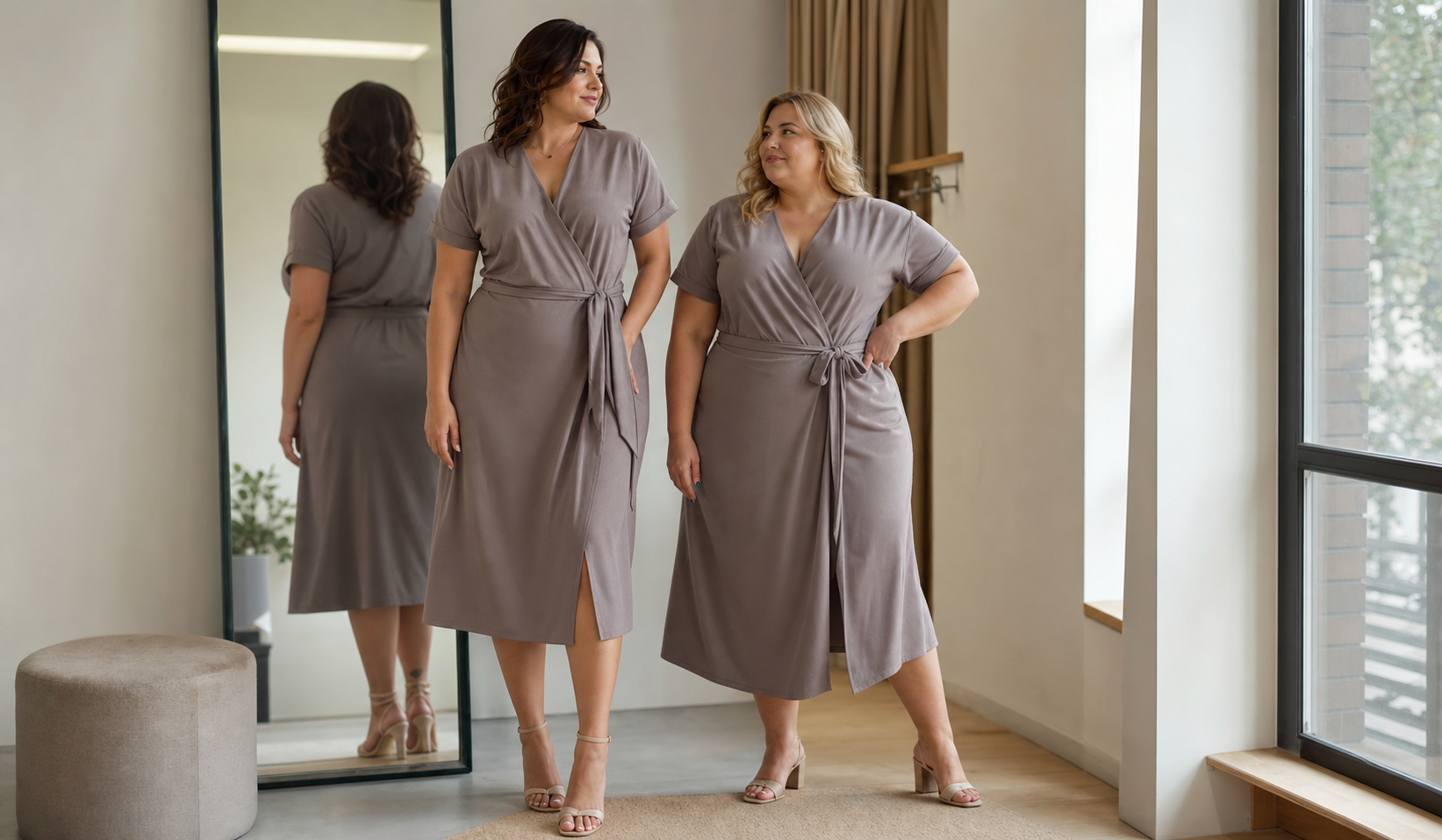
Одна и та же вещь может по-разному сидеть на разных фигурах, потому что одежда взаимодействует не с размером на бирке, а с пропорциями тела, ростом, посадкой плеч, длиной торса и свойствами ткани. Поэтому при выборе одежды важно смотреть не только на цифру, но и на крой, замеры и силуэт, а также сверяться с ассортиментом в каталоге Plus Size и подбирать идеи в лукбуке.
Почему посадка отличается
Одно и то же платье, блуза или жакет может выглядеть совсем по-разному на двух женщинах одного размера. Причина проста: вещь “садится” не на абстрактный размер, а на реальные объемы, пропорции и движение тела. На результат влияют и конструкция изделия, и особенности фигуры, и то, как ткань ведет себя на разных участках.
Что именно влияет на посадку
Пропорции тела
У двух женщин может быть одинаковый обхват груди, но разная ширина плеч, длина ног или высота талии. Именно поэтому платье может подчеркнуть талию у одного человека и визуально “съесть” ее у другого.
Разный рост
На высокой и невысокой фигуре одна и та же вещь воспринимается по-разному из-за длины изделия и расположения линий кроя. То, что на одной женщине выглядит как идеальное макси-платье, на другой может укорачивать силуэт.
Тип фигуры
Фасон, который хорошо работает на фигуре с выраженной талией, может иначе садиться на тело с более прямыми линиями или большей разницей между плечами и бедрами. Поэтому стилисты всегда смотрят не только на размер, но и на силуэт.
Конструкция модели
Посадку формируют плечевой шов, пройма, ширина спинки, высота талии, глубина выреза и форма рукава. Если хотя бы один из этих элементов не совпадает с анатомией тела, одежда выглядит иначе.
Ткань
Материал сильно меняет посадку: плотная ткань держит форму, мягкая драпируется, эластичная подстраивается под тело, а жесткая может создавать заломы. На внешний вид также влияют износ, трение и свойства волокна.
Освещение и зеркало
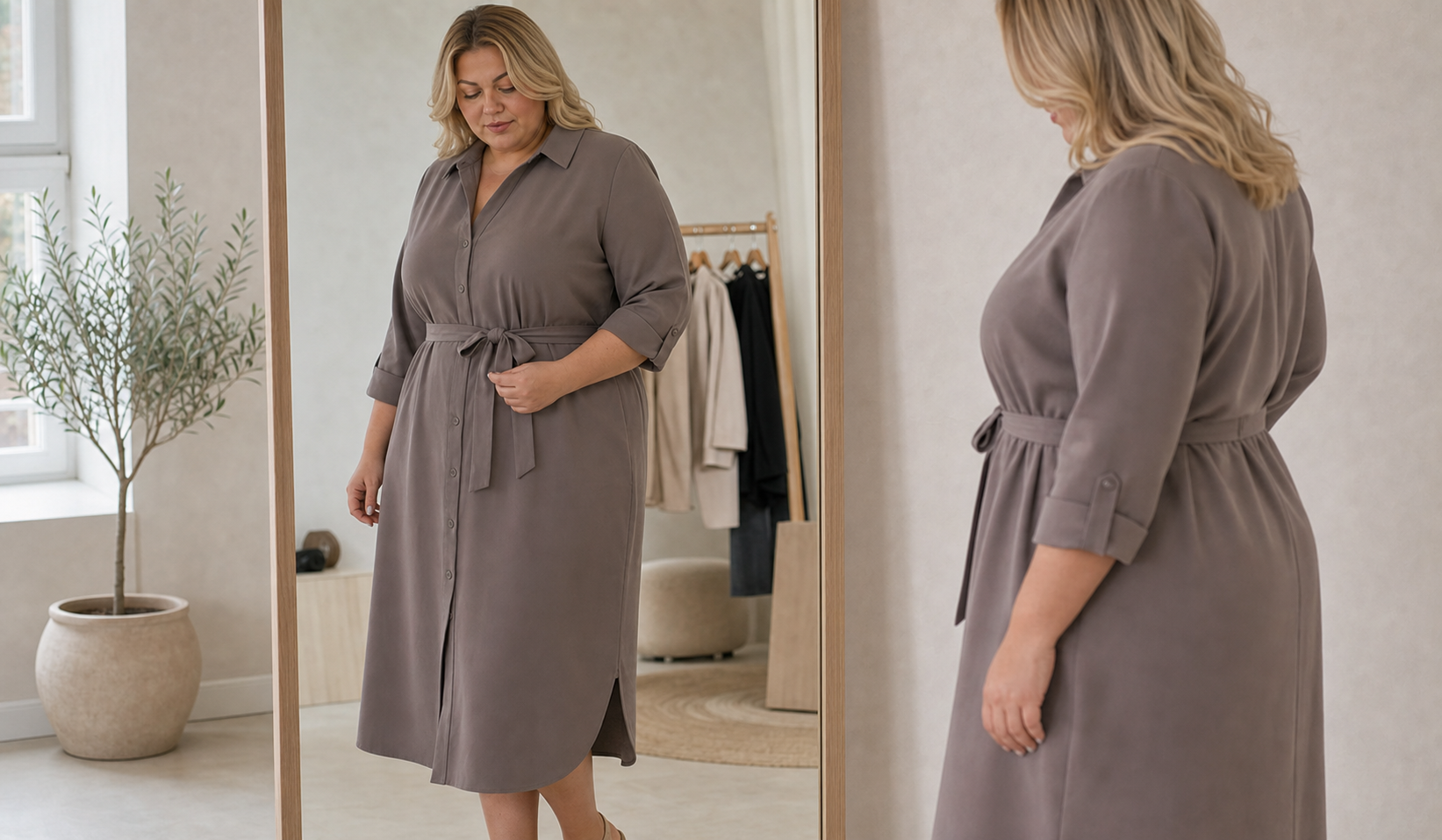
В примерочной восприятие посадки может искажаться из-за освещения, угла зеркала и даже психологического ощущения человека в момент примерки. Поэтому вещь иногда кажется “не вашей” только из-за условий оценки.
Почему это особенно важно в Plus Size
В Plus Size неправильная посадка заметнее, потому что вещь должна не просто налезть, а балансировать пропорции. Если изделие жмет в груди, собирается в животе или тянет в плечах, силуэт сразу теряет аккуратность.
Советы стилиста
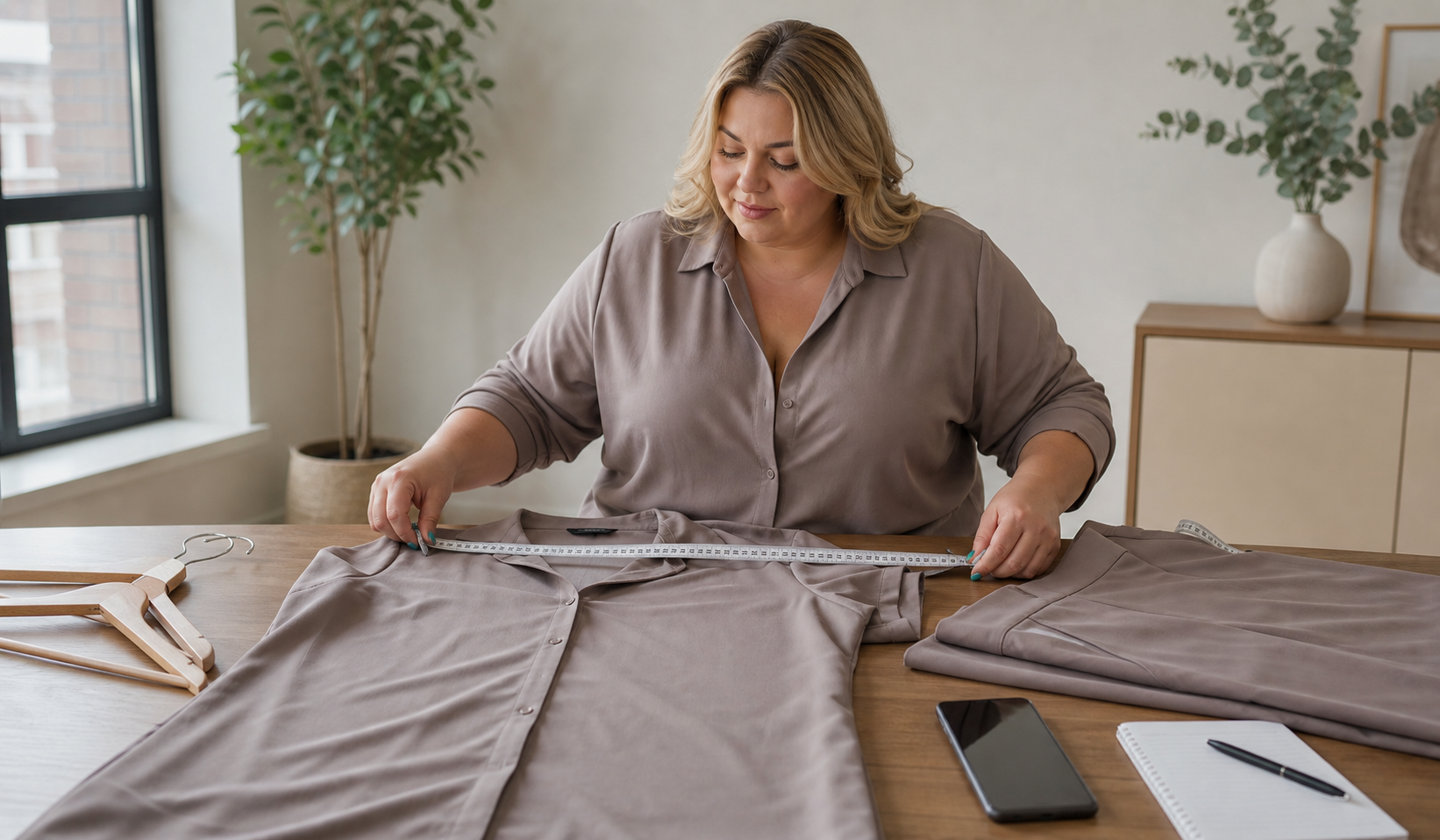
Ориентируйтесь на замеры изделия. Размер на бирке не показывает полной картины.
Проверяйте длину рукава и изделия по спине. Именно эти параметры часто решают, будет ли вещь удобной.
Для нестандартной фигуры лучше работают продуманные фасоны. Запах, А-силуэт, вертикальные линии и регулируемая талия обычно дают лучшую посадку.
Лучше иметь несколько вещей, которые сидят идеально. Набор почти подходящих вещей редко выглядит так же хорошо, как одна действительно удачная модель.
Как понять, сидит ли вещь именно на вас
Во время примерки обращайте внимание не только на то, застегивается ли вещь. Важны также посадка в плечах, натяжение на груди и спине, поведение подола и общая гармония силуэта.
Что проверить
не тянет ли ткань на груди и спине;
не “плывет” ли линия плеча;
не подскакивает ли подол во время движения;
не расходятся ли пуговицы;
не образуются ли лишние заломы в зоне живота или бедер.
Типичные ошибки
ориентироваться только на цифру размера;
покупать вещь “на потом”, если сейчас она уже сидит некомфортно;
игнорировать разницу между эластичной и неэластичной тканью;
оценивать посадку только по одному зеркалу или одному ракурсу.
Плотный трикотаж — если нужна эластичность и комфорт.
Вискоза с добавками — если нужна мягкая драпировка.
Хлопок с эластаном — для базовых вещей на каждый день.
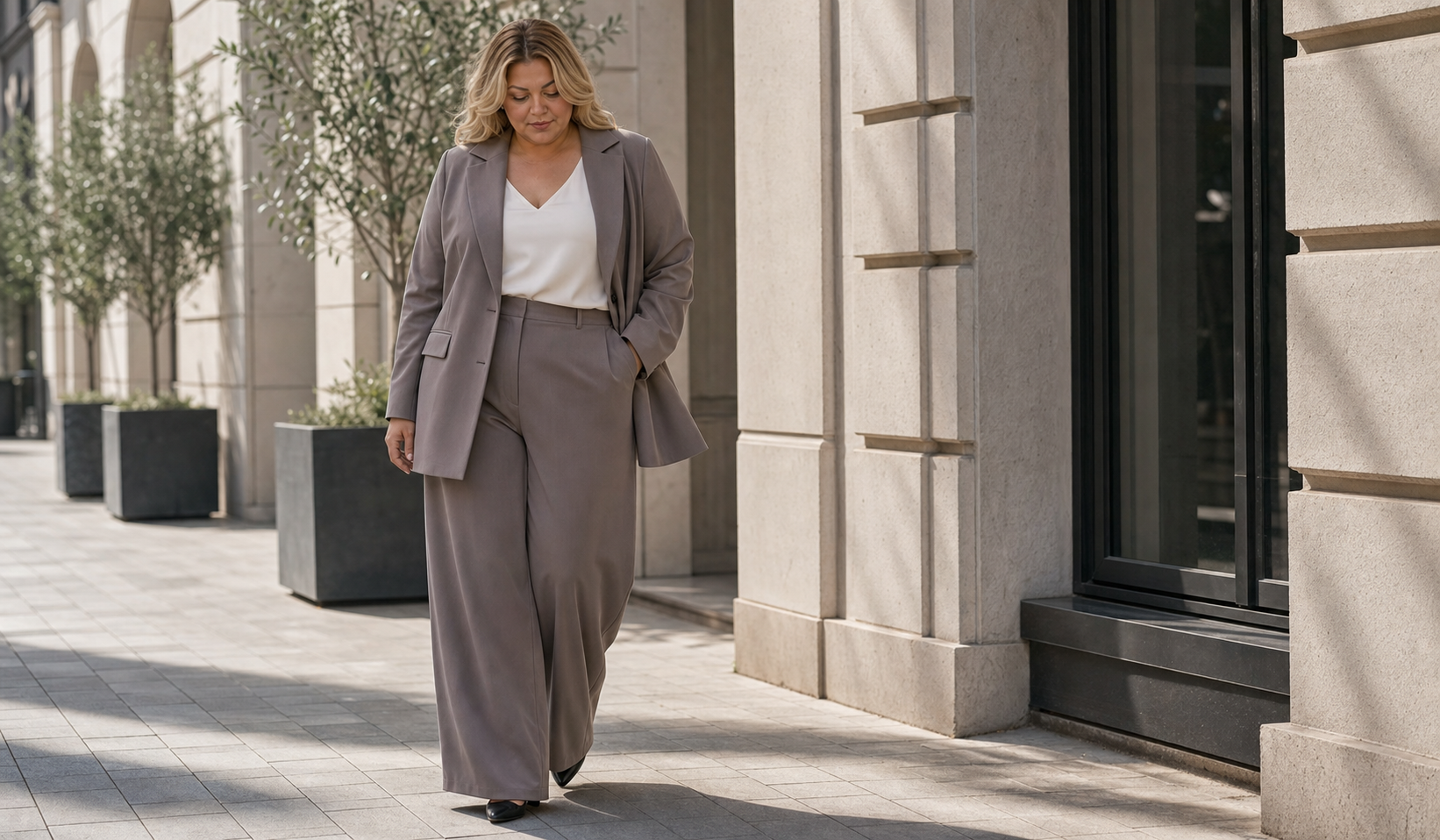
Плотные костюмные ткани — для жакетов и брюк, где важна форма.
Как помочь выбрать вещь онлайн
В карточке товара желательно указывать не только размер, но и обхваты, длину изделия, посадку модели и особенности ткани. Это снижает риск ошибки и помогает понять, как вещь сядет на разные фигуры.
Потому что размер не учитывает разницу в пропорциях тела, длине торса, ширине плеч и форме бедер.
Почему вещь на модели выглядит лучше?
Модель может иметь другие пропорции, рост и посадку, а саму вещь часто стилизуют и подбирают под съемку.
Влияет ли ткань на посадку?
Да. Эластичные ткани подстраиваются лучше, а более плотные держат форму и иначе ложатся по фигуре.
Как понять, что вещь мала?
Если тянет в плечах, расходится на груди, подскакивает подол или образуются заломы там, где их быть не должно.
Какие фасоны самые универсальные для Plus Size?
Часто хорошо работают платья на запах, А-силуэт, прямые жакеты и брюки с высокой посадкой.
Можно ли ориентироваться только на бирку с размером?
Нет. Надежнее смотреть на замеры изделия, ткань и посадку конкретной модели.
Почему в примерочной одежда иногда кажется хуже?
На это влияют зеркало, освещение, угол обзора и психологическое восприятие себя в момент примерки.
Одна и та же вещь по-разному сидит на разных фигурах, потому что одежда всегда взаимодействует с пропорциями, ростом, кроем и тканью. Для Plus Size лучшая стратегия — выбирать не просто свой размер, а фасон и посадку, которые работают именно с вашими параметрами, и при необходимости уточнять детали через контакты.