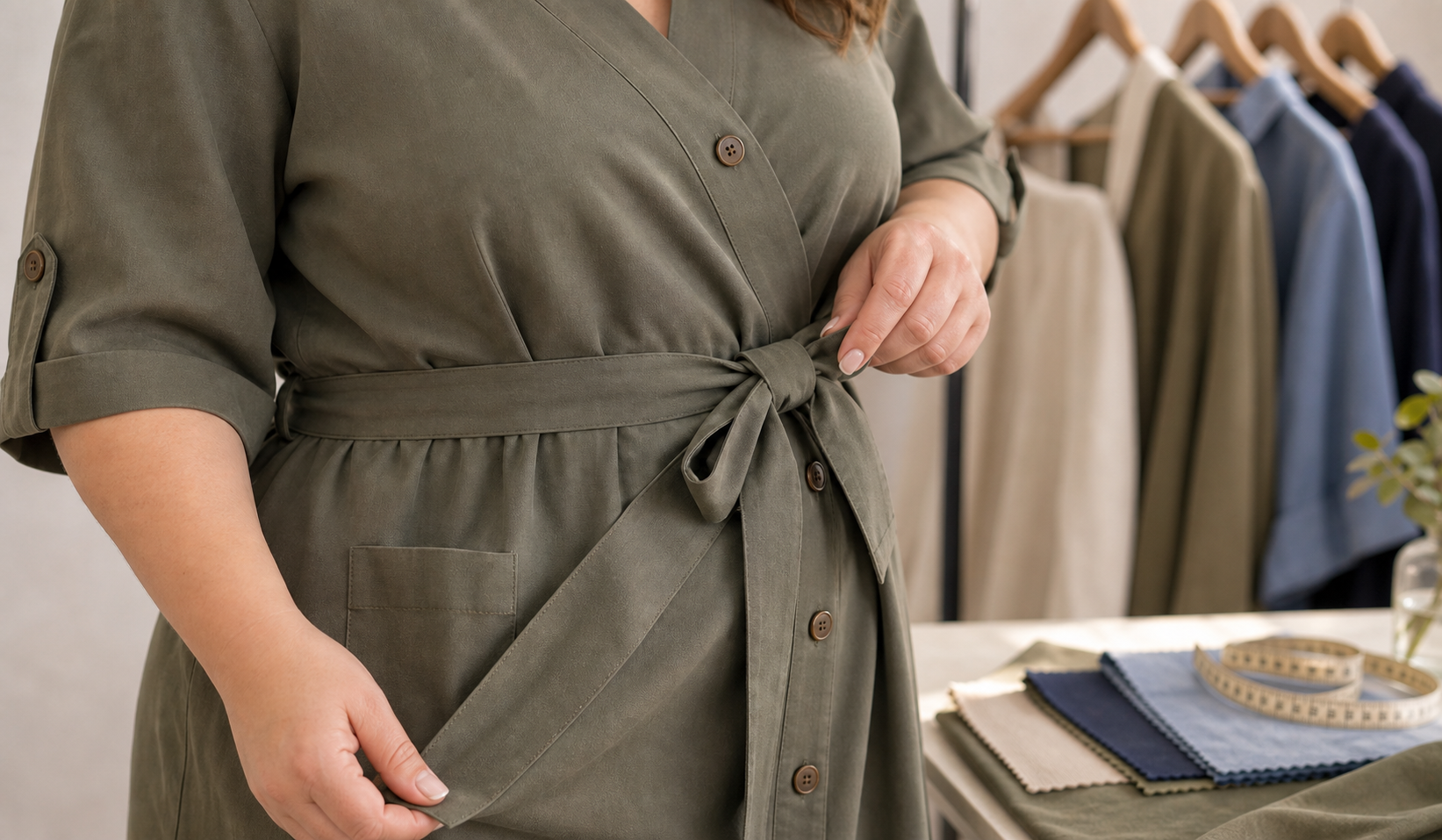
Warum Fotos von echten Models für Plus-Size-Kundinnen wichtiger sind als perfekte Studioaufnahmen.
Warum Fotos von echten Models für Plus-Size-Kundinnen wichtiger sind als perfekte Studioaufnahmen.
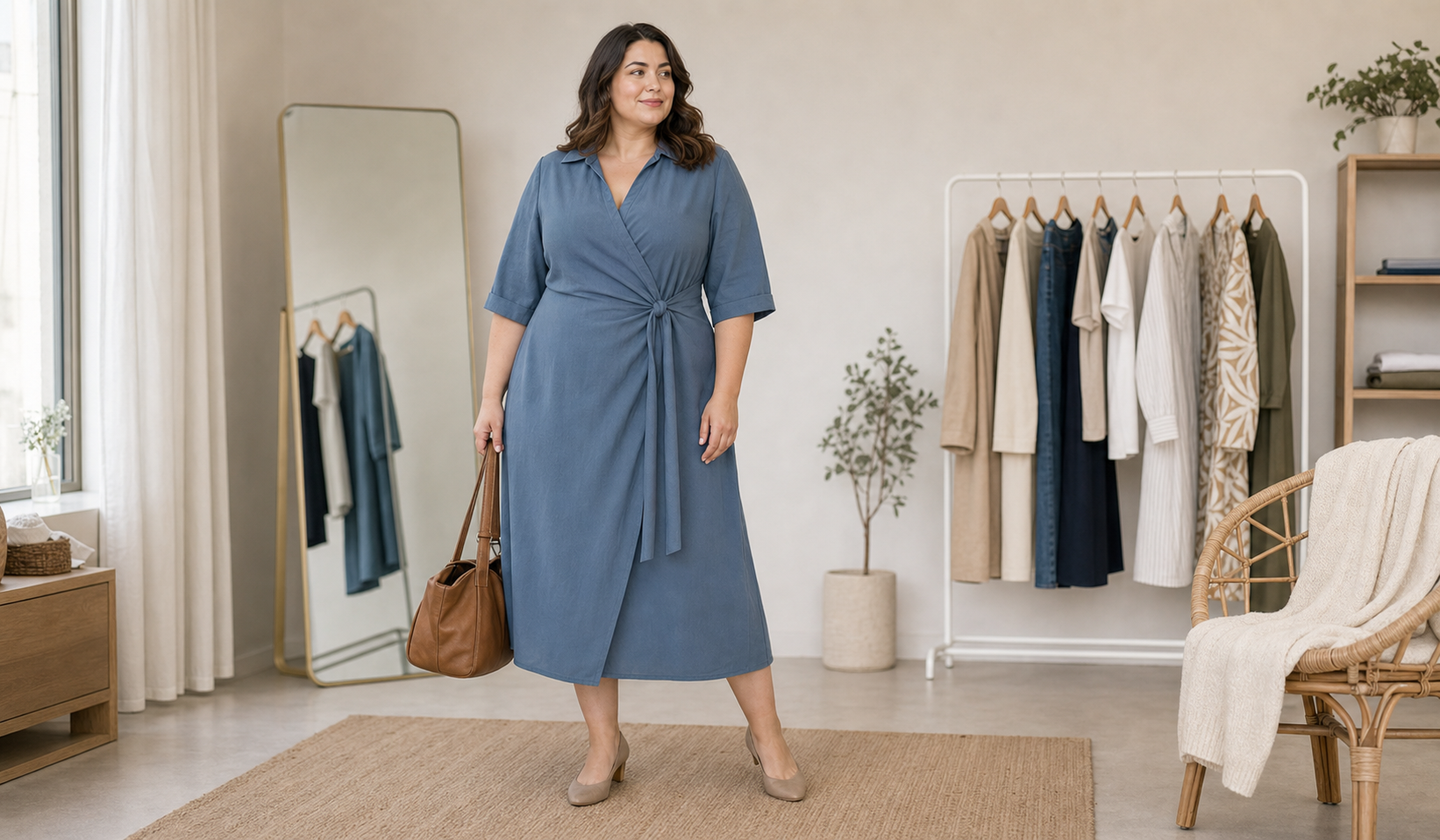
Fotos von echten Plus-Size-Models helfen dem Kunden, nicht ein abstraktes Bild zu sehen, sondern die tatsächliche Passform von Plus-Size-Kleidung an einem echten Körper. Diese Aufnahmen zeigen Länge, Volumen und den Fall des Stoffes und vermitteln so einen authentischeren Eindruck vom Kauf.
Warum Plus-Size-Kundinnen Ehrlichkeit mehr schätzen als ein perfektes Foto
Im Plus-Size-Segment ist ein Foto oft wichtiger als eine Produktbeschreibung.
Eine Kundin muss verstehen, wie ein Kleid, eine Hose oder eine Jacke an Körperformen aussieht, die ihrer eigenen ähneln: Brust, Bauch, Hüften, Arme, Taille und Schultern.
Wenn ein Geschäft Kleidung nur an sehr schlanken Models oder auf übermäßig retuschierten Fotos präsentiert, kann sich die Kundin nicht mit dem Artikel identifizieren.
Misstrauen entsteht: Wurden die Falten versteckt? Wurde der Stoff hinten festgesteckt? Ist der Schnitt wirklich für große Größen geeignet?
Ähnliche Proportionen. Die Kundin sieht, wie das Kleidungsstück an ihrem Körper sitzt, nicht nur nach einer willkürlichen Norm.
Echte Passform. An einem echten Körper sieht man, wo der Stoff weich fällt und wo er spannen könnte.
Weniger Unsicherheit vor dem Kauf. Die Fotos entsprechen der Realität und erleichtern die Kaufentscheidung, insbesondere in den Kategorien Kleider und Anzüge in großen Größen.
Respekt für die Kundin. Die Marke zeigt, dass Frauen mit großen Größen keine Ausnahme sind, sondern vollwertige Kundinnen.
Emotional Aspekt: Wie authentische Fotos Vertrauen und Selbstwertgefühl beeinflussen
Fotos von echten Models dienen nicht nur einem kommerziellen Zweck. Sie vermitteln der Kundin das Gefühl: „Mode ist auch für mich gemacht.“ Dies ist besonders wichtig für Frauen, die jahrelang nur einen einzigen Körpertyp in der Werbung gesehen haben.
Eine lebendige Pose, ein natürliches Lächeln, Bewegung, sanftes Licht und minimale Retusche schaffen Nähe. Die Kundin sieht kein unpersönliches Studiofoto, sondern ein Bild, in dem sie sich leichter wiedererkennen kann: bei der Arbeit, beim Spaziergang, in einem Meeting oder bei einer Feier. Vorgefertigte Bilder in einem Lookbook eignen sich hervorragend für diese Wahrnehmung.
Stärkung des Selbstwertgefühls. Realistische Körperformen im Bildausschnitt normalisieren unterschiedliche Körpertypen.
Höhere Kundenbindung. Kunden kehren eher zu einer Marke zurück, die sie ohne Scham zeigt.
Emotionale Bindung. Das Foto wird nicht nur zu einer Produktpräsentation, sondern zur Geschichte einer Frau, die der Kundin ähnelt.
Weniger Enttäuschung. Die Erwartungen an das Produkt werden realistischer.
Praktischer Aspekt: Passform, Größenangaben und weniger Retouren
Für einen Online-Shop wirken sich realistische Fotos direkt auf die Anzahl der Größenfehler aus.
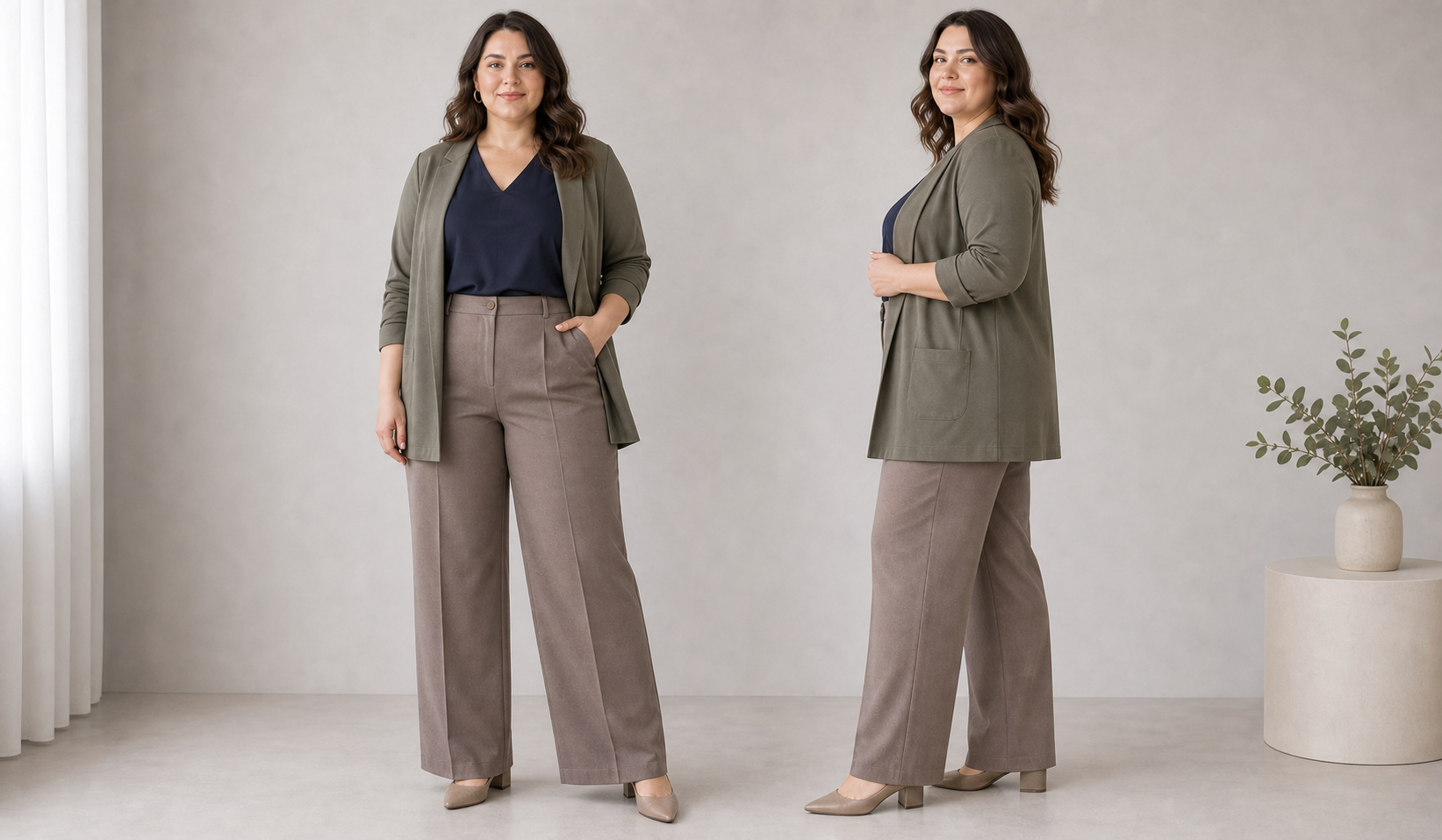
Wenn eine Kundin ein Kleidungsstück in voller Länge, von der Seite, in Bewegung und an einem Model mit den angegebenen Maßen sieht, kann sie die Passform besser beurteilen, insbesondere bei der Auswahl von Jacken und Cardigans.
Es ist besonders wichtig, mehr als nur die Frontansicht zu zeigen. Seiten- und Dreiviertelansichten helfen, das Volumen im Brust-, Bauch- und Hüftbereich hervorzuheben.
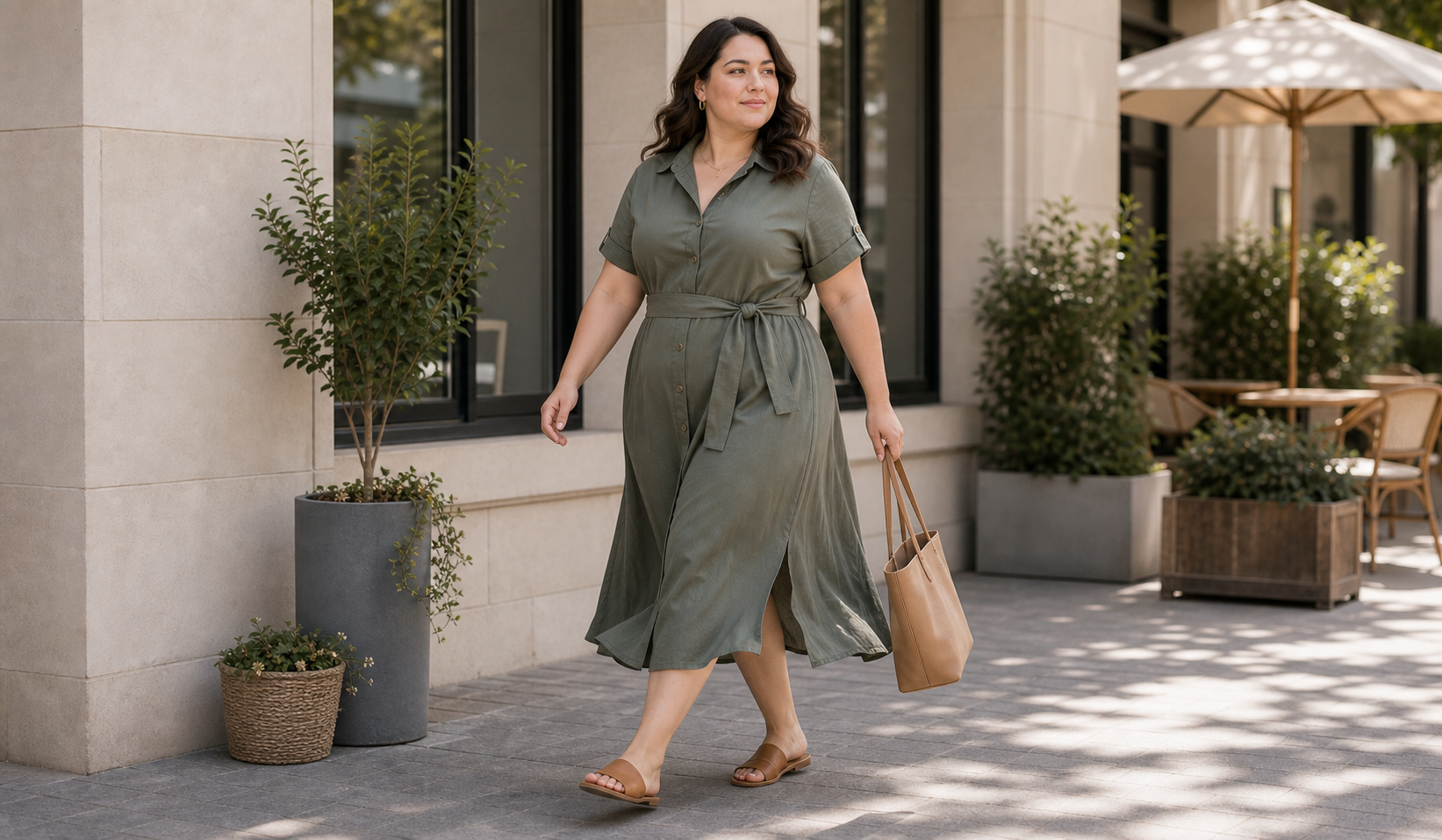
Eine bewegte Aufnahme zeigt, ob das Kleid hochrutscht, ob sich der Verschluss löst oder ob der Stoff beim Gehen spannt.
Ganzkörperansicht. Vermittelt einen Eindruck von der Länge des Kleides, der Hose, der Ärmel und der Jacke.
Seitenansicht. Zeigt, wie das Kleidungsstück an Bauch, Gesäß und Hüfte.
Dynamische Pose. Zeigt Komfort, Bewegungsfreiheit und die Funktionalität des Materials.
Maße des Models. Vergleichen Sie sich mit dem Foto und wählen Sie die richtige Größe.
Echte Models vs. perfekte Studiofotos
Studiofotos sind wichtig: Sie zeigen Farbe, Form, Details und die Klarheit des Katalogs. Enthält die Karte jedoch nur das „perfekte“ Foto ohne die tatsächliche Passform, fehlt der Kundin mit Plus-Size die wichtigste Antwort: Wie sieht dieses Kleidungsstück an mir aus? Dies ist entscheidend für Plus-Size-Anzüge, Kleider und Oberbekleidung.
Kriterien
Echte Plus-Size-Models
Ideale Studiofotos
Körpertyp
Zeigen Sie unterschiedliche Proportionen und natürliche Formen.
Erzeugen oft eine einheitliche, übermäßig perfektionierte Silhouette.
Selbstbewusstsein
Der Käufer sieht die tatsächliche Passform und kann so leichter entscheiden.
Kann den Verdacht auf Retusche oder versteckte Designelemente aufkommen lassen. Mängel.
Größeneinschätzung
Länge, Volumen und Bewegungsfreiheit sind leichter zu beurteilen.
Die Passform bei Plus-Size-Figuren ist schwer vorherzusagen.
Emotionale Wirkung
Fördert die Selbstakzeptanz und bringt Mode näher an Sie heran.
Kann das Gefühl verstärken, dass Ihre Figur „nicht ganz perfekt“ ist.
Wie man Plus-Size-Models fotografiert, damit die Fotos dem Kunden helfen
Plus-Size-Mode-Shootings sollten nicht nur schön, sondern auch nützlich sein.
Ziel ist es, Passform, Stoff, Details, Bewegungsfreiheit und die tatsächliche Größe des Kleidungsstücks an der Figur zu zeigen, insbesondere bei Blusen und Hemden.
Beleuchtung und Winkel
Weiches, diffuses Licht. Es betont die Form und erzeugt keine harten Schatten.
Fotografieren Sie leicht von oben oder auf Augenhöhe. Dadurch wirkt die Figur natürlich und proportional.
Mehrere Winkel. Vorder-, Seiten-, Rück- und Dreiviertelansicht sind das Minimum für eine aussagekräftige Karte.
Keine aggressive Retusche. Passen Sie Farbe und Beleuchtung an, nicht die Körperform.
Posen und Präsentation
Aufnahmen, auf denen das Model natürlich steht, einen Schritt macht, sich hinsetzt, sich dreht oder mit der Kleidung interagiert, sind am besten geeignet. So sieht der Kunde kein statisches Bild, sondern wie sich das Kleidungsstück im Alltag verhält: Sitzt die Plus-Size-Hose bequem, ist die Bluse eng, rutscht das Kleid hoch?
Eine Gewichtsverlagerung auf ein Bein lässt die Pose natürlicher wirken;
Eine leichte Asymmetrie der Arme und Schultern trägt dazu bei, dass die Pose natürlicher wirkt.
Dynamik in der Silhouette;
Eine Aufnahme im Sitzen zeigt, ob der Gürtel eng anliegt und die Länge bequem ist;
Bewegung hilft, die Elastizität, Dichte und den Fall des Stoffes zu beurteilen.
Wie ein Plus-Size-Geschäft eine visuelle Strategie entwickeln kann
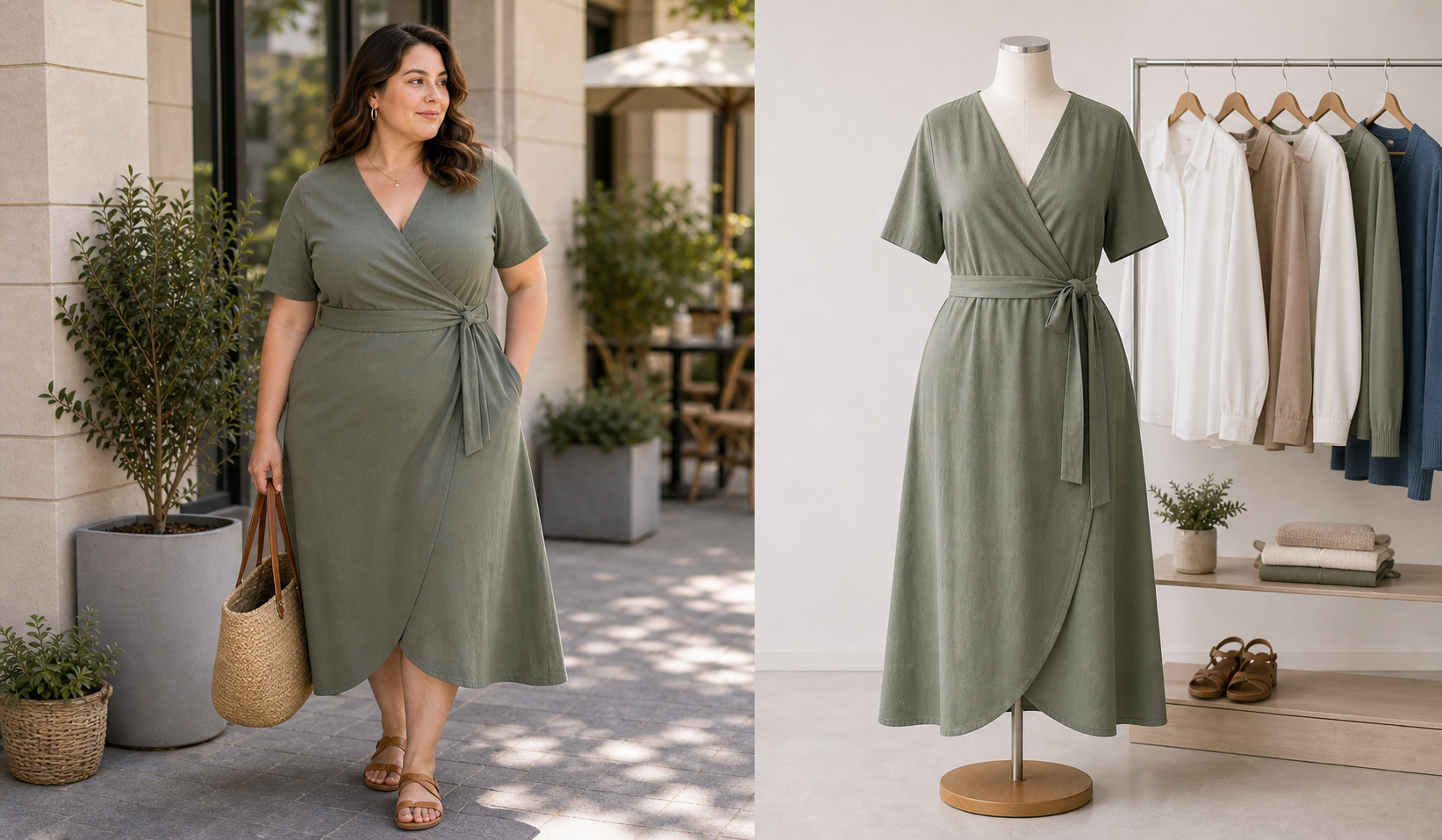
Eine starke visuelle Strategie kombiniert Produktfotos, Fotos von Models, Stoffdetails und lebendige Bilder. Produktfotos zeigen Passform, Nähte und Material, während das Model das Wichtigste erklärt - wie das Kleidungsstück sitzt. Deshalb ist es wichtig, nicht nur Basics, sondern auch Plus-Size-Oberbekleidung zu präsentieren.
Zeigen Sie verschiedene Körpertypen. Ein Model kann nicht das gesamte Plus-Size-Segment repräsentieren.
Geben Sie die Maße des Models an. Größe, Maße und die Größe des abgebildeten Artikels beseitigen Zweifel.
Fügen Sie Fotos aus dem Alltag hinzu. Eine Stadt, ein Büro, ein Café oder ein Spaziergang helfen Ihnen, sich den fertigen Look vorzustellen.
Ersetzen Sie die Realität nicht durch Retusche. Ein authentisches Foto vermittelt Vertrauen, nicht nur ein Produkt.
Zeigen Sie Details. Stoff, Verschlüsse, Taschen, Ärmel und Gürtel sollten gut sichtbar sein.
Native Übergänge eignen sich besser für Blogs und Kataloge: Nach dem Fototeil können Sie den Leser einladen, Kleider, Anzüge, Hosen oder Oberbekleidung in großen Größen anzusehen. Solche Übergänge sollten jedoch nur dann hinzugefügt werden, wenn präzise Abschnitts-URLs oder fertige Produktauswahlen vorhanden sind.
Fazit
Für eine Kundin mit großen Größen ist ein Foto mehr als nur ein schönes visuelles Element; es schafft Vertrauen und ermöglicht ihr eine Auswahl. Echte Models, natürliche Posen, sanftes Licht, verschiedene Blickwinkel und minimale Retusche helfen Kundinnen, Plus-Size-Mode so zu sehen, wie sie im Alltag aussieht.
Wenn eine Marke echte Körper und eine faire Passform zeigt, reduziert das die Unsicherheit vor dem Kauf, verringert Retouren und stärkt die Kundenbindung. Dies ist besonders im Plus-Size-Segment wichtig: Frauen sollten nicht raten müssen, sondern sehen, dass die Mode wirklich für sie gemacht ist. Am deutlichsten wird dies in Lookbooks mit fertigen Outfits.
Häufig gestellte Fragen
Warum erhöhen Fotos von echten Plus-Size-Models die Anzahl der Retouren?
Verkauf?
Weil die Kundin die Passform an einer Figur sieht, die ihrer eigenen ähnelt. Sie kann Länge, Volumen, Stoff und Tragekomfort besser beurteilen und trifft so sicherere Kaufentscheidungen, insbesondere bei Kleidern und Plus-Size-Hosen.
Ist es notwendig, nur Plus-Size-Models zu fotografieren?
Wenn ein Geschäft Plus-Size-Kleidung verkauft, sind solche Fotos erforderlich. Sie können verschiedene Modeltypen kombinieren, aber eine Plus-Size-Kundin sollte ein Beispiel an einer Figur sehen, die ihrer eigenen ähnelt.
Sie zeigen Kleidung nur an dünnen Models, retuschieren die Figur übermäßig, zeigen keine Seitenansichten, geben die Maße des Models nicht an und verbergen, wie sich der Stoff bewegt.