Wie man Kleidung richtig aufbewahrt, damit sie nicht ausleiert oder ihre Form verliert
Wie man Kleidung richtig aufbewahrt, damit sie nicht ausleiert oder ihre Form verliert
Die richtige Aufbewahrung von Kleidung in großen Größen verhindert, dass sie ausleiern, ihre Form behalten und länger gepflegt aussehen. Dabei spielen Stoffart, Falttechnik, Kleiderbügel und die Gegebenheiten im Kleiderschrank eine wichtige Rolle. Wenn Sie schnell durch die Hauptkategorien navigieren möchten, beginnen Sie mit dem Katalog für Übergrößen oder sehen Sie sich die fertigen Looks im Lookbook an.
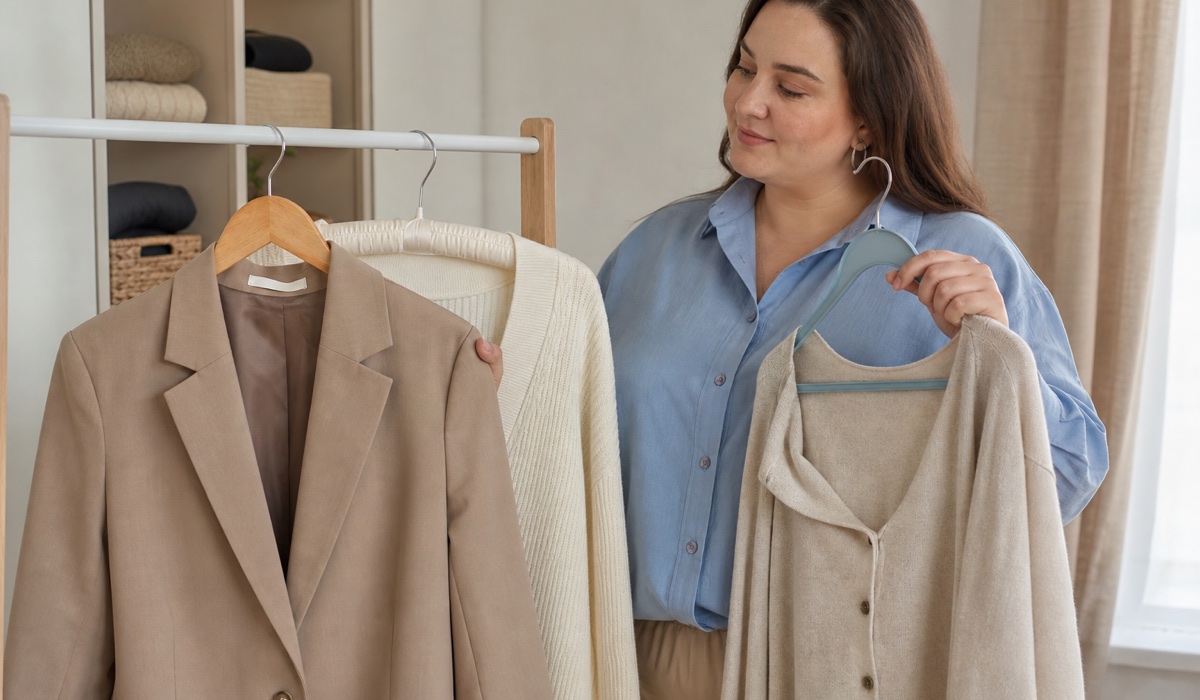
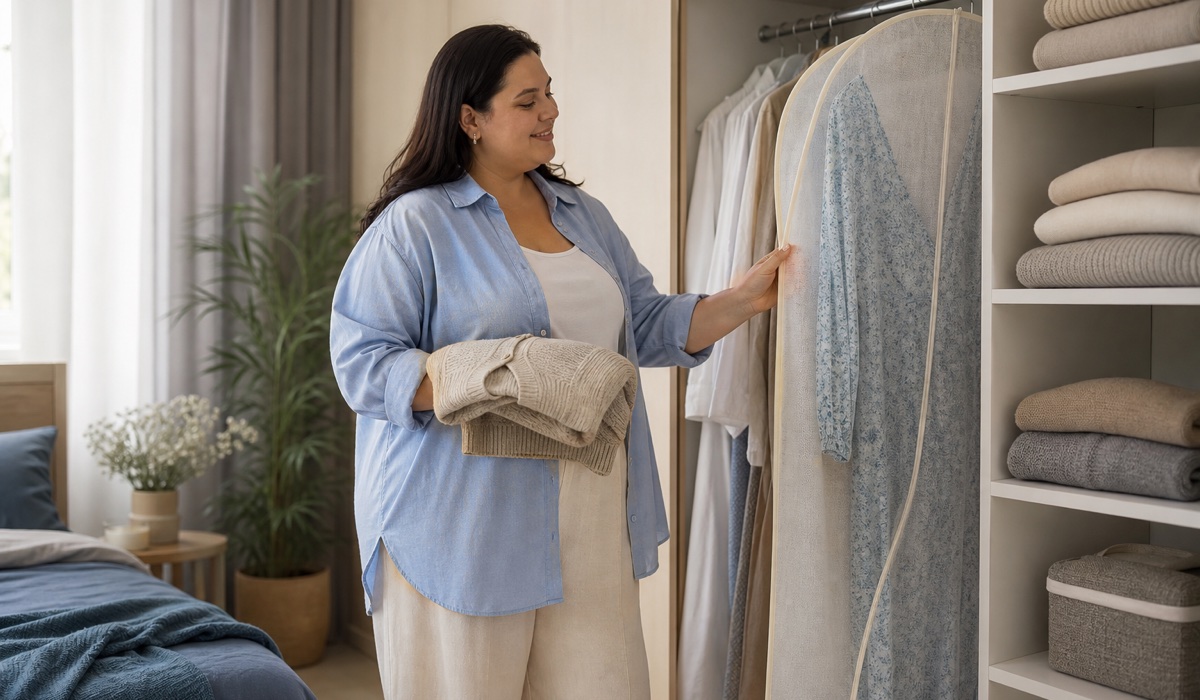
Bildblock: Die richtigen Kleiderbügel für Plus-Size-Kleidung, um ausgeleierte Schultern zu vermeiden.
Grundregeln für die Aufbewahrung von Kleidung, damit sie ihre Form behält
Die Grundprinzipien sind einfach, haben aber den größten Einfluss auf die Lebensdauer Ihrer Kleidungsstücke. Kühle, trockene und gut belüftete Orte sind unerlässlich für Oberbekleidung, Jacken und saisonale Sets.
Wenn Sie Ihre Garderobe gerade aktualisiert haben, schauen Sie sich auch die Oberbekleidung und Cardigans und Jacken im Katalog an, um gleich einen separaten Aufbewahrungsort dafür zu planen.
Lagern Sie die Kleidungsstücke unter stabilen Bedingungen ohne plötzliche Temperaturschwankungen.
Vermeiden Sie Feuchtigkeit, da diese Geruchsbildung, Schimmel und Faserverformung begünstigt.
Schützen Sie Ihre Kleidung vor direkter Sonneneinstrahlung, um Ausbleichen und Brüchigkeit zu verhindern.
Lassen Sie etwas Platz zwischen den Kleidungsstücken, damit der Stoff atmen kann.
Vor dem Einlagern für die Saison sollten die Kleidungsstücke sauber und vollständig trocken sein. Dies ist besonders wichtig für die Modelle aus der Kategorie Kleider in großen Größen oder die Sie als Basis für Anzüge in großen Größen wählen.
So bewahren Sie Strickwaren, Pullover und Strickjacken in großen Größen richtig auf
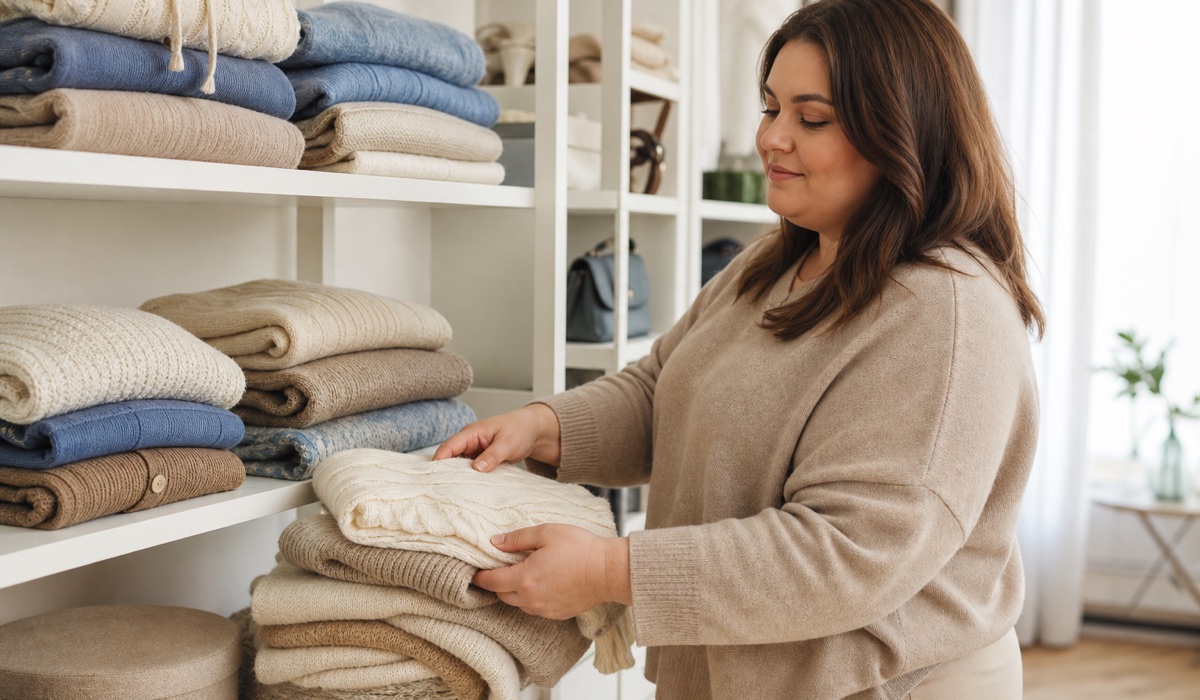
Strickwaren und weiche Strickwaren dehnen sich oft durch falsche Lagerung aus. Große Pullover und Strickjacken sollten am besten gefaltet statt aufgehängt werden, damit das Gewicht nicht auf den Schultern lastet. Bestimmte Cardigans oder leichte Basics wie Plus-Size-T-Shirts und -Tops müssen daher sorgfältig gefaltet werden. Strickwaren sollten flach gestapelt werden, um ein Überladen zu vermeiden. Schwerere Teile gehören nach unten, leichtere nach oben. Vermeiden Sie es, die Strickwaren zu stapeln, damit sie nicht auseinanderfallen oder ihre Form verlieren. Für die langfristige Aufbewahrung einen kühlen, trockenen Ort wählen. Wenn Sie die Kleidungsstücke aufhängen müssen, verwenden Sie breite, weiche Kleiderbügel ohne scharfe Kanten. Bei voluminösen Schnitten reduziert dies das Risiko von Faltenbildung an den Schultern und einem welligen Saum deutlich.
Kleider, Blusen und Jacken in großen Größen: So vermeiden Sie ausgeleierte Schultern und Taille
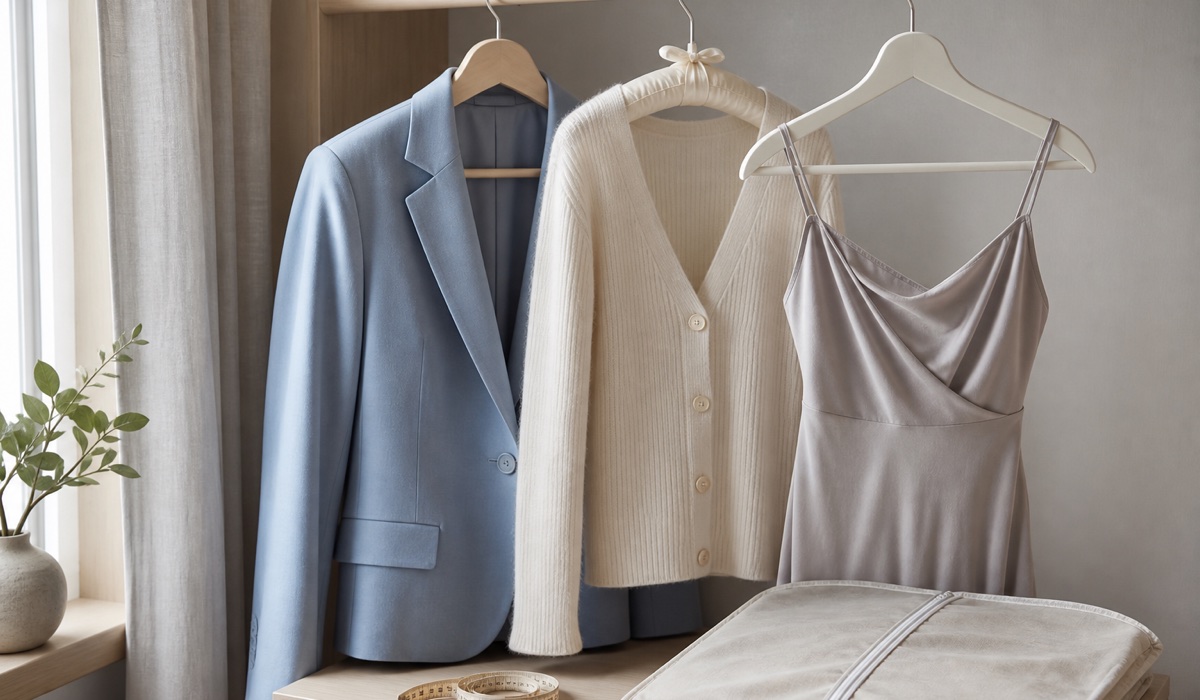
Kleider und Jacken in großen Größen haben komplexe Schnitte, daher fällt jede Verformung im Schulter- oder Taillenbereich sofort auf. Für solche Kleidungsstücke sind geeignete Kleiderbügel, eine weiche Abdeckung und ausreichend Platz im Kleiderschrank unerlässlich. Wenn Sie nicht nur die Aufbewahrungsmöglichkeiten, sondern auch Ihre Garderobe selbst auswählen, ist es einfacher, Blusen und Hemden in großen Größen sowie Hosen in großen Größen für Konfektionskleidung zu finden.
Wählen Sie für Kleider und Jacken breite Kleiderbügel, die Ihrer Schulterbreite entsprechen.
Verwenden Sie für empfindliche Stoffe weiche oder gepolsterte Kleiderbügel.
Vermeiden Sie zu schmale oder kindgerechte Kleiderbügel - sie können Ihre Schulterlinie verzerren.
Leichte Kleider sollten am besten in Baumwollhüllen aufbewahrt werden.
Für Outfits, die Sie zusammen tragen, ist es praktisch, einen separaten Bereich in Ihrem Kleiderschrank zu reservieren. So knittern Anzüge und Jacken nicht und behalten ihre Form zwischen Anproben und Ausgehen.
Plus-Size-Hosen, -Jeans und -Röcke: So behalten Sie Ihre Form
Hosen und Jeans neigen oft zu Falten an Knien, Bund und Hüfte. Um dies zu vermeiden, sollten Sie schwere Kleidungsstücke falten, anstatt sie einfach hängen zu lassen. Für Alltagsoutfits empfehlen wir Röcke in großen Größen und vielseitige Hosen in großen Größen, die sich platzsparend stapeln lassen.
Schwergewichtige Hosen und Jeans sollten flach gefaltet werden, ohne scharfe Knicke zu erzeugen.
Verwenden Sie gegebenenfalls Kleiderbügel mit Clips, die keine Abdrücke hinterlassen.
Achten Sie darauf, dass der Bund nicht hängt oder sich dehnt.
Leichte Röcke können je nach Material auf Kleiderbügeln oder gefaltet aufbewahrt werden.
Schwere Naturmaterialien wie Leinen, Baumwolle und hochwertiger Denim behalten ihre Form in der Regel besser. Aber auch sie müssen ordentlich gefaltet werden, besonders wenn das Kleidungsstück häufig getragen wird.
Vakuumbeutel, Organizer und Boxen: Wo liegen die Vorteile und wo die Risiken?
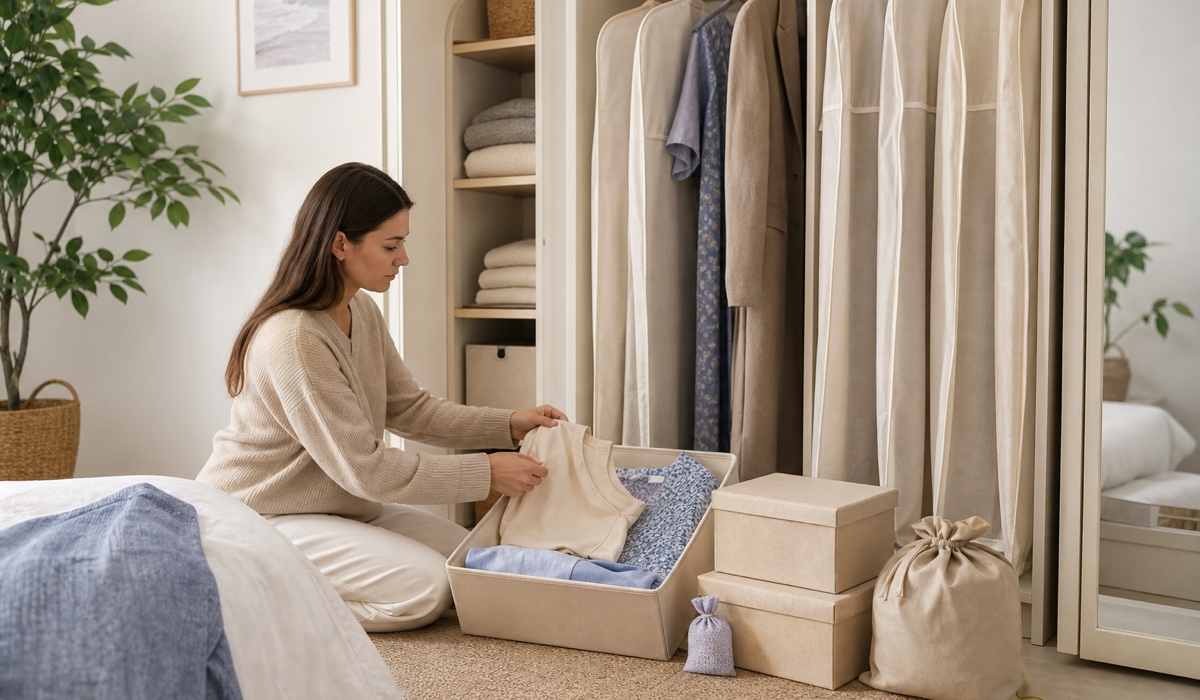
Organizer helfen, Platz zu sparen, aber nicht alle Methoden sind gleichermaßen gut für Textilien geeignet. Vakuumbeutel eignen sich für sperrige Kleidungsstücke, die man mit Sicherheit mehrere Monate lang nicht trägt. Für einfache Saisonkleidung sind Stoffbeutel oder Boxen, die die Luftzirkulation ermöglichen, besser geeignet. Wenn Sie Ihre Garderobe aktualisieren möchten, ist es hilfreich, sowohl Oberbekleidung als auch fertige Looks aus dem Lookbook griffbereit zu haben, um Ihre saisonale Capsule Wardrobe leichter zusammenzustellen.
Saisonale Kleidungsstücke können zur besseren Übersicht beschriftet und in separaten Gruppen aufbewahrt werden. So finden Sie das Gesuchte schneller und sparen Zeit beim unnötigen Umräumen Ihres Kleiderschranks.
Typische Fehler bei der Aufbewahrung von Plus-Size-Kleidung
Damit Ihre Garderobe länger hält, sollten Sie Sie sollten Ihre Sachen nicht einfach so beiseitelegen. Bereiten Sie sie am besten gleich für die neue Saison vor. Wenn Sie ein Upgrade wünschen, informieren Sie sich über die günstigen Bedingungen auf den Seiten Lieferung, Umtausch und Rückgabe und Kontakt.
FAQ
Häufig gestellte Fragen
Wie bewahre ich Strickkleider auf, damit sie nicht ausleiern?
Am besten stapeln Sie sie in flachen Stapeln auf einem Regal an einem kühlen, trockenen Ort. Dünne Kleiderbügel sind für solche Kleidungsstücke ungeeignet, da das Gewicht des Kleides die Schultern nach unten zieht.
Welche Kleiderbügel sollte ich für Kleider und Jacken in großen Größen wählen?
Breit, stabil und schulterfreundlich. Für empfindliche Stoffe eignen sich am besten weiche oder gepolsterte Kleiderbügel ohne scharfe Kanten.
Wie bewahre ich Sommerkleider im Winter auf?
Sie sollten gewaschen, vollständig getrocknet und nach Stoffart sortiert werden. Leichte Kleider können in Baumwollhüllen aufgehängt oder in einer Trockenbox gefaltet werden.
Wie kann ich verhindern, dass meine Kleidung nach einer Saison Lagerung nach Kleiderschrank riecht?
Belüftung ist wichtig: Überfüllen Sie den Kleiderschrank nicht, lüften Sie ihn und verwenden Sie natürliche Duftsäckchen oder Silicagel, um Feuchtigkeit zu bekämpfen.
Beeinflusst die Stoffqualität, wie lange ein Kleidungsstück seine Form behält?
Ja, dichte, hochwertige Naturfasern behalten ihre Form besser, aber auch sie müssen richtig gelagert werden.
Sollte man Kleidung in Plastiktüten aufbewahren?
Für die Langzeitlagerung - nein. Plastiktüten lassen die Kleidung nicht atmen und können vergilben und steif werden. Stoffhüllen und Organizer sind besser geeignet.
Kann man Kleidung in großen Größen in Vakuumbeuteln aufbewahren?
Ja, aber nur voluminöse Teile wie Jacken, Daunenjacken oder Sweatshirts und nur, wenn sie vollständig trocken sind. Empfindliche Stoffe sollten nicht gequetscht werden.
Verpacken Sie Kleidungsstücke nur vollständig trocken in Vakuumbeutel.
Vermeiden Sie es, empfindliche Stoffe zu komprimieren, da diese ihre Form verlieren können.
Stoffaufbewahrungsboxen sind atmungsaktiver und schützen vor Staub.
Bewahren Sie die Boxen an einem trockenen, feuchtigkeits- und kondenswasserfreien Ort auf.
Schwere Strickwaren auf dünnen Kleiderbügeln.
Plastiktüten für die Langzeitaufbewahrung.
Überfüllte Schränke ohne Luftzirkulation.
Aufbewahrung an feuchten Orten.
Kleidung wird schmutzig oder feucht in den Schrank geräumt.