Wie Sie Ihren Plus-Size-Stil ohne Stereotypen finden
Wie Sie Ihren Plus-Size-Stil ohne Stereotypen finden
Den eigenen Plus-Size-Stil zu finden bedeutet nicht, die Figur zu "verstecken", sondern vielmehr Looks zu sammeln, die den eigenen Charakter, den eigenen Lebensstil und das eigene Selbstbewusstsein unterstützen. Ein guter Ausgangspunkt ist der Plus-Size-Katalog, um herauszufinden, welche Silhouetten, Stoffe und Stimmungen Ihnen wirklich zusagen.
Unten finden Sie einen praktischen Leitfaden ohne Stereotypen: Wie Sie Ihren eigenen Stil von vorgegebenen Regeln abgrenzen, wie Sie mit Silhouetten, Farben und Capsule Wardrobes arbeiten und wie Sie Kleidungsstücke auswählen, die modern und bequem aussehen.
Was bedeutet „Ihr Stil“ für eine Frau mit Kurven?
Persönlicher Stil ist eine Kombination aus Ihrem Lebensstil, Ihren Vorlieben und Ihrem Wohlbefinden. Es gibt keinen „richtigen“ Stil für Frauen mit Kurven; es gibt nur einen, der Sie lebendig und selbstbewusst wirken lässt. Deshalb ist es so wichtig, sich nicht nur auf formale Regeln zu konzentrieren, sondern das Gesamtbild zu betrachten: die Silhouette, den Rhythmus Ihres Tages und wie Ihre Kleidung mit Ihnen harmoniert. Wenn Sie mit praktischen Teilen beginnen möchten, denken Sie an Kleider in großen Größen, Jacken und Cardigans sowie andere Basics, die sich leicht kombinieren lassen. Die wichtigsten Merkmale Ihres Stils sind einfach: Sie fühlen sich wohl, Ihr Look spiegelt Ihre Persönlichkeit wider und Ihre Kleidung betont Ihre Silhouette, anstatt sie in formlose Masse zu verwandeln. Wenn dein Stil wirklich dein eigener ist, denkst du nicht darüber nach, wie du etwas verstecken kannst - du fragst dich, wie du dich am besten präsentierst. Wie du Klischees über „Was du tun/nicht tun“ loswirst Klischees über Plus-Size-Mode klingen oft nach einer Liste von Tabus: nur Schwarz, keine Muster, keine enge Passform, keine Streifen. Doch die meisten dieser Ratschläge haben nichts mit echtem Stil zu tun. Es ist viel sinnvoller, auf Passform, Proportionen und die Wirkung eines Kleidungsstücks zu achten als auf abstrakte Regeln wie „erlaubt“ oder „nicht erlaubt“. Anstatt beispielsweise auf Oversize zu setzen, ist es besser, eine bequeme Plus-Size-Hose mit guter Passform zu wählen. Und statt starrer „Figurregeln“ … bewährte Basics: Plus-Size-Blusen und -Hemden, Jeans mit geradem Bein, Midikleider und leichte Jacken. Versuchen Sie, Kleidung nicht als Mittel zur „Tarnung“ zu sehen, sondern als Ausdruck Ihrer Persönlichkeit. Arbeiten Sie mit Farben, Proportionen und Texturen, die Ihnen gefallen, nicht nur mit solchen, die angeblich „optisch schlank machen“.
Bildblock: Plus-Size-Stil-Klischees und moderne Alternativen.
Wo Sie Ihre Stilsuche beginnen sollten: im Leben, nicht nur in Ihrer Figur
Stil sollte zu Ihrem Alltag passen. Wenn Sie viel unterwegs sind, oft im Büro arbeiten oder Beruf und einen aktiven Lebensstil verbinden, brauchen Sie keine abstrakten Ratschläge, sondern Kleidung, die Ihren Alltag mitmacht. Für den Alltag empfiehlt es sich, mit Basic-Tops, Plus-Size-Tops, Cardigans und Jacken zu beginnen und diese dann mit Accessoires zu ergänzen.
Seien Sie ehrlich zu sich selbst: Welche Kleidungsstücke brauchen Sie wirklich? Sind Ihnen weiche Stoffe wichtig oder bevorzugen Sie einen strukturierten Schnitt? Leben Sie im Büro, als Freelancer, auf Reisen oder mit aktiven Wochenenden? Die Antworten auf diese Fragen zeigen Ihnen, wie Ihre Garderobe aussehen sollte.
Schreiben Sie sich 3-4 Wörter auf, die Sie beschreiben: „romantisch“, „business“, „minimalistisch“, „fröhlich“. Diese helfen Ihnen, Spontankäufe zu vermeiden und einen Stil zu kreieren, der Sie wirklich widerspiegelt.
Silhouette-Looks: Figur und Komfort
Bei Plus-Size-Kleidung ist die Silhouette fast alles. Es kann einen klaren, selbstbewussten und modernen Look erzeugen, wenn man sich dafür entscheidet, die richtigen Linien zu setzen, anstatt "alles zu verstecken". Dafür ist es praktisch, drei Grundvarianten auszuprobieren: gerade, leicht tailliert und A-Linie. Welche Silhouetten passen am besten? Gerade Silhouetten verleihen einen entspannten, urbanen Rhythmus und passen gut zu Hemdblusenkleidern, Jacken und Mänteln. Leicht taillierte Silhouetten schmiegen sich an die Figur an, ohne sie zu spannen, und betonen Kurven sanft, ohne sie zu übertreiben. A-Linien kaschieren die Linie von Bauch und Hüften und sehen in Midi-Länge toll aus. Cocoon-Schnitt ist die richtige Wahl für Mäntel und Kleider, wenn Bewegungsfreiheit und modernes Volumen gewünscht sind. Um das Thema in der Praxis zu sehen, öffnen Sie das Lookbook mit fertigen Looks und entdecken Sie, wie die Linien in realen Kombinationen wirken. Länge und Proportionen. Der Stoff sollte fließend fallen, nicht steif stehen. Achten Sie auch auf die Länge: Das Kleidungsstück sollte nicht an der breitesten Stelle der Hüfte enden, wenn Sie eine schlankere und elegantere Silhouette wünschen. Bildblock: Plus-Size-Schnitte: Gerade, A-Linie und Cocoon. Vergleich der Plus-Size-Schnitte: Gerade, A-Linie und Cocoon (siehe Bild) Farben und Muster ohne den Mythos „Ich werde immer dick“ Ihr Stil wird interessanter, wenn Sie über Schwarz hinausgehen. Monochrome Looks, satte Farben und Pastelltöne im richtigen Schnitt sind allesamt Möglichkeiten. All das kann sehr modern wirken. Wenn Sie eine sanftere, aber dennoch vielseitige Lösung suchen, wählen Sie Kleidungsstücke in Graphit, Marineblau, Olivgrün oder Cremeweiß. Bei Farbkombinationen ist es praktisch, Teile innerhalb derselben Farbpalette zu kombinieren: zum Beispiel einen Rock und eine Bluse, Röcke in großen Größen und ein strukturiertes Oberteil oder ein farbenfrohes Oberteil zu einer neutralen Hose oder einem Rock. So wirkt der Look nicht zu aufdringlich, ist aber dennoch ausdrucksstark. Dasselbe gilt für Muster: Größe und Proportionen sind wichtig. Ein kleines Muster kann zu aufdringlich wirken, ein großes kann wuchtig erscheinen, und ein mittelgroßes, gut platziertes Muster sieht oft am besten aus. Vertikale und horizontale Streifen sind ebenfalls erlaubt, solange die Silhouette harmonisch wirkt.
So erstellen Sie eine Capsule Wardrobe in Ihrem Stil
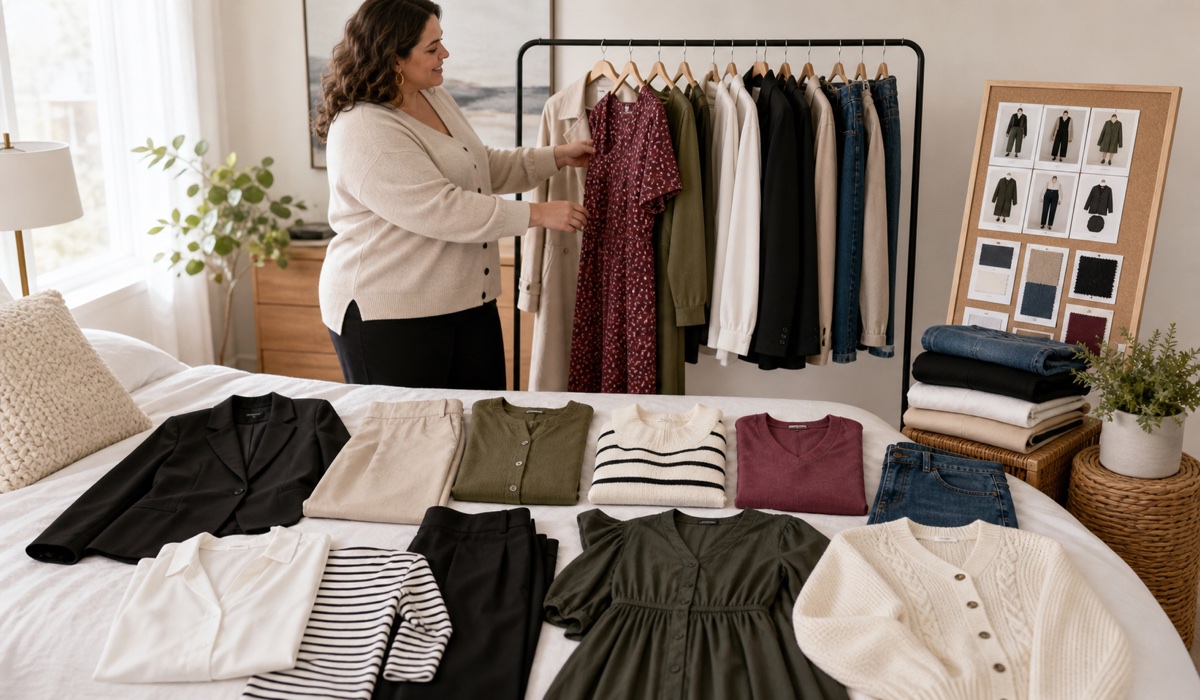
Eine Capsule Wardrobe hilft Ihnen, Ordnung zu halten und Outfits schneller zusammenzustellen. Es ist praktisch, einige wenige Key-Pieces zu besitzen: eine strukturierte Jacke, eine gerade Hose, ein Midikleid, Basic-Tops, Jeans und eine Strickjacke. Mit diesen Teilen können Sie Looks für Büro und Freizeit kreieren, ohne Chaos in Ihrem Kleiderschrank zu verursachen.
Wenn Sie mit einer bewährten Basis beginnen möchten, schauen Sie sich Plus-Size-Anzüge, Jacken und Strickjacken sowie andere Kleidungsstücke an, die sich leicht zu einem System kombinieren lassen. Eine gut sortierte Garderobe erfordert nicht, dass Sie viel kaufen; Es ist wichtig, einen einheitlichen Stil zu wählen. Eine gute Capsule Wardrobe zeichnet sich dadurch aus, dass man mit 2-3 beliebigen Teilen sofort ein komplettes Outfit zusammenstellen kann. Wenn einzelne Teile nicht zusammenpassen, ist der Stil noch nicht stimmig. Bildblock: Plus-Size-Capsule-Wardrobe für Büro und Freizeit Im Bildblock: Plus-Size-Capsule-Wardrobe für Büro und Freizeit So erkennen Sie, ob ein Kleidungsstück zu Ihnen passt: Eine Checkliste Achten Sie beim Anprobieren nicht auf die Größe, sondern auf die Passform. Achten Sie auf unschöne Falten an Brust, Taille und Hüfte und darauf, ob Sie frei atmen, sitzen und die Arme heben können. Komfort wirkt immer ästhetischer als ein zu enges Kleidungsstück. In diesem Abschnitt ist es besonders hilfreich, Hosen in großen Größen, Kleider in großen Größen und andere Basics zum Anprobieren bereitzuhalten. So erkennen Sie schnell, welche Schnitte Ihnen am besten stehen und welche nur auf Fotos gut aussehen. Ein einfacher Test: Wenn Sie vor dem Spiegel stehen und denken: „Es sieht schön aus, aber ich kann mich darin nicht bewegen“, dann ist das Kleidungsstück nicht Ihr Stil. Deine Kleidung sollte dich nicht einschränken, sondern dein Freiheitsgefühl unterstreichen.
So integrierst du Trends, ohne deinen Stil zu verlieren
Trends müssen nicht eins zu eins kopiert werden. Nimm einfach eine Trendfarbe, einen aktuellen Schnitt oder ein interessantes Detail und integriere sie in ein System, das du bereits kennst. Wenn du dich zum Beispiel in leicht taillierten Kleidungsstücken wohlfühlst, ergänze sie mit einer Trendfarbe in dieser Silhouette.
Wenn du deine Garderobe nach und nach aktualisieren möchtest, schau dir den Plus-Size-Katalog an und entdecke, welche neuen Styles zu deinen Basics passen.
Eine weitere praktische Inspirationsquelle ist das Lookbook, wo Sie sehen können, wie ein Trend in einem fertigen Outfit wirkt, nicht nur auf einem Kleiderbügel.
Beginnen Sie mit Accessoires, einem Oberteil oder einem neuen Kleid - so finden Sie schnell heraus, ob Ihnen ein Trend wirklich steht und vermeiden, Ihren eigenen Stil zu ruinieren.
Fazit
Ihren Plus-Size-Stil zu finden bedeutet, sich von der Idee zu verabschieden, Ihre Figur zu kaschieren, und zu lernen, sich für sich selbst zu kleiden. Setzen Sie auf Silhouetten, die Bewegungsfreiheit und klare Linien bieten, auf Farben, die Sie lieben, und auf eine Capsule Wardrobe, die zu Ihrem Lifestyle passt. So wird Stil nicht länger eine Einschränkung, sondern ein Werkzeug für mehr Selbstbewusstsein. Wenn Sie einen Einstieg suchen, beginnen Sie mit Kleider in großen Größen, Hosen in großen Größen und anderen Basiskategorien, die sich leicht zu einer harmonischen Garderobe kombinieren lassen.
FAQ
Häufig gestellte Fragen
Wo fange ich an, wenn ich meinen Stil überhaupt nicht kenne?
Beginnen Sie mit Lifestyle und gespeicherten Looks. Notieren Sie sich, welche Silhouetten und Farben sich wiederholen, und stellen Sie dann eine kleine Capsule Wardrobe mit 8-12 Teilen in diesem Stil zusammen.
Können Frauen mit Kurven figurbetonte Kleider tragen?
Ja, solange der Stoff dick und glatt ist, nicht eng am Körper anliegt und der Schnitt nicht Falten wirft. Halb- und figurbetonte Schnitte wirken luxuriös, wenn die Proportionen zwischen Ober- und Unterteil stimmen und die Länge perfekt ist.
Ich habe Angst vor knalligen Farben. Wo fange ich an?
Probieren Sie monochrome Looks in Marineblau, Graphit oder einem satten Grün. Sie sind weicher als Schwarz, verleihen dem Outfit aber eine ausdrucksstärkere Note.
Wie wähle ich ein Muster, das mich nicht „dicker“ wirken lässt?
Wählen Sie ein Muster, das proportional zu Ihrer Größe ist. Vermeiden Sie kleine, auffällige Muster und große, wuchtige Motive. Mittlere Größe und moderater Kontrast sind am besten geeignet.
Welche Kleidungsstücke sind eine sinnvolle Ergänzung für eine Plus-Size-Garderobe?
Eine strukturierte Jacke, ein Midikleid, gerade geschnittene Jeans ohne Verzierungen, bequeme Hosen mit mittelhohem Bund, Basic-Tops und eine lange Strickjacke für vertikale Silhouetten.