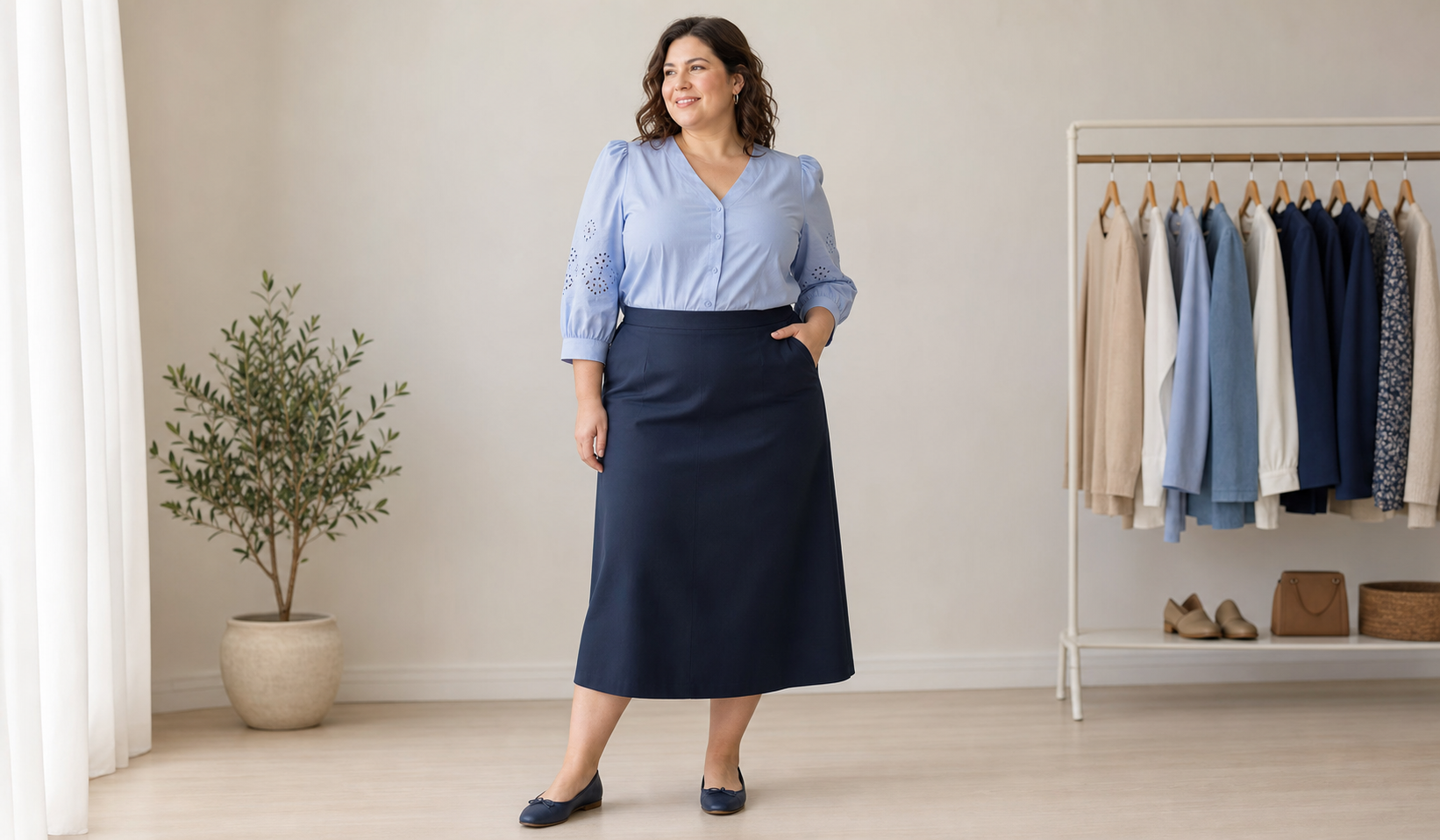
Как выбрать Plus Size одежду по типу фигуры: полный гид
Как выбрать Plus Size одежду по типу фигуры: полный гид
Правильный выбор Plus Size одежды по типу фигуры начинается не с размера, а с пропорций. Когда вы понимаете, где ваши сильные стороны, одежда перестает маскировать и начинает подчеркивать.
Что такое тип фигуры Plus Size и почему он важен
Тип фигуры - это про распределение объемов, а не про вес или цифру на бирке. Пышные бедра, выраженный живот или равномерные объемы могут выглядеть элегантно в любом размере, если одежда поддерживает силуэт, а не ломает его.
Тип фигуры определяют по соотношению груди, талии и бедер. Чаще всего выделяют Х-силуэт, или «песочные часы», О-силуэт, или «яблоко», А-силуэт, или «груша», V-силуэт, или «перевернутый треугольник», и Н-силуэт, или «прямоугольник».
Почему стоит ориентироваться на тип фигуры
Вы легче выбираете фасоны, которые хорошо садятся без долгих компромиссов в примерочной.
Меньше покупаете вещи, которые красиво выглядят только на фото, но не работают с вашими пропорциями.
Строите гардероб вокруг собственного силуэта, а не вокруг устаревших модных запретов.
Совет стилиста: плюс сайз фигура не означает, что вам можно носить только свободные балахоны. Важнее, чтобы вещи повторяли или мягко корректировали ваш силуэт, а не создавали бесформенный прямоугольник.
Как самостоятельно определить свой тип фигуры
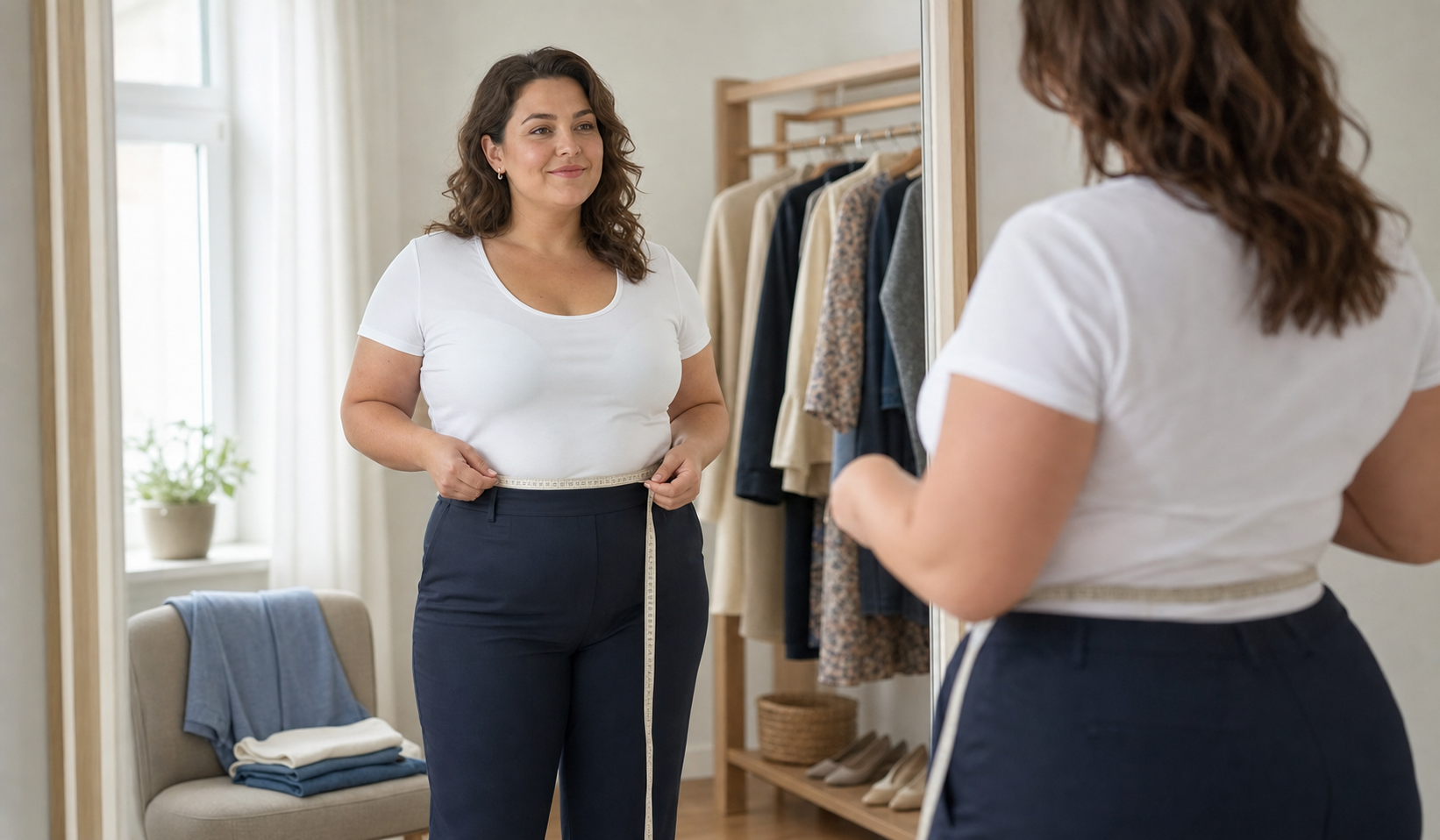
Чтобы понять свой тип фигуры, сделайте три базовых замера: грудь, талия и бедра. Измеряйте себя в белье или тонкой одежде, стоя ровно перед зеркалом.
Грудь. Проведите сантиметровую ленту по самой выступающей точке груди в бюстгальтере без пуш-апа.
Талия. Измерьте самую узкую часть корпуса, не втягивая живот.
Бедра. Проведите ленту по самой широкой точке бедер и ягодиц.
После этого сравните цифры между собой:
талия на 20-30 см меньше груди и бедер - Х-силуэт, или «песочные часы»;
талия и грудь заметнее бедер - О-силуэт, или «яблоко»;
все замеры примерно одинаковые - Н-силуэт, или «прямоугольник»;
грудь и плечи шире бедер - V-силуэт, или «перевернутый треугольник»;
бедра шире груди, а талия выражена - А-силуэт, или «груша».
При выборе одежды обращайте внимание не только на цифры. Важно, где сосредоточен основной объем, есть ли выраженная талия, какие зоны вы хотите подчеркнуть, а какие - визуально смягчить.
Тип фигуры «Груша» (А): выраженные бедра, акцент на верх
Для фигуры «груша» характерны бедра шире плеч, заметная талия и более компактный верх. Главная задача стиля - сбалансировать силуэт, усиливая верхнюю часть, и не перегружать зону бедер лишними деталями.
Что носить plus size-фигуре «груша»
Собранный верх. Выбирайте четкие горловины: V-образный, квадратный или округлый вырез, а также стабильную линию плеча.
Блузы с деталями. Объемные рукава, вертикальные планки, воротники и деликатный декор переводят внимание вверх.
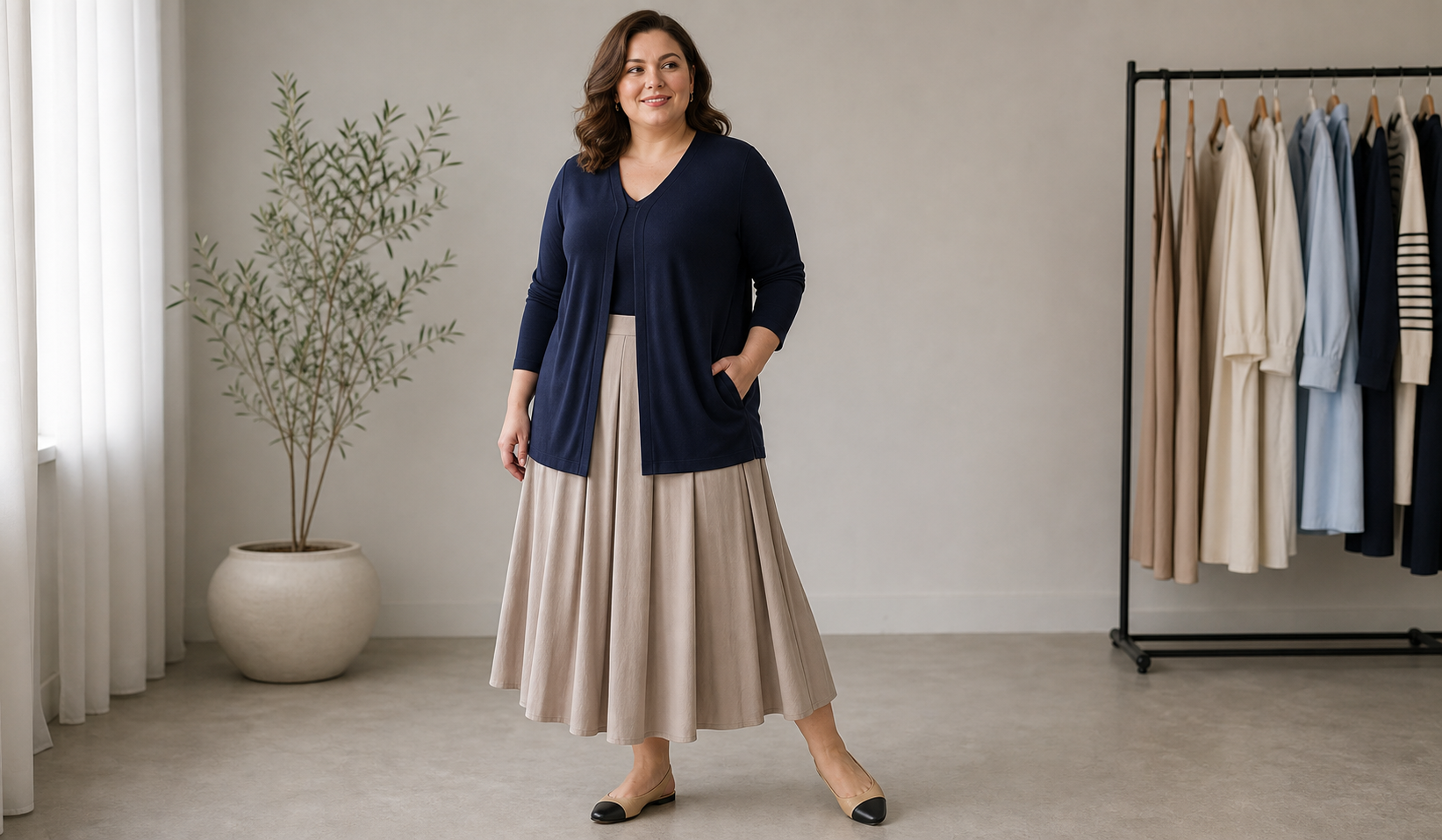
Жакеты и кардиганы, которые держат форму. Они формируют аккуратную линию плеч и ведут взгляд вертикально.
Спокойный низ. Хорошо работают юбки А-силуэта, прямые или мягко расклешенные брюки.
Длина верха должна либо проходить ниже самой широкой точки бедер, либо заканчиваться выше, желательно с разрезами или асимметрией. Жесткий срез именно на самой объемной зоне часто визуально расширяет силуэт.
Какие ткани лучше: для верха подойдут материалы, которые держат форму и добавляют плечам визуального присутствия. Для низа лучше брать более мягкие ткани без лишнего блеска, чтобы не подчеркивать объем.
Типичные ошибки: облегающий низ из тонкого трикотажа и удлиненные свитеры, которые заканчиваются на самой широкой точке бедер.
Если вы - «груша», обратите внимание на структурные блузы, жакеты Plus Size, юбки А-силуэта и брюки средней или высокой посадки.
Тип фигуры «Яблоко» (О): выраженный живот, сильный верх
Для фигуры «яблоко» характерны более заметный живот, слабо выраженная талия, сильный верх и часто стройные ноги. Задача стиля - смягчить зону живота, акцентируя декольте, плечи и ноги.
Что носить plus size-фигуре «яблоко»
Платья А-силуэта. Они не пережимают живот и мягко формируют линию тела.
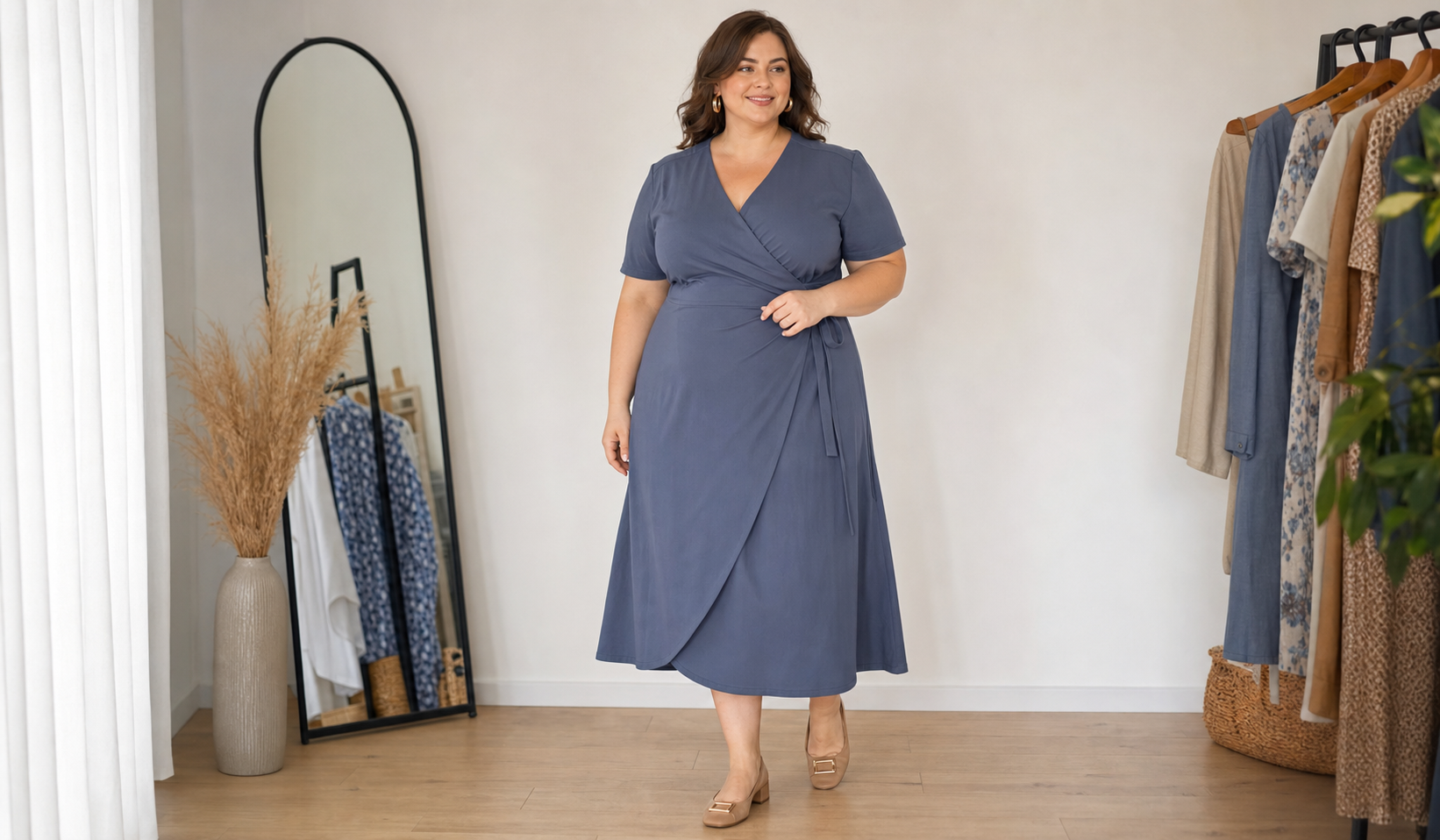
Модели с запахом. Такой крой создает диагональ, подчеркивает декольте и визуально вытягивает силуэт.
Блузы и рубашки свободного кроя. Они не облегают центр корпуса и оставляют пространство для движения.
Прямые жакеты, кардиганы и длинные жилеты. Они создают вертикальную линию и делают силуэт более собранным.
Брюки и джинсы с высокой или средней посадкой. Они помогают подчеркнуть ноги без лишнего давления на живот.
Какие ткани лучше: легкие и струящиеся материалы, которые мягко обтекают силуэт и не добавляют веса. Избегайте очень тяжелых тканей, если они делают верх массивнее.
Типичные ошибки: облегающие топы из тонкой эластичной ткани, платья в облипку и чрезмерные драпировки в зоне талии.
Для фигуры «яблоко» стоит присмотреться к платьям с запахом, А-силуэту, удлиненным жакетам и кардиганам Plus Size.
Тип фигуры «Песочные часы» (Х): выраженная талия, сбалансированные объемы
В Х-силуэте грудь и бедра примерно одинаковы по объему, а талия заметно уже. Главная цель - подчеркнуть природные изгибы, не пряча их в слишком свободных вещах.
Что носить plus size-фигуре «песочные часы»
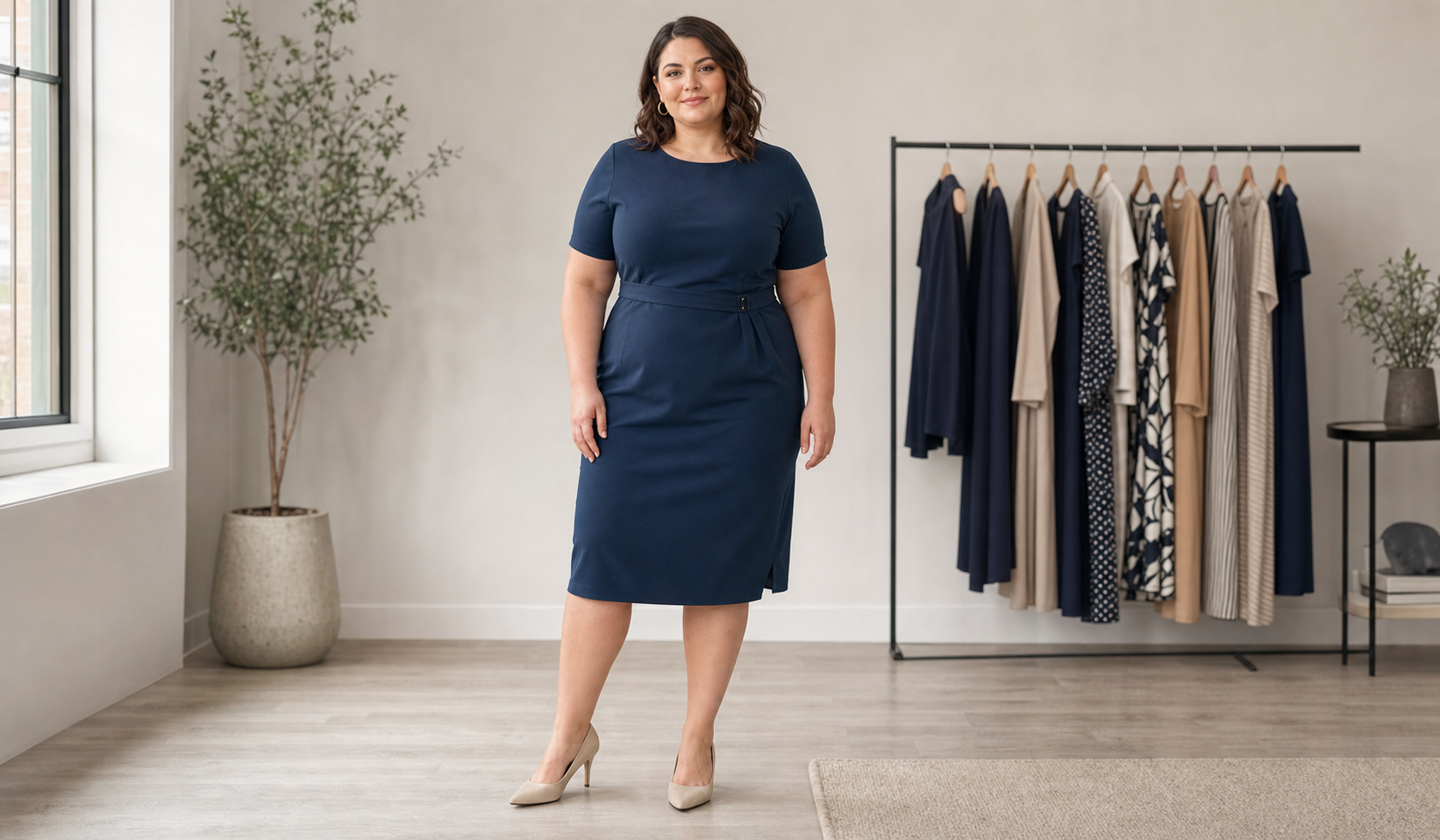
Приталенные платья. Футляр, платья с поясом и wrap-модели поддерживают естественный Х-силуэт.
Жакеты со швами по талии или с поясом. Они не перекрывают пропорции, а подчеркивают их.
Юбки карандаш или А-силуэт. Оба варианта могут работать, если подобраны по посадке и длине.
Брюки с высокой или средней посадкой. Они поддерживают талию и делают образ собранным.
Какие ткани лучше: материалы средней плотности, которые подчеркивают форму, но не пережимают: костюмные ткани, плотный трикотаж, мягкие полотна с небольшой эластичностью.
Типичные ошибки: очень мешковатая одежда, которая превращает изгибы в прямоугольник, и слишком жесткие корсетные формы, делающие образ некомфортным.
Обладательницам фигуры «песочные часы» стоит искать приталенные платья, жакеты Plus Size, джинсы с высокой талией и юбки-карандаш.
Тип фигуры «Прямоугольник» (Н): равномерные пропорции
Для «прямоугольника» характерны близкие по объему грудь, талия и бедра. Изгибы менее выражены, поэтому одежда должна создать иллюзию талии и добавить объема там, где его не хватает.
Что носить plus size-фигуре «прямоугольник»
Ремни и пояса. Носите их поверх платьев, жакетов и кардиганов, чтобы собрать силуэт в центре.
Платья с драпировкой или плиссировкой. Мягкие линии помогают сформировать изгибы.
Жакеты с фигурными рельефами. Легкое приталивание добавляет структуры без жесткости.
Юбки А-силуэта и брюки с высокой талией. Они визуально удлиняют ноги и добавляют пропорциям динамики.
Какие ткани лучше: материалы, которые держат форму в зонах, где нужен объем, например в плечах или бедрах. Хорошо работает сочетание более плотного верха с легким низом или наоборот.
Типичные ошибки: полностью прямые бесформенные вещи без намека на талию и чрезмерный акцент на одной зоне без поддержки общего силуэта.
Для фигуры «прямоугольник» хорошо работают платья с поясом, юбки А-силуэта Plus Size и жакеты с мягким приталиванием.
Тип фигуры «Перевернутый треугольник» (V): акцент на плечах и груди
В V-силуэте плечи и грудь шире бедер, поэтому верх кажется массивнее низа. Задача стиля - визуально смягчить ширину плеч и добавить объема в нижней части.
Что носить plus size-фигуре «перевернутый треугольник»
V-образные вырезы. Они вытягивают верхнюю часть и делают линию плеч легче.
Вертикальные линии в верхней части. Планки, рельефы и длинные жакеты помогают визуально сузить силуэт.
Лаконичные плечи. Лучше избегать массивных подплечников и лишнего декора у плеч.
Более активный низ. Юбки А-силуэта, плиссе, мягкие складки и декоративные детали добавляют баланса.
Контраст «спокойный верх + более активный низ» помогает выровнять пропорции. Если низ очень узкий, лучше осторожно относиться к слишком укороченным топам, которые заканчиваются выше талии.
Для V-силуэта удачным выбором станут V-вырезы, удлиненные жакеты и юбки с объемом Plus Size.
Универсальные правила выбора Plus Size одежды по типу фигуры
1. Посадка важнее размера
Одежда должна сидеть по вашей фигуре: не пережимать, не сползать и не собираться складками в критичных зонах. Особенно внимательно смотрите на шаговую зону в брюках, линию пояса, плечи и область груди.
2. Длина формирует пропорции
Футболки и свитеры часто лучше всего выглядят до косточки бедер или чуть ниже, без резкого пересечения самой широкой точки.
Брюки должны доходить до обуви без лишних складок, которые искажают пропорции.
Среди юбок Plus Size универсально выглядят миди, А-силуэт и модели на запах.
3. Ткани и фактуры
Для верха часто уместна средняя плотность: жаккард, костюмные полотна, плотный трикотаж.
Для платьев и блуз хорошо работают струящиеся ткани, которые не добавляют лишнего объема, но и не облегают фигуру слишком плотно.
Слишком тонкие или блестящие материалы лучше не ставить в зоны, где вы не хотите акцента.
4. Вертикали против горизонталей
Вертикальные линии - планки, расстегнутые кардиганы, полосы, длинные жакеты - создают эффект более стройного и высокого силуэта. Горизонтали, резкие канты и отрезы по линии бедер стоит использовать осторожно, потому что они могут визуально добавлять ширины.
Чтобы собрать капсульный гардероб Plus Size под свой тип фигуры, начните с базовых вещей: джинсов с правильной посадкой, универсального платья, базовой блузы и жакета.
Вывод
Выбор Plus Size одежды по типу фигуры - это не список запретов, а инструмент, который помогает сделать силуэт выразительным и гармоничным. Когда вы понимаете, где ваша сила - в талии, ногах, плечах или бедрах, гардероб перестает быть борьбой с недостатками и становится способом подчеркнуть достоинства.
Выбирайте фасоны, которые поддерживают ваши природные линии, а не прячут их. Тогда даже базовые вещи Plus Size будут выглядеть как продуманные стилистические образы.
Частые вопросы
Как понять, что одежда плюс сайз правильно сидит на фигуре?
Вещь не тянется и не перекручивается по швам, пояс не врезается, ткань не собирается складками в зоне живота и бедер, а плечи и область груди остаются без заломов.
Можно ли носить облегающую одежду, если я Plus Size?
Можно, если вам комфортно, но для повседневных образов часто лучше работает полуприлегающий крой из тканей средней плотности. Он подчеркивает форму без лишнего акцента на складках.
Какой тип платьев самый универсальный для Plus Size?
Для большинства типов фигуры хорошо работают платья А-силуэта, модели с запахом и платья-футляры с мягким приталиванием и правильной длиной миди.
Какие брюки лучше для плюс сайз фигуры?
Брюки и джинсы с высокой или средней посадкой помогают сформировать талию и красиво подчеркнуть силуэт. Важно, чтобы пояс не пережимал живот, а длина доходила до обуви без лишних складок.
Нужен ли пояс, если талия выражена?
Для фигуры «песочные часы» пояс усиливает естественный силуэт. Для «прямоугольника» ремень может создать иллюзию талии, особенно если сочетать его с приталенным кроем.
Какие принты подходят plus size фигуре?
Удобнее всего работают мелкие или средние принты, тонкие полоски и рисунки, которые чередуются с однотонными участками. Крупные контрастные принты в критичных зонах могут визуально добавлять объема.
С чего начать базовый гардероб Plus Size?
Начните с платья универсального фасона, джинсов или брюк с правильной посадкой, базовой блузы, жакета или кардигана и верхней одежды, которая держит форму.