Качественный крой в Plus Size видно еще до покупки: достаточно оценить посадку, симметрию, швы, подкладку, фурнитуру и то, как ткань ведет себя в движении. Перед примеркой удобно открыть каталог Plus Size и сравнить силуэт с фото в лукбуке.
Как понять базовую посадку
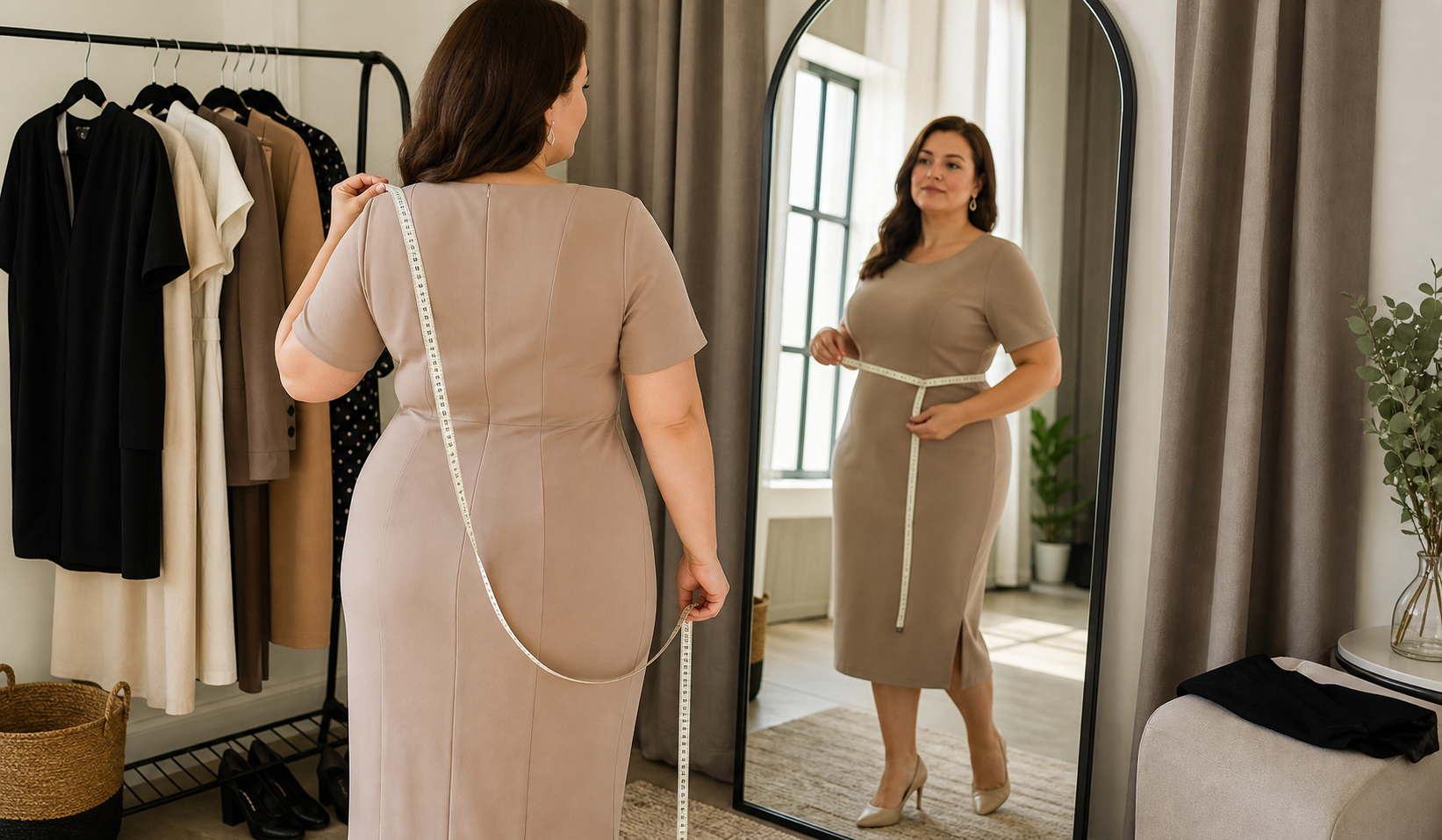
Первый тест - это примерка. Поднимите руки, сядьте, пройдитесь, наклонитесь вперед и посмотрите, не тянет ли вещь в груди, плечах, проймах, животе или по бедрам. У удачного изделия линии спокойные, а ткань не собирается грубыми складками.
Если вы выбираете платья Plus Size или брюки Plus Size, обращайте внимание на плечевые швы, высоту посадки и то, не смещается ли изделие при движении. Хороший крой не мешает дышать, садиться или поднимать руки.
Изображение 1. Проверка посадки в примерочной: зеркало, сантиметр и внимательный взгляд на силуэт Plus Size.
Симметрия и конструкция изделия
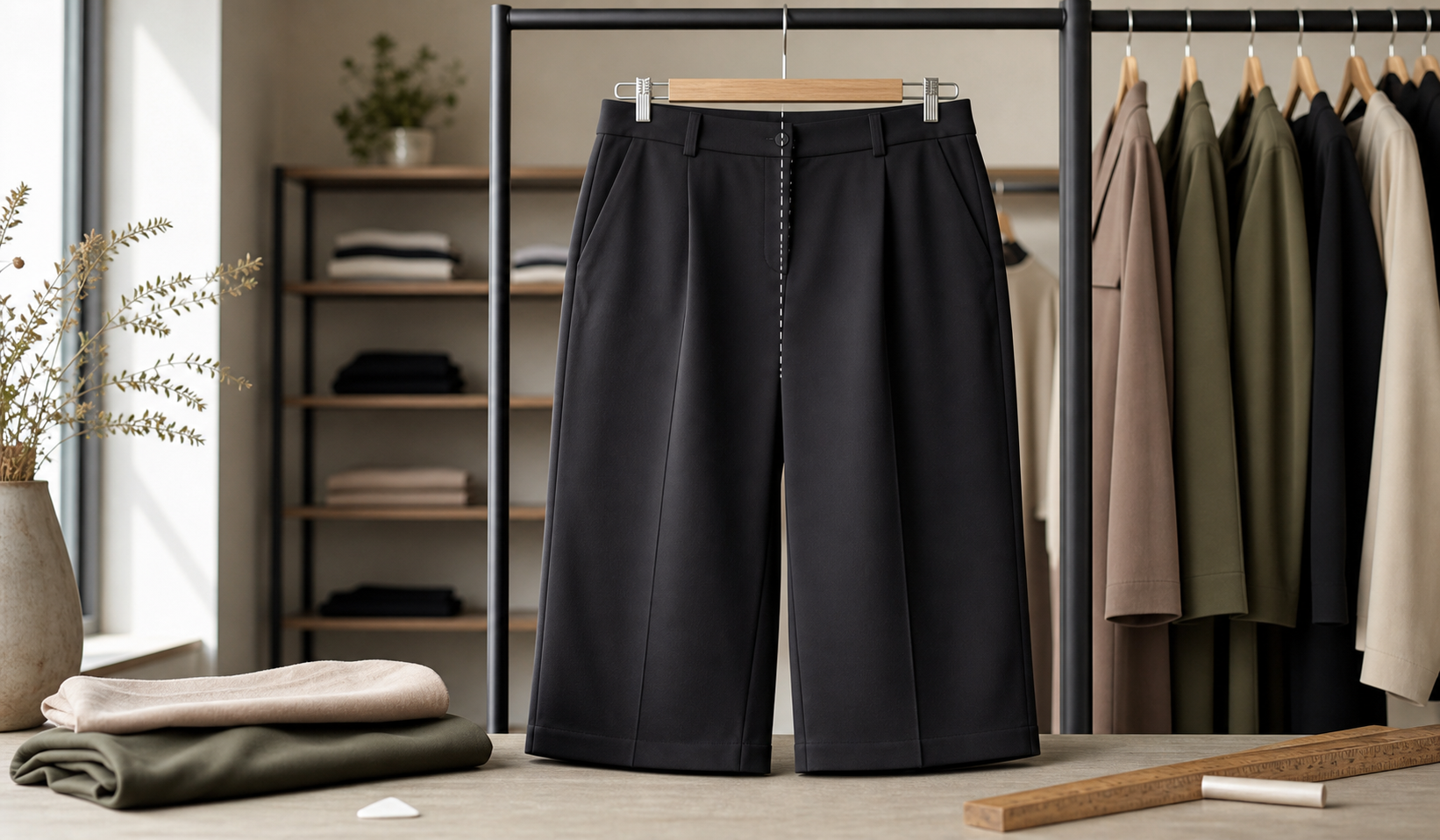
Качественная вещь всегда выглядит собранно и на теле, и на вешалке. Левая и правая части должны быть зеркальными, боковые швы - идти вертикально, а детали кроя - совпадать между собой без перекосов. Если плечи, полочки или подол «плывут», это сигнал, что конструкция недоработана.
Особенно внимательно рассматривайте модели с выразительным силуэтом: блузы и рубашки Plus Size часто показывают качество кроя через грудь и проймы, а жакеты и кардиганы - через линию плеча, рельефы и симметрию бортов.
Изображение 2. Крупный план симметричного кроя: выровненные детали, чистая линия борта и аккуратная геометрия.
Швы, подкладка и фурнитура
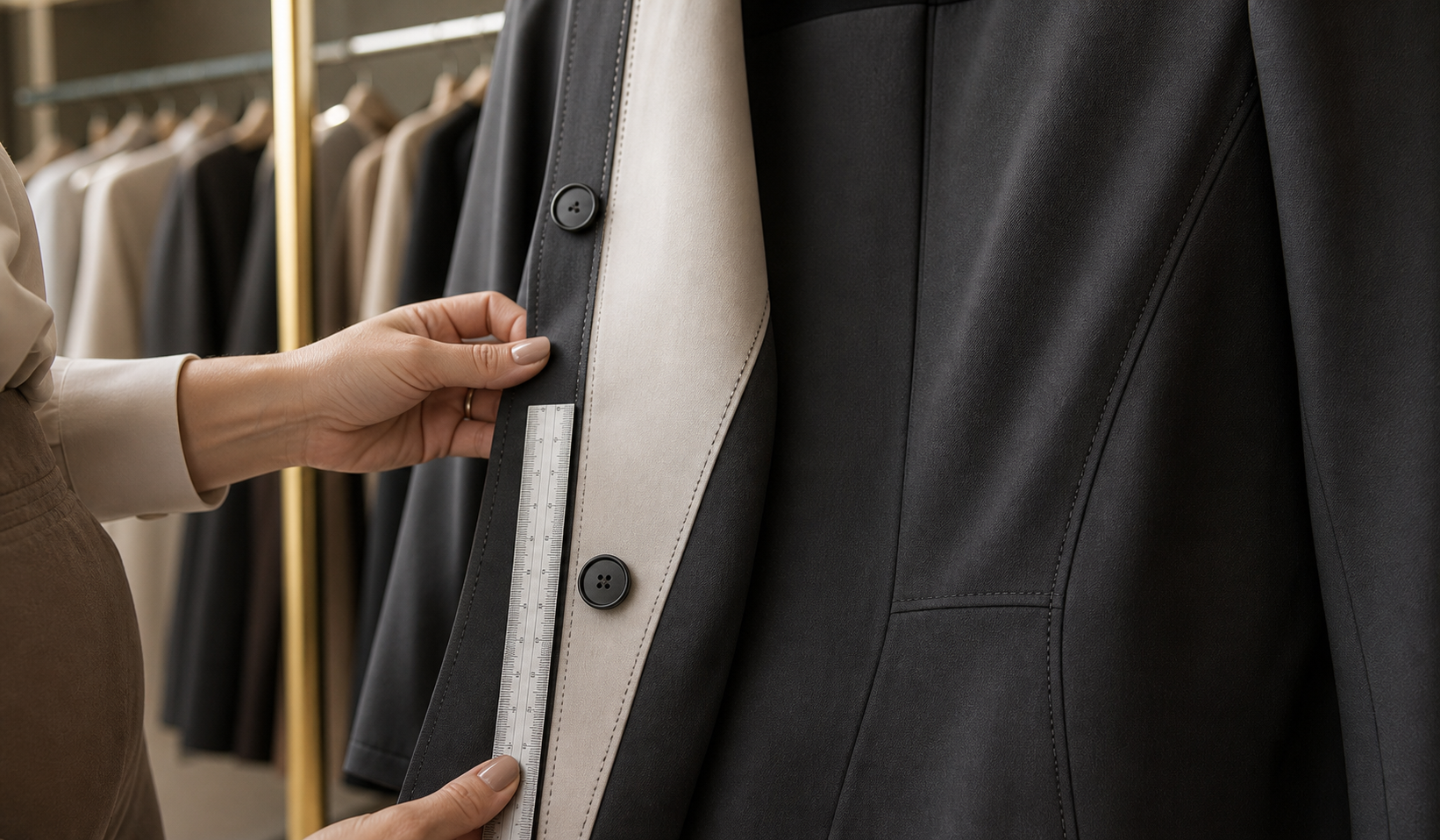
Шов должен быть ровным по всей длине, без пропусков стежков, торчащих ниток и перекошенных срезов. Если ткань немного растягивается, а строчка не расходится, это хороший знак. Подкладка, наоборот, не должна стягивать основную ткань или собираться «пузырем».
В верхней одежде крой особенно хорошо виден через обработку: верхняя одежда и модели с более жесткой конструкцией быстро выдают недостатки, если у них перекошены молнии, слабые петли или плохо пришиты пуговицы. Если вы не уверены в удобстве посадки, лучше проверить условия обмена и возврата еще до оплаты.
Изображение 3. Тест швов и обработки: боковой срез, аккуратная строчка и фурнитура крупным планом.
Ткань и поведение в движении
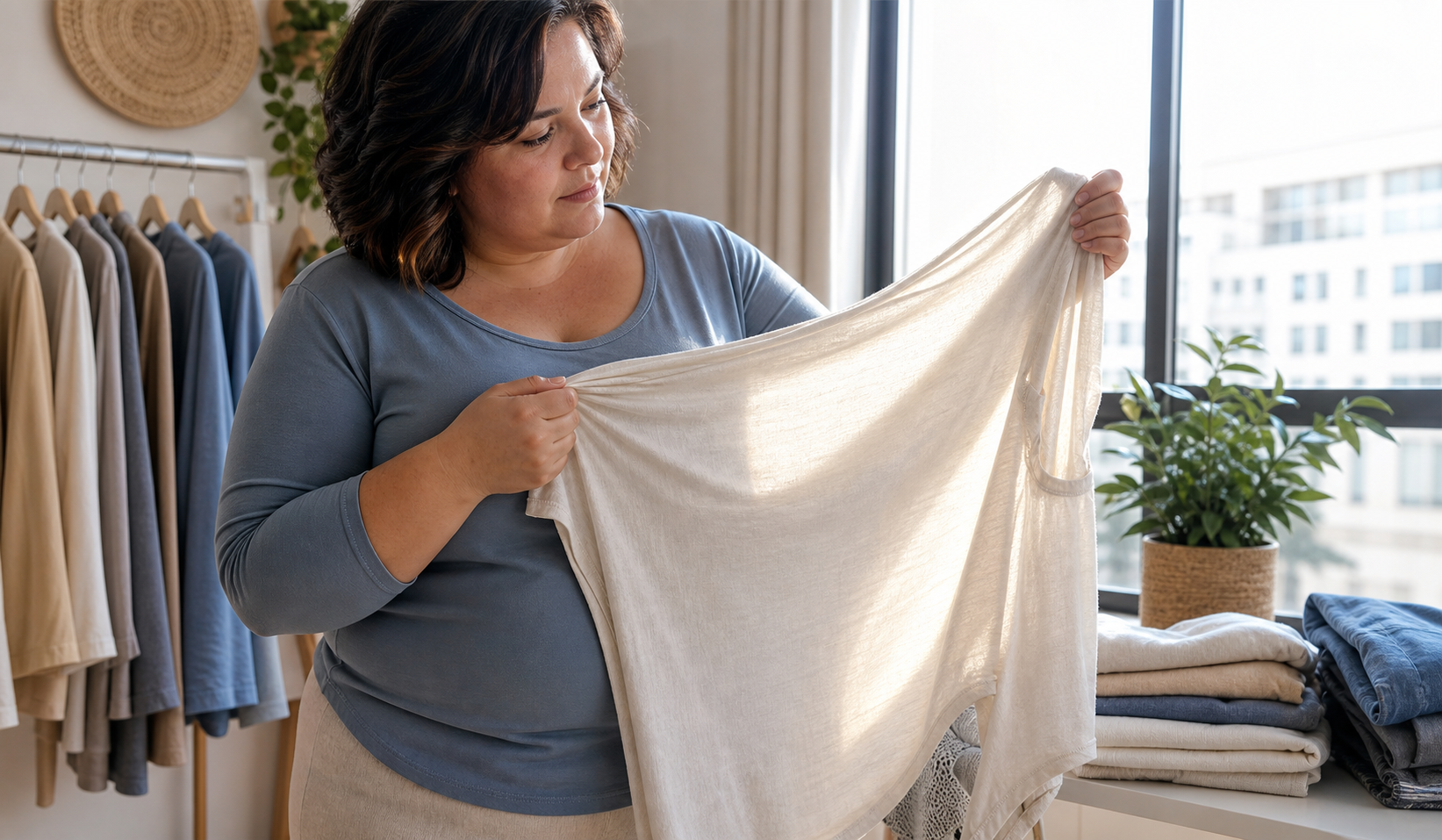
Ткань должна работать вместе с кроем, а не против него. Качественный материал не слишком жесткий, не провисает без формы, не дает неестественного блеска и не становится прозрачным при легком натяжении. Для Plus Size особенно важно, чтобы полотно не подчеркивало каждую неровность и не теряло вид после нескольких движений.
Когда вы смотрите на костюмы Plus Size или похожие вещи в лукбуке, проверяйте, собирается ли ткань в заломы после сжатия и быстро ли восстанавливает форму. Если производитель уже дает понятные правила ухода и честное описание состава, это помогает лучше оценить поведение вещи в носке.
Изображение 4. Проверка ткани на свету: легкое растягивание, плотность полотна и прозрачность материала.
Как проверять крой онлайн
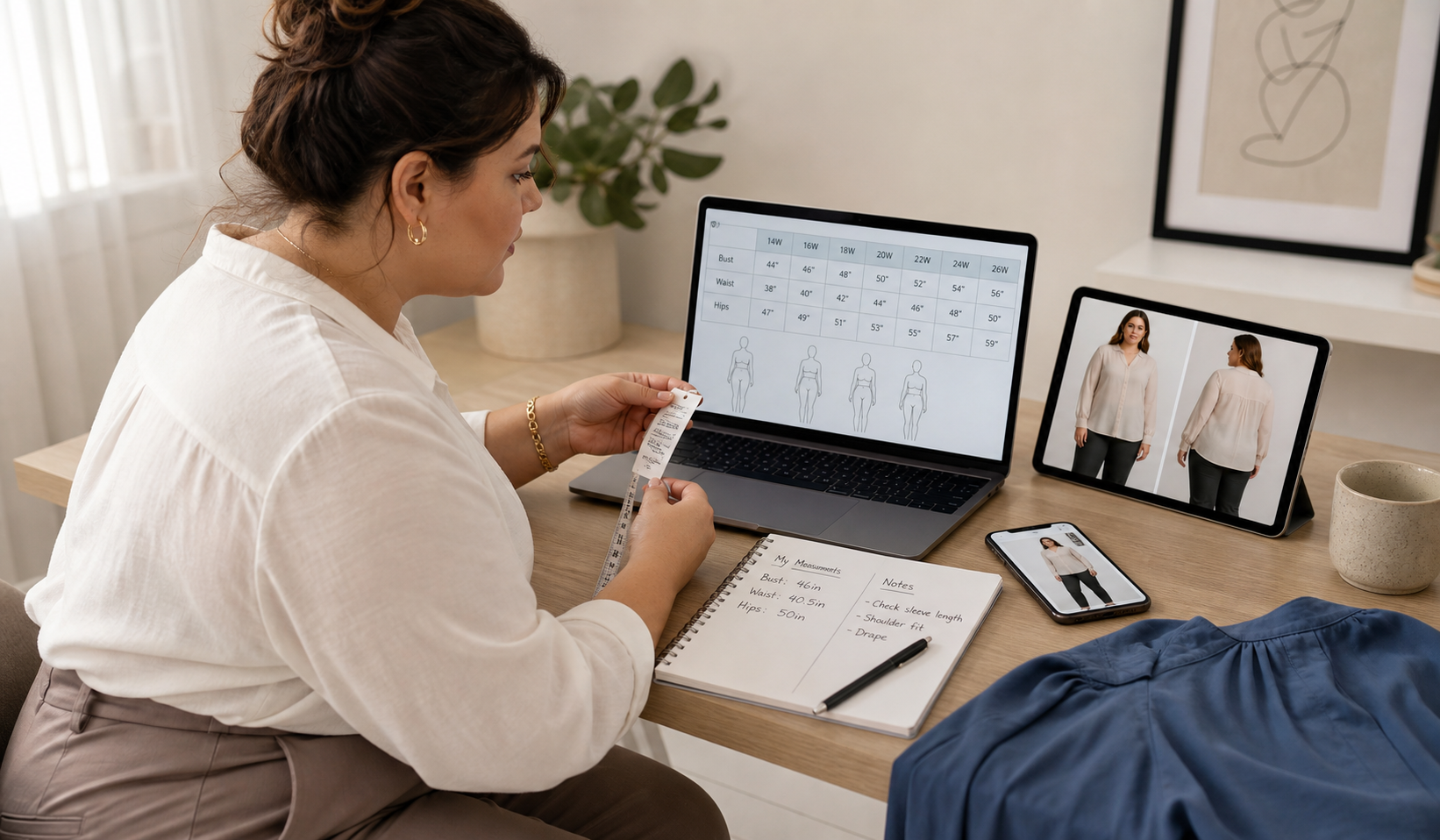
В интернет-магазине качество кроя лучше всего читать через фото спереди, сзади и сбоку, крупные планы швов и понятную таблицу замеров. Также полезно смотреть, дает ли магазин прозрачные условия доставки, оплаты и быстрый способ связаться через контакты, если нужно уточнить детали модели.
Если данных мало, не стоит полагаться только на название товара. Лучше сверить фото, описание конструкции и размерную сетку, а уже потом выбирать среди базовых категорий вроде каталога Plus Size или нужного фасона.
Изображение 5. Онлайн-проверка перед заказом: таблица мерок, телефон, ноутбук и заметки по посадке.
Частые вопросы
Как быстро понять, что крой неудачный?
Оцените посадку в плечах, груди, талии, животе и бедрах. Если вещь тянет, перекручивается или собирается грубыми складками, крой не работает на вашу фигуру.
Почему симметрия так важна?
Симметрия показывает, что изделие скроено внимательно и правильно собрано. Если боковые швы смещены или плечи разные, вещь будет плохо вести себя в движении.
Что первым делом смотреть в швах?
Ровность строчки, одинаковый стежок, отсутствие пропусков и аккуратную обработку срезов. Хорошо, когда шов не расходится даже при легком растягивании.
Как понять, что ткань не подходит?
Слишком тонкая, прозрачная или жесткая ткань часто подчеркивает неровности и быстро теряет форму. Для Plus Size лучше материал, который держит силуэт и мягко движется.
Можно ли оценить крой только по фото?
Да, если фото показывают изделие спереди, сзади и сбоку, а еще есть крупные планы швов, подкладки, фурнитуры и таблица замеров.
Когда вы привыкаете проверять крой внимательно, покупки становятся спокойнее и предсказуемее. Чтобы быстрее найти удачную модель, смотрите не только каталог Plus Size, но и конкретные категории вроде платьев Plus Size или верхней одежды и не стесняйтесь уточнять детали через контакты магазина.